Contents
- Why this topic matters
- What premium positioning means in pistachio trade
- Why positioning starts with the product itself
- Core pillars of premium pistachio positioning
- Origin story and product narrative
- Visual identity, format and presentation
- Application fit and market use
- Packaging and commercial signals
- Price logic and value perception
- Private-label and brand-building considerations
- Common premium brand positions in pistachio products
- Commercial perspective
- Technical perspective
- Buyer checklist before positioning a product
- Common mistakes to avoid
- How Atlas uses this knowledge
- Frequently asked questions
Why this topic matters
In premium food categories, buyers rarely purchase an ingredient only for its physical form. They also purchase what that ingredient can communicate in the market. Pistachios are especially sensitive to this because they already carry strong associations with quality, indulgence, gifting, refined taste and origin-driven value. As a result, the way a pistachio product is positioned can influence how it is priced, which customers it attracts, what packaging it requires and what level of consistency the buyer expects from shipment to shipment.
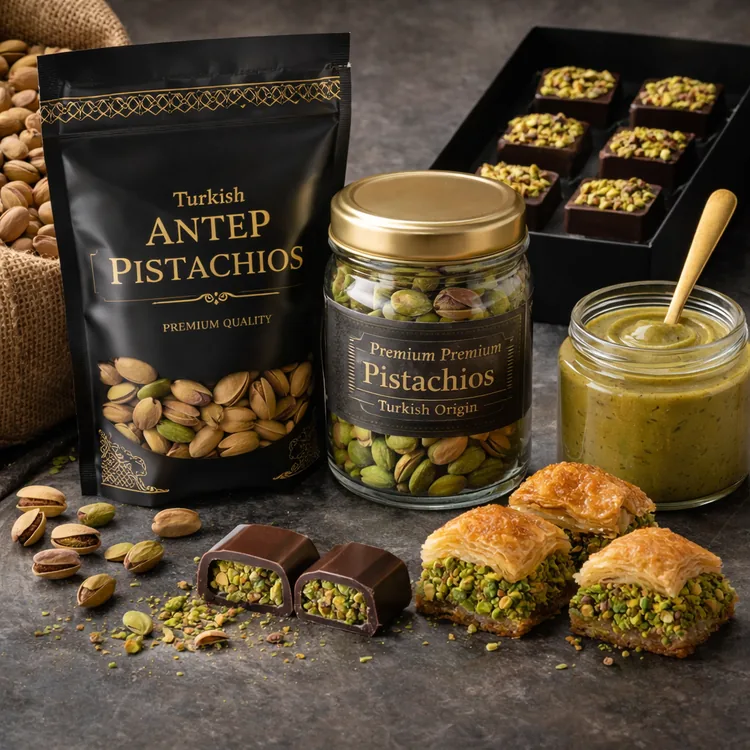
This matters in Turkish pistachio sourcing because the same origin can support very different commercial outcomes. One buyer may be building a gourmet snack brand. Another may be supplying premium pastry manufacturers. Another may be launching pistachio-filled chocolate bars under private label. Another may be selling kernels to foodservice distributors that want a clean, premium culinary story. All of these buyers can use Turkish Antep pistachios, but they are not building the same brand position.
Better positioning creates clearer decisions. It helps define what the buyer should prioritize, what kind of language the product needs, and which product cues deserve investment. Without positioning clarity, the brand message can become generic even if the product itself is strong.
What premium positioning means in pistachio trade
Premium positioning means giving the product a clear place in the market above ordinary, interchangeable or purely price-driven alternatives. It is the process of defining why the product should be perceived as more valuable and to whom that added value matters.
In pistachio trade, this usually involves several factors working together:
- How the product is described and named.
- How strongly the origin story supports trust and quality perception.
- Whether the product looks visually premium in its chosen format.
- How consistently it performs in the target application.
- How the packaging, messaging and sales language reinforce the intended value level.
Premium positioning is therefore not just branding on the outside. It must reflect a real relationship between product quality, format, market expectation and customer promise.
Why positioning starts with the product itself
A premium brand message cannot compensate for a product that is poorly matched to its market use. The strongest premium positioning starts with a product that genuinely supports the claim being made.
Format must match the promise
If a product is presented as refined, gourmet or luxury-led, the chosen pistachio form should reinforce that. Whole kernels, greener visible cuts, carefully selected garnish formats or richer pistachio paste systems can all contribute to that story in different categories.
Consistency must support trust
Premium positioning is difficult to sustain if the product changes too much from batch to batch. Brand strength depends not only on the first impression, but also on whether customers receive the same quality signal repeatedly.
Application performance matters
In ingredient categories especially, premium value is often proven through performance. A pastry buyer, confectionery producer or gelato manufacturer may care less about abstract luxury language and more about how clearly the pistachio supports the finished product.
Core pillars of premium pistachio positioning
Premium pistachio products are usually built around several positioning pillars rather than a single claim.
Origin credibility
Turkish Antep pistachios already carry a strong identity in many markets. That origin can support perceptions of culinary heritage, craftsmanship, authenticity and ingredient value when presented clearly and credibly.
Visual distinction
Premium products usually look differentiated. Depending on the category, that can mean attractive shell presentation, greener kernel tone, elegant cuts, refined decoration or a rich pistachio-forward interior.
Product clarity
Premium buyers often respond well to products that are explained clearly. A strong position is easier to trust when the product form, use case and expected quality cues are well defined.
Sensory promise
Premium positioning often relies on more than appearance. It may promise depth of flavor, stronger pistachio identity, richer texture, cleaner roast expression or a more refined mouthfeel.
Commercial consistency
The more premium the product is positioned, the more important repeatability becomes. Premium value needs a dependable delivery story behind it.
Origin story and product narrative
Origin is one of the strongest tools in premium pistachio positioning because it helps transform the product from a generic nut ingredient into a product with identity. In many B2B markets, origin story is not used only for consumer-facing language. It is also used to support distributor confidence, brand legitimacy and premium sales messaging.
Origin should support, not replace, the product
A strong Turkish pistachio story is valuable, but it works best when it is supported by the right format, quality profile and application fit. Origin alone does not make an unsuitable product premium.
Storytelling should match the customer segment
A gourmet retail customer may respond to heritage, region and culinary reputation. An ingredient manufacturer may prefer story elements that support trust, quality consistency and application relevance.
Brand language should stay specific
Words such as authentic, premium or artisanal are more persuasive when grounded in concrete product realities such as source, form, preparation or use-case relevance.
Visual identity, format and presentation
Premium pistachio products often communicate value visually before they are tasted. This is especially true in retail snacks, confectionery, pastry toppings and gourmet packaged goods.
Whole format vs processed format
Whole kernels or premium in-shell products may support a stronger premium signal in direct-consumption categories. Cuts, slices, powders and paste may support premium value more effectively in ingredient categories when the final application requires them.
Visible use vs internal use
If the pistachio remains visible, the product needs stronger visual discipline. If it becomes internal to a recipe system, the premium claim may depend more on flavor, performance and finish than on raw appearance alone.
Color and finish as positioning tools
In some categories, greener kernel tones and cleaner visual presentation help reinforce a premium offer. In others, what matters more is whether the product creates a refined finished result inside pastry, chocolate, gelato or bakery systems.
Application fit and market use
Brand positioning becomes stronger when it fits the actual customer and market use. A premium pistachio product should not be positioned the same way across every channel.
Retail snack positioning
Here the product may need strong direct-consumption appeal, attractive appearance, a premium snack identity and a packaging language that supports gifting or everyday indulgence.
Pastry and confectionery positioning
In these categories, premium value may depend on kernel color, decorative finish, paste quality, filling richness, texture logic and how visibly the pistachio contributes to the finished product.
Foodservice and horeca positioning
In professional kitchens, the premium message may need to focus more on usability, consistency, ingredient credibility and ease of menu integration.
Industrial ingredient positioning
For industrial buyers, premium usually needs to be explained through application performance, controlled product definition and reliability rather than broad luxury language alone.
Packaging and commercial signals
Packaging is one of the most visible carriers of brand position. It tells the customer what level of value to expect before the product is opened.
Packaging should match the value claim
If the product is positioned as premium, the packaging should support that impression through structure, clarity, cleanliness and visual discipline.
Pack format communicates market intent
Smaller branded consumer packs, giftable formats, ingredient-focused bulk formats and foodservice-oriented pack styles all signal different market positions. The product may be the same origin, but the market message changes with the pack logic.
Consistency between product and pack matters
If the packaging signals premium luxury but the visible product inside looks generic or inconsistent, trust weakens quickly. The strongest positioning happens when packaging and product reinforce one another.
Price logic and value perception
Premium positioning is closely connected to price, but it should never be reduced to price alone. A product is not premium simply because it is expensive. It is premium when the market understands why it is worth more.
Higher price needs a visible reason
That reason may come from better appearance, stronger origin identity, more refined product form, clearer application fit, better packaging or stronger customer trust.
Over-positioning can create friction
If the product is described at a luxury level but the market does not experience that value clearly, customers may resist the price. The position should therefore match both the product reality and the target market's willingness to pay.
Under-positioning can weaken margin
The reverse is also true. A strong Turkish pistachio product can lose commercial opportunity if it is presented too generically and sold on commodity logic alone.
Private-label and brand-building considerations
Private-label programs often face a special challenge: they must create a premium story that feels distinctive while still being disciplined enough for repeat production and multi-team approval.
Positioning must work internally and externally
Procurement teams need clarity. Sales teams need language. Design teams need visual direction. Technical teams need a product that behaves consistently. A strong premium position needs to serve all of them.
Specification and branding should support each other
Product positioning is stronger when the internal specification sheet and external brand language point toward the same market promise.
Consistency matters more as volume grows
Once a premium private-label pistachio product scales, positioning becomes more dependent on repeatable execution than on launch-stage creativity alone.
Common premium brand positions in pistachio products
While every business is different, premium pistachio products often cluster around a few common market positions.
Heritage-driven premium
This position emphasizes origin, regional credibility, culinary history and authenticity.
Modern gourmet premium
This position emphasizes design, taste sophistication, clean presentation and a refined ingredient image.
Indulgence-led premium
This position is common in confectionery, pastry and dessert products where the pistachio is used to communicate richness, abundance and gifting value.
Ingredient-performance premium
This position appears more in B2B and industrial channels, where the value lies in reliability, format precision, product clarity and application success.
Simple comparison: what supports premium positioning?
| Positioning factor | Why it matters | Typical premium signal |
|---|---|---|
| Origin | Builds trust and story value | Clear Turkish Antep pistachio identity |
| Format | Shapes how the customer experiences the product | Whole kernels, refined cuts, premium paste systems |
| Visual quality | Supports first impression and merchandising | Clean presentation, attractive color, consistency |
| Application fit | Makes the product credible in its category | Strong performance in snack, pastry, confectionery or foodservice use |
| Packaging | Signals value before the product is used | Disciplined, market-appropriate premium packaging |
| Repeatability | Protects long-term brand trust | Consistent supply and customer experience |
Commercial perspective
Successful pistachio purchasing starts with the final application, but strong brand positioning adds another layer: the product must not only work, it must also communicate the right level of value. Buyers compare kernel color, cut size, roast profile, packaging style and repeatability according to whether the product will be used for snacks, confectionery, pastry, ice cream, foodservice or ingredient manufacturing.
From a commercial point of view, positioning helps buyers avoid two common traps. The first is paying for a premium claim that the product cannot fully support. The second is underselling a strong Turkish pistachio product through generic market language. In both cases, the brand loses clarity.
Stronger positioning leads to better quote comparison, better pricing discipline and better communication with customers. It also gives the sales team clearer reasons to explain why one pistachio offer belongs in a more premium market tier than another.
Technical perspective
Technical expectations vary by customer segment. Snack buyers often focus on shell opening, roast profile and direct-consumption appearance. Ingredient buyers typically look more closely at kernel tone, cut size, grind consistency, purity, moisture management and performance during processing.
Premium positioning becomes much stronger when the technical product cues actually reinforce the commercial message. For example, a pastry ingredient positioned as premium should support cleaner visual output, more dependable application fit or stronger flavor credibility in the final pastry system. A premium snack line should support a more attractive ready-to-eat presentation and a more dependable direct-consumption experience.
In this sense, technical and commercial thinking should not be separated. The most persuasive premium position is the one that can be seen, used and repeated consistently.
Buyer checklist before positioning a product
Before launching or repositioning a premium pistachio product, buyers should confirm that the market story is grounded in the real product.
- What customer segment is this product meant for?
- What exactly makes this pistachio product premium in that segment?
- Is the chosen format aligned with the brand promise?
- Will the customer see the value directly, taste it clearly or experience it in application performance?
- Does the packaging support the intended market level?
- Can procurement and operations support repeatability at the promised standard?
- Are we using origin and product story clearly without becoming generic?
- Does the price feel justified by the customer experience we are creating?
Common mistakes to avoid
-
Using luxury language without product support.
Premium claims become weak when the product form, consistency or packaging does not reinforce them. -
Treating all pistachio categories the same way.
Snack products, visible pastry ingredients and industrial-use formats do not need identical positioning logic. -
Relying too heavily on origin alone.
Origin is powerful, but it works best when product quality and application fit support it. -
Ignoring repeatability.
Premium positioning is difficult to maintain if the product changes too much from shipment to shipment. -
Overpricing without clear value cues.
Customers need understandable reasons to accept a higher market position. -
Underspecifying the product internally.
If procurement and technical teams are not aligned, premium positioning becomes harder to sustain externally.
How Atlas uses this knowledge
Atlas uses academy content to make product discussions clearer and more useful. Each article supports a better understanding of product forms, applications, quality expectations and the questions buyers should ask before placing an order.
On a topic like brand positioning, that means helping buyers move beyond loose premium language and toward more structured product thinking. A better premium position is built when origin, product format, application logic and commercial story reinforce one another instead of competing.
- Connect commercial guidance to relevant product categories.
- Connect technical information to real manufacturing and market applications.
- Support faster, better-prepared conversations with buyers.
- Reduce ambiguity around kernels, cuts, powder and paste-oriented products.
- Help teams build more credible and more repeatable premium pistachio offers.
Key takeaway
Brand positioning for premium pistachio products gives buyers a stronger framework for evaluating Turkish pistachios with confidence. It helps explain not only what the product is, but why the market should value it more highly and how that value should be communicated.
Better information leads to better product choices, smoother communication and more effective purchasing decisions. In premium pistachio trade, that clarity is not a cosmetic marketing layer. It is part of the commercial advantage.
Frequently asked questions
Who is this article for?
This article is intended for B2B buyers, importers, distributors, private-label programs, brand owners and food manufacturers researching Turkish pistachio supply.
What does premium positioning mean in pistachio products?
Premium positioning means defining the pistachio product in a way that clearly communicates higher perceived value through product identity, origin story, visual quality, application fit, consistency and packaging.
Is premium positioning only about luxury packaging?
No. Packaging matters, but premium positioning also depends on product performance, customer fit, commercial clarity and the credibility of the overall value promise.
Why does brand positioning matter to B2B buyers?
Because buyers are not only sourcing pistachios. They are also deciding how those pistachios will be presented, priced, explained and sold in their own markets.
Can the same pistachio origin support different premium positions?
Yes. The same Turkish origin can support a gourmet snack line, a pastry ingredient story, a confectionery concept or a private-label premium offer, depending on the product form and market use.
What is the biggest positioning mistake?
One of the biggest mistakes is making premium claims that the product itself does not fully support in appearance, performance, packaging or repeatability.
Can Atlas help buyers think more clearly about premium pistachio positioning?
Yes. Atlas helps buyers connect product form, technical expectations, application logic and commercial goals so sourcing conversations become more practical and more precise.