Raw In-Shell Antep Pistachios
Natural in-shell product formats for importers, roasting operations and snack distributors seeking strong Turkish origin character.
View DetailsAtlas Global Trading Co. presents Turkish pistachio products in the format professional buyers actually compare: by product form, intended application, visual profile, processing level, packaging direction and commercial suitability.
Whether you purchase in-shell pistachios for snack programs, color-sensitive kernels for baklava, granules for decoration, powder for bakery systems or 100% pistachio paste for premium recipes, this page is structured to help you identify the right format faster and start a more efficient product discussion.
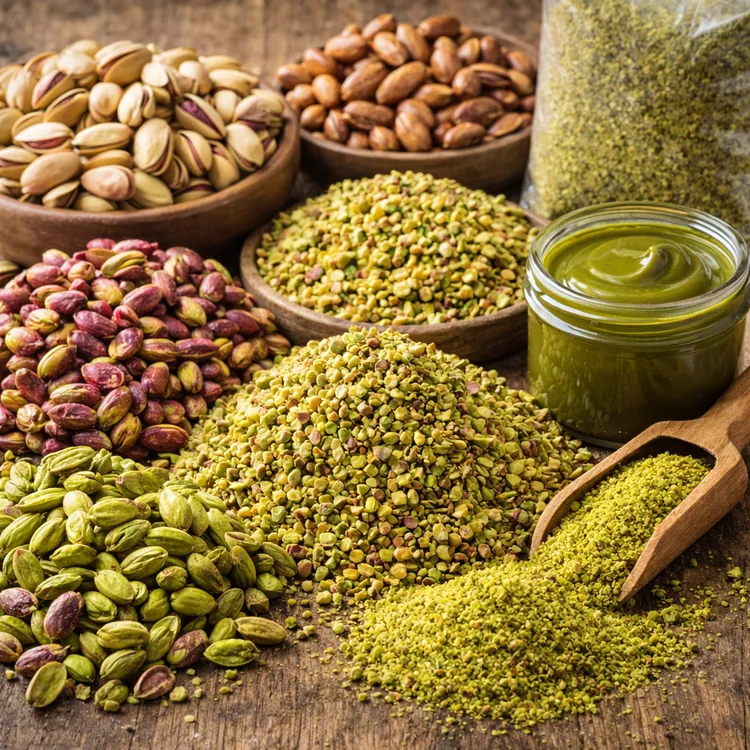
Natural in-shell product formats for importers, roasting operations and snack distributors seeking strong Turkish origin character.
View DetailsReady-for-market snack solutions suitable for private-label, wholesale distribution and premium retail assortments.
View DetailsWhole kernel formats for pastry, confectionery, chocolate, toppings, fillings and broader ingredient applications.
View DetailsColor-led kernel selections where appearance, aroma and premium presentation are commercial priorities.
View DetailsGranulated, diced, sliced and slivered forms for coating, layering, topping and texture-building use.
View DetailsFine and controlled particle formats for creams, dough systems, bakery mixes, fillings and dry ingredient blends.
View DetailsPure pistachio ingredient paste for gelato, chocolate, spreads, pastry creams and recipe development.
View DetailsCommercially structured supply conversations around target grade, packing direction and intended end use.
View DetailsA strong pistachio quotation is rarely judged on product name alone. Serious buyers usually compare offers by application match, visual expectations, aroma profile, processing level, particle size direction, packaging format, transit protection and repeat-order consistency. That is why Atlas organizes the range below in a commercially practical way rather than a simple product list.
| Product | Typical Buyer Type | Main Buying Priorities | Typical Use Direction | Packing Direction |
|---|---|---|---|---|
| Raw In-Shell Pistachios | Importers, roasters, snack distributors | Open-shell ratio, natural appearance, flavor, size direction | Roasting, snack packs, repacking, wholesale sale | Bulk sacks, cartons, protected transit options |
| Roasted & Salted In-Shell | Retail brands, wholesalers, private-label programs | Roast profile, salt balance, crunch, visual uniformity | Consumer packs, retail shelves, foodservice snack channels | Bulk and selected retail-ready concepts |
| Red Kernels | General ingredient buyers | Whole-kernel integrity, flavor, versatility, value | Chocolate, fillings, bakery, inclusions, topping | Ingredient cartons or bulk bags |
| Green Kernels | Baklava producers, premium confectionery makers | Color intensity, aroma, appearance, grade consistency | Baklava, luxury desserts, visible premium fillings | Vacuum or protected ingredient formats |
| Granules & Sliced | Bakery, pastry, gelato, chocolate manufacturers | Cut size, clean appearance, color retention, flowability | Decoration, coating, topping, inclusion | Industrial ingredient packs |
| Powder & Meal | Bakery and recipe developers | Particle consistency, aroma, color, mix behavior | Dry blends, creams, fillings, dough systems | Ingredient bags or cartons |
| 100% Pistachio Paste | Gelato, chocolate and premium dessert manufacturers | Purity, texture, spreadability, recipe performance | Paste-based formulations and flavor systems | Pails or industrial-use containers |
Raw in-shell pistachios are the natural starting point for buyers serving snack markets, local roasting operations, specialty retail and wholesale repacking channels. This format appeals to customers who want visible whole product identity and the traditional consumer experience of an in-shell nut.
Commercial conversations for raw in-shell pistachios usually focus on open-shell ratio, lot appearance, general size direction, natural flavor impression and destination market suitability. For some buyers, the visual uniformity of the shell is highly important. For others, the priority is aroma and value positioning within a broader snack range.
Roasted and salted in-shell pistachios are aimed at buyers who need a more market-ready snack solution. This format is especially relevant for brands, distributors and private-label partners that want a finished or near-finished consumer proposition with strong shelf appeal.
Typical commercial priorities include roast level, salt intensity, shell cleanliness, texture, crunch and packing concept. Different markets may prefer different salt profiles or roast styles, so the intended destination should always be part of the quotation discussion.
Red pistachio kernels are a practical and versatile ingredient format used across chocolate, pastry, bakery, fillings, toppings and general food manufacturing. They are often chosen by buyers who need an efficient kernel solution with broad applicability across several product lines.
Because the kernel is already separated from the shell, this format is easier to integrate into industrial processing, recipe development and semi-automated production systems. Buyers typically review whole-kernel condition, general color profile, flavor, application fit and packing method.
Green pistachio kernels occupy a more premium position in the range because color and visual expression are especially important. They are frequently associated with baklava, luxury pastry, premium fillings and presentation-driven confectionery where a vibrant green tone can strongly influence product appeal.
These kernels are generally evaluated not only for flavor, but also for color intensity, lot consistency, aroma and how well they perform in high-visibility applications. Buyers looking for premium dessert positioning usually give this category special attention.
Processed cut formats allow manufacturers to buy pistachios already prepared for decorating, coating, layering or inclusion. Instead of handling whole kernels internally, many buyers prefer cut-size solutions that reduce preparation time and improve production efficiency.
Granules and slices are widely used on chocolate, pastries, bakery surfaces, ice cream, gelato and plated desserts. The most important buying points often include cut size consistency, visual cleanliness, color expression and easy handling in the production environment.
Pistachio powder and meal are typically selected by manufacturers that need even distribution in creams, dry mixes, baked formulations, fillings and flavor systems. This format is useful when visible nut identity is less important than consistent dispersion and recipe integration.
Buyers often focus on particle direction, aroma, color, flowability and suitability for their own formulation environment. This product can be especially valuable in bakery and confectionery systems where texture and flavor distribution need to be carefully managed.
100% pistachio paste is one of the most formulation-focused products in the range. It is intended for professional users who need concentrated pistachio identity in paste form for chocolate, gelato, pastry cream, fillings, premium desserts and specialty spreads.
Commercial evaluation usually centers on purity, texture, color expression, process behavior and recipe performance. Paste is especially attractive when the goal is to build pistachio flavor and richness into the product matrix rather than keep the nut in a visible particulate form.
Not every buyer fits neatly into a standard product category. Some require a specific visual range, a certain production-friendly format, a particular packaging approach or a solution designed around repeat purchasing schedules. Atlas supports these more structured conversations by focusing on the intended application first.
Instead of forcing a standard offer, custom supply discussions can bring together the right product form, grade logic, pack style, route-to-market requirements and commercial continuity expectations. This helps reduce mismatch between sample approval and real production use.
Many pistachio procurement mistakes happen when the product is selected without enough attention to the final use. The right choice for a premium baklava producer is often different from the right choice for a snack importer, bakery manufacturer or chocolate brand. Atlas encourages buyers to match the product form to the way the pistachio will actually be used in production or retail.
Premium green kernel directions are frequently preferred where the pistachio remains highly visible and is closely tied to premium dessert identity.
Raw or roasted in-shell pistachios are especially relevant when the consumer values visible whole nuts, shell-opening experience and snack authenticity.
Kernels, granules or paste may all be suitable depending on whether the pistachio is intended to be visible, textural or fully integrated into the formulation.
Powder, meal and controlled cut sizes are often chosen when production efficiency and even dispersion in recipes are the priority.
Packaging is not only about transport. For pistachios, the pack format also affects handling efficiency, presentation, protection and commercial suitability. Different product forms often require different packing logic. Atlas discusses packaging in relation to the product type, intended market and buyer workflow.
These buyers usually prioritize aroma, vibrant appearance and presentation quality. Green kernel choices are often central to the discussion because the pistachio remains visually important in the final dessert.
These customers often choose between whole kernels, cuts and paste depending on whether they want visible nut pieces, layered texture or a more integrated flavor profile.
They commonly focus on shell appearance, roast profile, pack format and repeat consumer acceptance. In-shell formats tend to be central here.
Powder, meal and selected granule sizes are often preferred when line efficiency, recipe consistency and even ingredient dispersion are key requirements.
These customers may need a balance between premium appearance and operational practicality, especially for dessert finishing, buffet service and kitchen preparation.
For ongoing programs, commercial continuity matters. Product form, packing style and target grade should all align with repeat purchasing expectations, not just initial samples.
A product page should do more than list names. It should help buyers move from broad interest to precise inquiry. Atlas organizes the range to reduce ambiguity and support faster commercial alignment between product expectations and actual usage.
Buyers can quickly understand the difference between snack-ready, ingredient-grade and premium appearance-driven pistachio categories.
The range is explained with practical end uses in mind so product choice starts from commercial reality, not guesswork.
The page speaks to importers, wholesalers, food manufacturers, confectioners, pastry professionals and private-label buyers.
Buyers can identify which information matters before asking for a quotation, helping reduce back-and-forth and improve offer relevance.
When selection is based on actual application and packing needs, repeat-order continuity becomes easier to discuss from the beginning.
The content helps differentiate between general-use pistachio formats and those selected for premium visual or sensory expectations.
Start with the intended use: snack retail, baklava, bakery, chocolate, ice cream, ingredient blending or private-label distribution.
Select the most suitable product form such as in-shell, kernel, cut, powder or paste based on how the pistachio will be handled internally.
Include destination market, approximate volume, target pack style and whether the requirement is a one-time purchase or repeat program.
Discuss the right balance of appearance, aroma, processing level and pack format so the quotation matches your actual business need.
The table below gives buyers a practical starting point. Final selection should always reflect the exact recipe, market positioning, pack format and commercial goals.
| Use Case | Usually Recommended Direction | Why It Often Fits |
|---|---|---|
| Traditional premium baklava | Green pistachio kernels | Commonly preferred when visual color expression and aroma are central to premium dessert identity. |
| Retail snack products | Roasted & salted in-shell pistachios | Suitable for shelf-ready snack presentation and consumer familiarity with in-shell formats. |
| Importer repacking program | Raw in-shell pistachios | Supports downstream roasting, packing and distribution according to the buyer's own market strategy. |
| Chocolate with visible nut pieces | Red kernels or granules | Allows strong pistachio identity in inclusions, bars, coatings and premium confectionery applications. |
| Bakery creams and fillings | Pistachio powder or 100% pistachio paste | More efficient for even flavor distribution and smoother recipe integration than whole kernels alone. |
| Ice cream and gelato flavoring | 100% pistachio paste | Paste form is often preferred where pistachio needs to be integrated deeply into the formulation. |
| Pastry decoration | Sliced or granulated pistachios | Offers controlled visual finishing and reduces preparation work for the production team. |
| Multi-line ingredient use | Red kernels | A practical choice for buyers who need a flexible product suitable for several applications. |
Raw in-shell pistachios are better suited for buyers who want to roast, repack or position the product through their own downstream process. Roasted and salted in-shell pistachios are more aligned with finished snack programs and retail-oriented use.
Green kernel directions are commonly favored for premium baklava because visual color, aroma and premium presentation tend to be especially important in that category.
Yes. Red kernels can still be highly useful in premium product development, especially where the buyer prioritizes versatility, ingredient practicality or visible whole-kernel usage across multiple applications.
Granules are usually chosen when the pistachio needs to be sprinkled, coated, layered or distributed more evenly without internal cutting by the buyer.
These terms are often used in related ways, but the buyer should still clarify the intended particle direction and application so the product matches the production need.
Gelato makers, pastry producers, confectionery manufacturers and premium dessert brands commonly prefer paste when they need concentrated pistachio character in a smooth, formulation-friendly form.
Yes. Many commercial buyers use more than one product form at the same time, for example kernels for fillings, granules for decoration and paste for creams or gelato systems.
The best inquiry usually includes product form, target application, expected volume, destination market, packaging preference and whether the purchase is spot-based or repeat-oriented.
Because the same pistachio format can perform very differently across snack, pastry, bakery and industrial uses. Product choice should reflect how the pistachio will actually function in the buyer's business.
No. In-shell formats may also be relevant for importers, repackers, regional wholesalers and operators who perform their own roasting or packaging activities.
Greener kernels are often associated with a more premium visual impression, especially in products where the pistachio remains clearly visible to the final customer.
That depends on the line. Powder, granules and paste can reduce preparation work, while kernels may still be preferred where visible pistachio identity is part of the finished product concept.
Yes. Pistachio paste is often relevant in chocolate and confectionery development when the buyer wants flavor integration, smoothness and premium pistachio expression in the recipe.
They are often used decoratively, but they can also contribute texture, visual segmentation and premium finishing in bakery, chocolate and plated dessert applications.
The decision usually depends on whether the pistachio needs to remain visible, provide texture, or blend smoothly into the formulation. The application should guide the format choice.
No. Different markets reward different strengths. Snack markets may emphasize shell presentation, while baklava producers may prioritize green color and dessert manufacturers may prefer paste.
Because packaging affects handling, presentation, transit suitability and the buyer's own downstream workflow. The best product can still be inconvenient if the packing direction is wrong.
Yes. The commercial structure can be discussed according to whether the buyer needs a one-time order, seasonal purchases or a more regular sourcing relationship.
Red kernels are often a practical starting point for versatile ingredient buyers because they can fit a wide range of applications and downstream processing directions.
Granules are often more appropriate when some visible nut identity and texture are still desired, while powder is generally chosen when even distribution within the recipe is the priority.
Yes. Powder or fine meal may be relevant in fillings and cream systems where consistent dispersion and processing convenience are important.
Sliced, slivered or finely selected green kernel components are often preferred when the goal is an elegant and visibly premium finish.
Usually yes. Private-label buyers often focus more on shelf positioning and finished presentation, while industrial buyers may focus more on process suitability and ingredient integration.
Yes. That is often the best route when the project involves premium positioning, repeat purchasing, multiple pistachio formats or application-specific requirements.
Share your intended application, preferred product form, destination market, expected order size and packaging direction. We can then discuss the most relevant pistachio format for your commercial needs.
Your inquiry has been received. If you do not get a reply, please email contact@atlastradehouse.com directly.