Contents
- Why this topic matters
- What Dubai-style chocolate signals in the market
- Why pistachio sits at the center of the category
- How trend-driven demand changes buying behavior
- Which pistachio formats matter most
- Commercial perspective for buyers
- Technical perspective for manufacturers
- Visible pistachio use vs. internal pistachio use
- Packaging, gifting and premium positioning
- Supply planning in a trend-sensitive category
- Pricing logic and value perception
- Buyer checklist
- Common mistakes to avoid
- How Atlas uses this knowledge
- Frequently asked questions
Why this topic matters
Trend-driven confectionery categories can reshape ingredient demand quickly. When a chocolate concept becomes strongly associated with indulgence, gifting, visual abundance and premium lifestyle cues, demand tends to shift not only at the retail level but also across the ingredient chain. Buyers begin looking for pistachio products that can help them reproduce a specific experience: a dense, rich center; visible pistachio presence; a vivid premium identity; and a filling or topping system that feels generous rather than minimal.
This matters for pistachio buyers because such categories usually create uneven demand across product forms. One buyer may suddenly need pistachio paste for a center filling. Another may need chopped kernels for texture contrast. Another may need powder for blended cream systems. Another may need green kernels for decorative impact. If the buyer only asks for “pistachio for chocolate,” the sourcing discussion often remains too broad to be useful.
Stronger understanding leads to stronger product decisions. That is the purpose of this article: to connect market-facing confectionery demand to the practical pistachio formats, quality priorities and commercial questions that matter behind the scenes.
What Dubai-style chocolate signals in the market
In commercial terms, Dubai-style chocolate usually signals an indulgence-led chocolate concept built around richness, pistachio identity, premium presentation and a stronger emotional appeal than a standard chocolate bar. It often suggests generosity of filling, layered textures, a more giftable look and a product story built around excess, luxury and memorable sensory contrast.
For ingredient buyers, the important lesson is not the name alone. The important lesson is what the name has come to represent in purchasing behavior. Buyers in this category are often looking for:
- High-impact pistachio flavor identity rather than a weak background note.
- A filling system that feels rich, substantial and commercially differentiated.
- Visual cues that clearly communicate pistachio to the end customer.
- Formats that work in premium confectionery, seasonal gifting and social-media-friendly products.
- Ingredients that help justify a more premium retail or wholesale selling price.
In other words, the category is not only about taste. It is about perception, format, richness and commercial storytelling.
Why pistachio sits at the center of the category
Pistachio is especially powerful in premium confectionery because it bridges several value signals at once. It has strong visual identity, strong luxury associations, strong compatibility with chocolate and strong flexibility across formats. A buyer can use pistachio as a visible topping, an interior cream or paste, a particulate textural element, a powder in a blended filling system, or a premium flavor cue across multiple product lines.
This flexibility is commercially important. Very few ingredients can contribute to visual appeal, textural complexity and upscale positioning at the same time. Pistachio can do all three when used correctly. That is one reason trend-driven chocolate concepts so often pull pistachio demand upward.
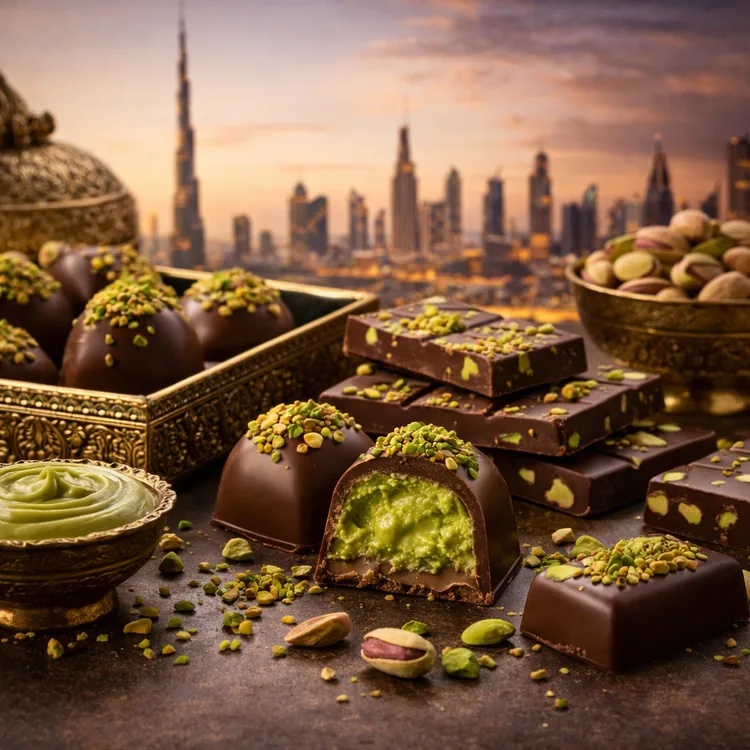
Pistachio also performs well in a category where consumers expect contrast: crunchy and smooth, rich and nutty, creamy and textured, dark chocolate and vivid green filling. For manufacturers, this makes pistachio not just a flavor option but a structural tool in product design.
How trend-driven demand changes buying behavior
When demand is shaped by a strong confectionery trend, purchasing behavior often becomes more urgent and more segmented at the same time. Buyers may move faster, but they also become more specific about what they need once product development begins. The first wave of demand may start broadly, yet sustainable sourcing usually requires more discipline.
More interest in pistachio-forward ingredients
Buyers who previously purchased pistachio in smaller volumes or only for narrow applications may begin exploring broader use in bars, filled chocolates, coated items, seasonal gift boxes, bakery crossovers and dessert-inspired confectionery formats.
More focus on application-fit rather than generic quality claims
As a product concept becomes more competitive, buyers usually stop asking only for “premium pistachio” and start asking more specific questions: Which pistachio format works best in a thick center? Which one supports a vivid pistachio appearance? Which one creates texture without overpowering the shell? Which format is more cost-efficient for a layered bar?
More pressure on supply continuity
Trend categories can create uneven buying waves. This increases the importance of supplier clarity, pack-size planning, repeatability and a realistic view of lead times. A product that launches successfully needs more than a good first sample. It needs a sourcing structure that can keep supporting the concept.
More importance on premium perception
Because Dubai-style chocolate is usually linked to indulgence and visual appeal, the buyer often evaluates ingredients not just on taste but on how premium the finished product will look and feel. That can increase demand for greener kernels, stronger paste identity, better cuts and more visually attractive decorative finishes.
Which pistachio formats matter most
The phrase “pistachio demand” can be misleading because it hides the fact that several different pistachio formats may be relevant depending on the finished chocolate concept. Buyers should think in terms of role, not only ingredient name.
Pistachio kernels
Kernels are relevant when the buyer needs visible pistachio presence, premium cut quality or further processing control in-house. They may be used whole, sliced, chopped or ground depending on the concept. Greener kernels can be particularly valuable when visual presentation matters.
Pistachio cuts and granules
These are useful where texture contrast is part of the appeal. In filled bars, coatings, decorative finishes or mixed interior systems, cuts can help create a more substantial eating experience while still keeping pistachio clearly recognizable.
Pistachio powder
Powder is often relevant in blended fillings, bakery-chocolate hybrid products and smoother center systems where the pistachio note needs to be distributed more evenly. It may be more useful in formulations where texture comes from other elements and the powder supports flavor and body.
Pistachio paste
Paste is one of the most important formats in premium pistachio-forward chocolate because it allows a dense, rich and cohesive filling profile. For many buyers, paste serves as the backbone of a center system or cream concept and helps create the indulgent interior associated with premium filled chocolate.
Pistachio cream or filling-oriented systems
Some buyers do not want only a raw pistachio ingredient. They want a component better aligned with confectionery manufacturing. In these cases, the focus may shift toward pistachio-rich cream bases or process-ready filling logic rather than just raw kernels alone.
Commercial perspective for buyers
From a commercial standpoint, Dubai-style chocolate demand changes how pistachio ingredients are evaluated. The buyer is not only buying a nut ingredient. The buyer is buying a premium signal, a product story and a differentiator that may support higher retail pricing or stronger distributor interest.
Category-driven premiumization
When chocolate moves into a more premium, giftable or trend-led segment, pistachio often becomes central to value perception. That means the ingredient may have more influence over the final price point than in a standard confectionery program.
Better margin can justify better ingredient clarity
If the finished product is positioned higher, the buyer may be able to justify a more selective pistachio grade, stronger visual appearance or a more refined filling structure. However, this only works when the ingredient advantage is actually visible or sensorially meaningful in the finished item.
Not every product needs the highest-cost format
Trend demand sometimes pushes buyers to over-specify. A manufacturer may assume the most premium kernel, the brightest green tone and the richest paste are always necessary. In reality, the right choice depends on what the consumer will see, what the consumer will taste and what the production system can support consistently.
Retail storytelling matters
Products in this segment are often sold through visual cues, indulgent descriptions and premium packaging. That means the pistachio ingredient must support not only technical function, but also the credibility of the marketing story. If the product promises abundance and pistachio richness, the ingredient choice must help deliver that promise.
Technical perspective for manufacturers
Technical teams view trend-led products differently from purely commercial teams. They need to translate the premium concept into a manufacturable structure. This is where pistachio format selection becomes especially important.
Filling structure
If the product relies on a rich interior, the pistachio system must support the intended texture and body. Some concepts need smoother filling behavior. Others need a thicker, more substantial structure. Others benefit from a layered center with both smooth paste and particulate texture.
Texture contrast
A major appeal of premium filled chocolate often comes from contrast between shell and center, smooth and crunchy, rich and crisp. Pistachio cuts or granules may play a role here even when the filling itself is paste-based.
Visual consistency
Where pistachio remains visible, either in a cut-open bar, topping or transparent decorative area, visual consistency matters. Technical buyers should therefore think carefully about kernel color, cut definition and how the product presents after manufacturing.
Process-fit
The same pistachio format can behave differently depending on how it is deposited, mixed, layered or enrobed. Buyers should think about what the ingredient needs to do inside the production line, not only how it looks in isolation.
Repeatability
Trend-led success can quickly turn into volume pressure. Once a product gains attention, repeatability becomes essential. Technical teams therefore benefit from ingredients that behave consistently from batch to batch and align with the planned manufacturing method.
Visible pistachio use vs. internal pistachio use
One of the most useful distinctions a buyer can make is whether the pistachio will remain visible in the final product or function mainly as an internal flavor and texture component. This one decision often changes the right sourcing strategy.
Visible pistachio use
If the pistachio is visible, such as in toppings, decorative cuts, cross-sections or open-faced presentation, appearance becomes a major purchasing factor. In these cases, greener color, cleaner cuts and stronger visual definition may create real commercial value.
Internal pistachio use
If the pistachio will be blended into a filling or processed into a less visible system, functionality and cost-performance balance may matter more than premium visual appearance. Buyers sometimes overpay when they forget this distinction.
Hybrid systems
Many premium chocolates use both: a rich internal pistachio base and a visible pistachio topping or finishing layer. In those cases, the smartest sourcing strategy may involve multiple pistachio formats rather than one universal ingredient.
Packaging, gifting and premium positioning
Dubai-style chocolate trends are closely tied to visual presentation and gifting logic. This matters because the way the product is boxed, wrapped and displayed changes how much value the pistachio ingredient is expected to communicate.
Giftability raises appearance expectations
A product designed for gifting usually needs stronger premium cues than a standard impulse chocolate. The pistachio ingredient may therefore be expected to contribute more visibly to the product identity.
Premium packaging increases pressure on ingredient credibility
The more upscale the outer presentation becomes, the more the interior needs to feel worthy of that positioning. A rich pistachio center or vivid pistachio finish helps justify that expectation.
Cross-category expansion becomes more likely
Once a pistachio-forward chocolate concept works in bars, brands often explore gift boxes, bite-size pieces, spreads, pastry collaborations, dessert jars and seasonal launches. This can widen the range of pistachio formats the buyer eventually needs.
Supply planning in a trend-sensitive category
Trend categories can create sharp interest and fast scaling pressure. That is why sourcing cannot be based only on first-sample excitement. Buyers should think carefully about continuity, lead-time expectations, packaging preferences and how quickly their demand could expand if the concept performs well.
Do not plan only for launch volume
Some buyers prepare only for the initial test run and then discover that successful sell-through creates a second sourcing challenge. Stronger planning considers not just the first order but also the next several cycles.
Separate pilot-stage buying from scale-stage buying
The ingredient structure that works for a pilot may not be the ideal one for scale. A company may begin with very premium visible inputs and later refine the mix for production efficiency. Planning for that transition early reduces stress later.
Think about packaging sizes and handling reality
A confectionery manufacturer may not need the same pack logic as a distributor or re-packer. The pistachio format should be aligned not only with the recipe but also with the warehouse and production workflow.
Clarify whether one supplier can support multiple pistachio roles
Some buyers want one supplier relationship that can support kernels, cuts, powder and paste-oriented needs across a growing chocolate portfolio. Others may segment sourcing by function. Both approaches can work if they are intentional.
Pricing logic and value perception
Pistachio is often one of the clearest premium-value drivers inside this category, but buyers should still think carefully about what they are paying for. The best pricing decisions come from linking ingredient cost to finished-product value, not from treating every premium pistachio format as equally necessary.
Pay more when the market can see or feel the difference
If a greener kernel, stronger paste or more refined cut materially improves the finished product's visual appeal, texture or premium identity, the higher ingredient cost may be well justified.
Be careful not to over-specify hidden inputs
Internal-use ingredients that disappear into a mixed center do not always need the same appearance level as visible toppings or exposed fillings. Smart buyers separate these roles instead of applying one premium rule to everything.
Judge value at finished-product level
The relevant question is not whether a pistachio input looks impressive in a raw sample tray. The relevant question is whether it creates visible or sensory value in the final chocolate format the customer actually buys.
Simple comparison: what different buyers may prioritize
| Buyer type | Main pistachio priority | Secondary priority | Typical commercial question |
|---|---|---|---|
| Premium chocolate brand | Visual and sensory impact | Giftable premium identity | Does the pistachio help justify a higher-end selling price? |
| Private-label producer | Repeatability and application fit | Customer-specific appearance targets | Can the ingredient perform consistently across multiple runs? |
| Industrial manufacturer | Process-fit and cost-performance balance | Scalable supply planning | Which format creates the best result without overpaying? |
| Distributor | Versatility across customer types | Clear product segmentation | Which pistachio format fits which downstream customer best? |
| Bakery-confectionery crossover buyer | Filling behavior and flavor density | Textural contrast | Should we combine paste, powder and cuts in one concept? |
Buyer checklist
Before comparing offers, buyers in this category should define the product more carefully than just “pistachio chocolate.” Better sourcing usually begins with better internal questions.
- Will the pistachio be visible, internal or both?
- Do we need kernels, cuts, powder, paste or multiple formats?
- Is our main goal visual luxury, rich filling density, texture contrast or a combination of all three?
- Are we buying for a pilot launch, a seasonal promotion or a longer-term product line?
- Does the finished product justify a more selective pistachio grade?
- Do we need one ingredient solution or a layered pistachio system?
- Can our chosen format support repeatability at scale?
- Are we evaluating value at raw ingredient level or finished-product level?
Common mistakes to avoid
-
Using vague product language.
Asking for “pistachio for Dubai chocolate” is usually too broad. Buyers should define the pistachio role inside the product much more clearly. -
Over-specifying every input.
Not every pistachio component needs the highest visual grade. Visible and internal uses often need different sourcing logic. -
Planning only for the first order.
Trend-sensitive products can scale quickly, so launch success should be considered in sourcing strategy from the beginning. -
Ignoring texture as a demand driver.
The appeal of premium filled chocolate often comes from contrast, not only flavor. Cuts and particulates may matter as much as paste. -
Comparing prices without comparing use case.
A cheaper input may be unsuitable for the role it must play, while a more expensive one may be justified only in certain visible applications. -
Forgetting the packaging story.
If the product is sold as an indulgent or giftable format, ingredient credibility must match the packaging promise.
How Atlas uses this knowledge
Atlas uses academy content to make product discussions more practical, more commercial and more application-focused. In a category like Dubai-style chocolate, that means helping buyers move beyond trend language and toward the actual pistachio decisions that shape the finished product.
Rather than treating pistachio demand as a single broad market movement, we connect it to specific commercial questions: Which format is needed? How visible is the pistachio? What does the buyer need the ingredient to communicate? Is the product gift-led, retail-led, industrial or private-label? How should cost be balanced against premium effect?
- We connect trend-driven demand to real pistachio product forms.
- We connect commercial positioning to sourcing logic.
- We help buyers compare kernels, cuts, powder and paste more intelligently.
- We support clearer conversations around premium confectionery applications.
- We aim to reduce ambiguity before product development becomes a purchasing decision.
Final takeaway
Dubai-style chocolate trends matter because they amplify demand for pistachio in premium confectionery formats where the ingredient must do more than add flavor. It must support indulgence, visual richness, textural contrast, gifting appeal and premium storytelling.
For buyers, the practical lesson is simple: trend demand should not lead to generic sourcing. It should lead to more precise sourcing. The right pistachio decision depends on whether the ingredient will be seen, felt, blended, layered or used to define the core identity of the product.
Better pistachio buying begins when the conversation shifts from “we need pistachio for this trend” to “we need the right pistachio role for this product.” Once that shift happens, format selection, pricing logic and supplier discussions become much clearer.
Frequently asked questions
Who is this article for?
This article is intended for B2B buyers, importers, distributors, confectionery brands, private-label programs and food manufacturers researching Turkish pistachio supply for premium chocolate applications.
What does Dubai-style chocolate usually signal to pistachio buyers?
It usually signals strong interest in rich pistachio-forward fillings, premium visual presentation, indulgent texture contrast and a more elevated confectionery positioning.
Which pistachio formats are most relevant for this category?
Commonly relevant formats include kernels, cuts, powder, paste and filling-oriented pistachio systems depending on how the finished chocolate is structured.
Does every buyer need the same pistachio format?
No. The right format depends on whether the pistachio is used visibly, internally, as a filling base, as a textural element or across multiple roles in one product.
Why is pistachio so important in premium chocolate concepts?
Because it combines luxury perception, visual identity, strong compatibility with chocolate and flexibility across visible, creamy and textural applications.
Should buyers always choose the most premium-looking pistachio option?
Not always. The best choice depends on the finished product and whether the market will actually see or feel the difference created by that more selective grade.
Can Atlas help buyers think through the right pistachio role for a chocolate concept?
Yes. Atlas helps buyers connect product form, application, quality expectations and commercial goals so sourcing decisions become more precise and more practical.
Looking for Turkish pistachios for premium chocolate, confectionery, fillings or gift-oriented product lines? Contact Atlas to discuss product form, application, packaging and supply requirements.