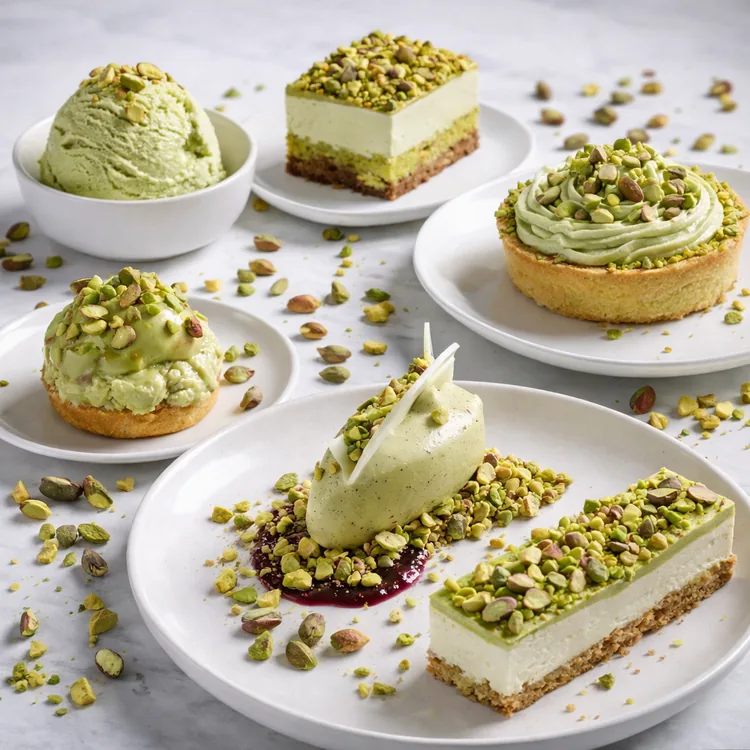
Introduction: why pistachio desserts remain a powerful menu category
Pistachio desserts occupy a rare position in modern foodservice and premium packaged foods. They feel familiar enough to be commercially safe, yet distinctive enough to signal quality, craft and indulgence. When used well, pistachio can communicate richness without heaviness, color without artificiality and luxury without becoming inaccessible.
That is why pistachio appears across so many dessert formats: gelato, semifreddo, pastries, layered cakes, filled chocolates, cookies, tarts, plated desserts, cream-based desserts, dessert spreads and seasonal specials. It works across European, Middle Eastern, Mediterranean and globally inspired menus. It also performs well in products designed for gifting, premium retail and private-label development.
For businesses working with Turkish pistachios, menu development is not only a creative exercise. It is also a product strategy question. The format of the pistachio, the grade selected, the visual target and the final texture all influence whether a dessert concept will feel premium, perform reliably and remain commercially practical.
Why Turkish Antep pistachios are especially relevant in dessert development
Turkish Antep pistachios are strongly associated with premium dessert culture. They are linked in the minds of many buyers and chefs with pastry traditions, confectionery craftsmanship and ingredient quality. This makes them highly relevant for dessert applications where pistachio is not only a flavor but also a selling point.
In menu language, pistachio tends to signal more value than many standard nut ingredients. Consumers often expect pistachio desserts to be richer, more artisanal and more refined. That expectation can justify premium positioning, but only when the ingredient quality and dessert design support the claim. A weak pistachio flavor, poor color consistency or low-quality topping can damage the entire concept.
For this reason, dessert development with pistachios should begin with a clear understanding of both flavor intent and product form. A pistachio dessert should not be built around a generic “green nut” idea. It should be built around a specific sensory and visual outcome.
What menu development really means in a pistachio context
Menu development is more than generating attractive dessert names. It involves aligning ingredient format, portion structure, production method, service model, visual identity and margin expectations. With pistachios, this becomes particularly important because the ingredient can appear in many forms, each with different operational and commercial implications.
A menu developer or buyer may need to decide between:
- Whole kernels for luxury garnish and visible inclusions.
- Sliced or slivered kernels for layered presentation and lighter topping coverage.
- Diced kernels for texture, coating or filling structure.
- Pistachio powder for bakery, dusting, sponge applications or dry mixes.
- Pistachio paste for creams, gelato, mousse, fillings and sauces.
Each choice influences taste, texture, color, cost, shelf behavior, portion control and how clearly the dessert communicates “pistachio” to the customer.
Why this topic matters commercially
From a commercial perspective, pistachio is one of the most useful premium dessert drivers because it works in both hero products and supporting elements. A business can create an entire seasonal program around pistachio, or use it strategically to elevate a limited number of signature items. In both cases, the ingredient has strong merchandising value.
For importers, distributors, processors and private-label buyers, this means pistachio dessert development is closely tied to demand planning and product architecture. Buyers need to understand not only what desserts are popular, but also which pistachio formats are likely to support repeatable, scalable and profitable concepts.
Questions that matter commercially include:
- Will the pistachio be visually prominent or mainly functional?
- Does the concept require premium whole kernels, or will cuts and paste perform better?
- Is the dessert intended for artisan service, retail display, frozen distribution or industrial production?
- How much pistachio intensity does the concept need to justify its premium position?
- Can the product be replicated consistently across batches and outlets?
Why this topic matters technically
Technical success in pistachio desserts depends on much more than flavor. The ingredient must work in the final system. That means thinking about fat content, visual finish, particle size, moisture interaction, processing method and where pistachio sits within the texture of the dessert.
For example, pistachio paste may be ideal in a gelato base, but not sufficient by itself if the final product also needs top-note crunch or decorative appeal. Diced kernels may provide texture in a tart filling, but if the cut size is too coarse, the mouthfeel may become awkward. Powder may integrate well into sponge or crumble systems, but the grade must fit the desired appearance and behavior.
Good dessert development connects these technical decisions to the menu promise. A pistachio dessert that sounds premium but eats flat, oily, too sweet or visually dull will underperform regardless of the concept name.
A practical framework for building pistachio dessert concepts
One useful way to develop a pistachio dessert is to treat the ingredient across five design roles. Not every dessert needs all five, but the framework helps structure creative thinking:
- Flavor base – pistachio as the dominant internal flavor, often through paste, cream or infused fat system.
- Texture layer – pistachio as crunch, crumb, praline, coating or inclusion.
- Visual signal – pistachio as garnish, dusting or visible green component.
- Value cue – pistachio as a premium menu marker that supports pricing and positioning.
- Story element – pistachio as a regional, artisanal or ingredient-led narrative.
The strongest concepts usually use pistachio in more than one of these roles. A pistachio tart, for example, may use paste in the filling, diced kernels in a praline layer and sliced kernels on top. This creates a more convincing dessert than using pistachio only as a decorative sprinkle.
Flavor pairing strategies for pistachio desserts
Pistachio is unusually flexible in dessert pairing. It works in soft dairy-driven systems, bright fruit applications, deeper caramelized profiles and floral concepts. Menu development becomes easier when pairings are grouped by direction rather than by isolated recipes.
1. Dairy-led pairings
Pistachio performs naturally with milk, cream, mascarpone, ricotta, yogurt and lightly tangy cultured notes. This makes it useful in gelato, panna cotta, mousse, cheesecake, diplomat cream and layered chilled desserts. Dairy helps round the pistachio flavor while supporting a smooth premium texture.
2. Chocolate pairings
Both white and milk chocolate are common companions to pistachio because they support richness and sweetness while allowing the nut character to remain clear. Dark chocolate can also work well, especially in more adult or bittersweet profiles, but the balance must be handled carefully so the pistachio is not overshadowed.
3. Pastry and cereal pairings
Shortcrust, puff pastry, phyllo-style pastry, choux, sponge, cookie dough, sable and crumble textures all offer strong platforms for pistachio. These systems help deliver textural contrast and allow pistachio to appear in fillings, dusting, inclusions or finishing layers.
4. Fruit pairings
Pistachio pairs especially well with fruits that bring brightness or perfume rather than excessive heaviness. Citrus, berry, cherry, apricot, fig and pear-style directions are often effective because they sharpen the overall dessert and keep the richness balanced.
5. Floral and aromatic pairings
Rose, orange blossom, vanilla, cardamom and light spice accents can turn pistachio into a more signature offering. These profiles are useful when the menu wants to feel more regional, refined or celebration-oriented.
6. Caramel and honey directions
Caramel, browned butter and honey-style sweetness create a warmer pistachio profile. This is effective in bakery, cookies, layered cakes and plated desserts where roundness and indulgence matter more than freshness.
Pistachio in plated dessert menus
For plated desserts, pistachio works best when it is layered rather than isolated. A single pistachio cream can be pleasant, but a composed dessert becomes much more memorable when pistachio appears in multiple textures.
Examples of plated dessert structures include:
- Pistachio mousse with citrus compote, sable crumble and pistachio praline.
- Pistachio financier with whipped cream, roasted fruit and pistachio crumb.
- Pistachio semifreddo with berry sauce, white chocolate shell and chopped kernels.
- Warm pistachio cake with vanilla cream, poached fruit and pistachio dust.
In plated service, the advantage of pistachio is that it reads as both flavor and finish. Even a relatively small amount of visible pistachio on the plate can reinforce the menu message and enhance perceived value.
Pistachio in bakery and pastry lines
Bakery and pastry offer some of the strongest opportunities for pistachio because the ingredient can be distributed across doughs, fillings, toppings and post-bake finishing. This allows developers to control both cost and visual impact.
Pastries and viennoiserie
Pistachio creams and fillings work especially well in laminated formats, filled croissants, Danish pastries, brioche-based items and rolled sweet breads. These formats benefit from pistachio because the nut adds luxury and strong display appeal without requiring a fully complex plated presentation.
Tarts and entremets
Pistachio is highly effective in tarts and layered pastry desserts. It can appear as baked cream, praline layer, sponge insert, whipped ganache component, glaze accent or decorative kernel finish. This makes it attractive for pastry counters where cross-section and top-view presentation both matter.
Cookies and bars
Cookies, shortbreads, blondies and layered bars provide a more accessible entry point into pistachio dessert development. Here, pistachio can be used to lift a familiar product into a premium tier. Chopped kernels, pistachio paste, dusting and pistachio-white chocolate combinations are particularly useful.
Pistachio in frozen desserts and gelato
Pistachio is one of the most iconic frozen dessert flavors because it combines creamy compatibility with strong premium recognition. For gelato, ice cream and semifreddo development, pistachio paste is usually the structural core, but visible inclusions and toppings can improve differentiation.
Ways to build more distinctive pistachio frozen desserts include:
- Pairing pistachio with ripples such as berry, caramel or citrus.
- Adding roasted pistachio pieces for texture contrast.
- Using pistachio-coated cones, shells or inclusions for visual reinforcement.
- Layering pistachio with pastry fragments, chocolate or sponge in tubs and dessert cups.
For premium retail and scoop-shop concepts, pistachio often performs best when the consumer can both taste and see the pistachio story clearly.
Pistachio in confectionery and chocolate menus
Pistachio has enormous value in filled chocolate, dragée, praline and giftable confectionery formats. It supports premium gifting, seasonal collections and celebratory packaging. Pistachio also works well in chocolate-driven dessert menus because it naturally bridges flavor, texture and color.
Useful formats include:
- Pistachio praline chocolates.
- Pistachio cream-filled bars.
- Pistachio-coated truffles.
- White chocolate and pistachio bark.
- Pistachio gianduja-style fillings.
- Layered pistachio dessert bars for premium retail.
In these products, ingredient choice matters greatly. The difference between a well-defined pistachio center and a generic nut-flavored filling is immediately noticeable to the customer.
Pistachio in layered and hybrid dessert formats
Modern dessert menus increasingly rely on cross-category ideas. Pistachio is ideal for hybrid development because it works across crunchy, creamy, frozen and baked systems. This allows developers to create products that feel novel without becoming difficult to execute.
Examples include:
- Pistachio cheesecake with baklava-inspired crunch layer.
- Pistachio tiramisu-style cup dessert with nut cream and sponge layers.
- Pistachio tart with gelato accompaniment for plated service.
- Pistachio dessert jars for grab-and-go premium retail.
- Pistachio profiteroles with cream filling and nut glaze.
These hybrids are useful because they allow a business to blend familiarity with innovation. The consumer recognizes the format, but the pistachio profile makes it feel more special.
How to use pistachio for visual impact
Visual design matters in pistachio desserts because the ingredient carries strong customer expectations. People expect pistachio desserts to look refined and ingredient-rich. A dessert described as pistachio but presented with little visible evidence may feel underwhelming.
Effective visual strategies include:
- Using sliced or chopped kernels where the consumer can clearly see them.
- Adding pistachio dust or powder as a finishing element.
- Building visible green contrast against cream, chocolate or fruit tones.
- Using pistachio in top layers rather than burying it entirely inside the dessert.
- Combining smooth pistachio cream with rougher pistachio crumb for visual depth.
Good visual design does not require excess quantity. Even controlled use of pistachio can create a strong premium impression when placed deliberately.
Texture design: one of the most important pistachio advantages
One of pistachio’s greatest strengths in desserts is textural flexibility. It can be creamy, crunchy, sandy, crumbly, smooth, coated, brittle or soft depending on format. This allows menu developers to create multi-layered eating experiences without relying on many unrelated ingredients.
Common textural roles for pistachio include:
- Smooth pistachio cream or mousse for richness.
- Pistachio praline or nut paste for depth.
- Chopped kernels for bite and contrast.
- Pistachio crumble or sable for dryness and crunch.
- Pistachio sponge or financier for baked softness.
The more intentionally these layers are combined, the more complete the dessert becomes. This is particularly important when building signature items with strong repeat appeal.
Seasonal menu ideas with pistachio
Pistachio adapts well to seasonal dessert menus because it can lean fresh, floral, rich or festive depending on the supporting ingredients. This makes it useful for limited-time menus, holiday programs and spring or celebration launches.
Spring direction
Use pistachio with lighter cream structures, berries, citrus and floral notes. Spring pistachio desserts often benefit from freshness and visual brightness rather than heavy richness.
Summer direction
Focus on gelato, chilled desserts, parfaits, frozen sandwiches, pistachio creams with stone fruit and cold plated formats with bright acid balance.
Autumn direction
Combine pistachio with caramel, baked pastry, roasted fruit, honey and warm spice accents. The goal is depth and comfort while keeping the pistachio profile clear.
Winter and festive direction
Use pistachio in chocolates, layered celebration cakes, rich tarts, premium cookies, gifting assortments and center-filled pastries. Festive desserts benefit from pistachio’s premium and celebratory associations.
Signature menu concept directions
For teams looking for strong concept territories rather than single recipes, the following directions are often commercially effective:
1. Classic premium pistachio
Clean, elegant, ingredient-led desserts built around pistachio, dairy and subtle sweetness. Suitable for luxury pastry, cafes and hotels.
2. Pistachio and fruit brightness
Concepts that pair pistachio with berry, citrus, apricot or cherry directions for a fresher and more modern profile.
3. Pistachio and chocolate indulgence
Dense, giftable and dessert-focused products where pistachio creates a premium counterpoint to white, milk or dark chocolate.
4. Pistachio pastry heritage
Desserts inspired by layered pastry traditions, nut fillings, syrup accents and structured textures. Useful when the brand wants a more regional or artisanal story.
5. Modern pistachio minimalism
Refined desserts with fewer components, cleaner plating and stronger emphasis on ingredient clarity, visual restraint and premium simplicity.
How to choose the right pistachio format for each dessert type
Whole kernels
Best when the pistachio needs to be clearly visible and signal premium quality. Whole kernels are often used for garnish, luxury pastry decoration and visible inclusions in high-value desserts.
Sliced or slivered kernels
Useful when the menu needs elegant surface coverage, lighter topping weight or more uniform decorative application. These formats work well on pastries, tarts and cakes.
Diced kernels
Ideal for fillings, coatings, praline layering, bakery toppings and products where texture is important but full kernels are not necessary.
Pistachio powder
Well suited to sponge, cake, crumble, dusting, dry blends and coating systems. Powder can also help bring pistachio flavor and visual identity into baked applications more evenly.
Pistachio paste
The preferred format for smooth systems such as creams, mousses, gelato, fillings, sauces and dessert bases. Paste allows pistachio flavor to spread more evenly throughout the product.
Cost, portioning and menu engineering considerations
Pistachio desserts are attractive commercially because they often support premium pricing. However, ingredient cost still needs to be managed carefully. Strong menu development does not mean using maximum pistachio in every element. It means using the right amount in the right place.
Good menu engineering strategies include:
- Using pistachio as a high-impact accent in visible areas.
- Combining paste and kernel formats to balance cost and sensory intensity.
- Creating desserts where pistachio functions as both flavor and visual value cue.
- Choosing formats that reduce waste and improve production consistency.
- Matching premium ingredient use to menu price and brand positioning.
A dessert can feel distinctly pistachio-led without using pistachio in every gram of the formula. Strategic concentration often creates a better result than overuse.
Operational considerations for chefs and manufacturers
Menu ideas only become commercially meaningful when they can be executed consistently. For restaurants, hotels, bakeries and dessert manufacturers, pistachio concepts should be designed with the actual production environment in mind.
Operational questions to consider include:
- Is the dessert assembled to order or produced in batch?
- Does the pistachio component hold well under refrigeration or freezing?
- Can the topping remain visually attractive through display and service?
- Does the chosen format support clean scaling across multiple outlets or production runs?
- Is the pistachio flavor still clear after baking, freezing or blending with dairy and sugar systems?
These decisions affect not only product quality but also labor load, consistency and complaint risk.
What importers and distributors should take from this topic
Importers and distributors often serve customers across several dessert categories at once. A pastry manufacturer, gelato producer and chocolate brand may each want pistachio, but not in the same form or quality profile. That is why category understanding matters.
Rather than treating pistachio as one generic item, distributors should think in application-led terms:
- Decoration-focused products for visible premium use.
- Texture-focused products for bakery and fillings.
- Smooth-format products for creams, gelato and dessert bases.
- Flexible commercial grades for broad industrial use.
This helps create more meaningful offers and improves communication with customers who may know the dessert they want to build, but not yet the exact pistachio format they need.
What food manufacturers should take from this topic
Manufacturers developing pistachio desserts for retail, foodservice or private-label programs need to define product goals early. A product designed for visible shelf impact may require different pistachio inputs than one designed for internal cream filling or frozen dessert base.
Manufacturers should align pistachio selection with:
- Declared flavor intensity.
- Visual standard of the final product.
- Texture expectation.
- Processing method.
- Portion economics.
- Repeatability across batches.
The more clearly these variables are defined, the easier it becomes to choose the right combination of kernels, cuts, powder and paste.
How to brief a supplier when developing pistachio dessert products
Supplier communication becomes easier when the buyer describes the final application clearly. Instead of asking only for “pistachio,” it helps to specify the role of the ingredient in the dessert system.
A useful brief may include:
- Final product type: pastry, gelato, chocolate, filling, spread, tart, cookie or plated dessert component.
- Whether pistachio is meant to be visible, structural, flavor-led or all three.
- Preferred format: whole, sliced, diced, powder or paste.
- Desired visual standard and color expectations.
- Target texture: smooth, crunchy, fine, rustic or decorative.
- Packaging and production scale requirements.
Clear briefs reduce misalignment and allow more accurate product recommendations.
Sample pistachio dessert idea bank
Below is a broad concept list that menu developers can adapt for pastry counters, plated service, premium retail or industrial inspiration:
- Pistachio cream tart with berry finish.
- Pistachio croissant with filled center and nut glaze.
- Pistachio cheesecake bar with crumb base.
- Pistachio mousse cake with white chocolate shell.
- Pistachio gelato cup with fruit ripple.
- Pistachio mille-feuille with cream layers.
- Pistachio cookie sandwich with soft filling.
- Pistachio brownie or blondie with chopped kernel top.
- Pistachio panna cotta with citrus garnish.
- Pistachio semifreddo with caramel notes.
- Pistachio chocolate bonbon collection.
- Pistachio dessert jar for premium grab-and-go.
- Pistachio layer cake with cream and praline.
- Pistachio-filled choux pastry.
- Pistachio cream roll with decorative slices.
The purpose of these ideas is not simply to increase menu count, but to show how many roles pistachio can play across different price points and service models.
Common mistakes in pistachio dessert development
Even strong concepts can underperform when a few common mistakes are not addressed:
- Using too little pistachio and expecting the dessert name alone to carry the experience.
- Using the wrong format such as relying on kernels when a smooth paste system is needed.
- Ignoring texture balance so the dessert feels flat or overly soft.
- Overloading sweetness and muting the pistachio identity.
- Forgetting visibility so the customer cannot see why the dessert is premium.
- Not designing for operations which leads to inconsistency in production or service.
Most of these issues can be corrected early if the dessert is developed around a clear role for pistachio rather than added at the end as an afterthought.
How Atlas uses this knowledge
Atlas uses academy content to make buyer conversations more useful and more precise. Articles like this help connect menu language with ingredient decisions. That is valuable because many dessert businesses know the style of product they want to create, but still need clarity on which pistachio format and quality profile best supports that goal.
By translating application needs into practical sourcing language, Atlas helps buyers think more clearly about product form, visual standard, texture expectations and how Turkish pistachios can fit within a wider dessert strategy.
Key takeaway
Menu development ideas for pistachio desserts are most effective when creativity and practicality work together. Pistachio is not just a decorative ingredient. It is a premium flavor, a texture tool, a visual signal and a strong menu story all at once. When the right pistachio format is matched to the right dessert structure, the result is more convincing to the customer and more effective for the business.
For buyers, chefs, brands and manufacturers working with Turkish Antep pistachios, the goal should be simple: build desserts where pistachio is clearly present, commercially justified and operationally repeatable. That is what turns a good concept into a durable menu success.
Frequently asked questions
Who is this article for?
This article is written for chefs, menu developers, importers, distributors, private-label buyers, food manufacturers and brands researching pistachio dessert applications.
Which pistachio format is best for dessert development?
The best format depends on the role of the ingredient. Whole or sliced kernels suit visible decoration, diced kernels support texture, powder fits bakery and finishing applications, and pistachio paste is often the preferred base for creams, fillings and frozen desserts.
Why do pistachio desserts often support premium pricing?
Pistachio carries strong premium associations and performs well visually. When the ingredient quality is clear and the dessert is properly structured, it can support a more elevated customer perception than many standard dessert flavors.
How can businesses make pistachio desserts more distinctive?
Distinctive pistachio desserts usually combine multiple pistachio roles such as cream, crunch, garnish and visual contrast rather than relying on a single flat flavor layer.
What should buyers tell a supplier before asking for samples or a quote?
Buyers should explain the final dessert application, the intended pistachio format, whether visual appearance matters strongly, and the desired texture, packaging and production scale.
Can Atlas help with sourcing?
Yes. Atlas helps connect dessert application needs with clearer sourcing discussions around Turkish pistachio formats, quality expectations and buyer requirements.
Related pages: Products, Applications, Quality Commitment, Contact Atlas