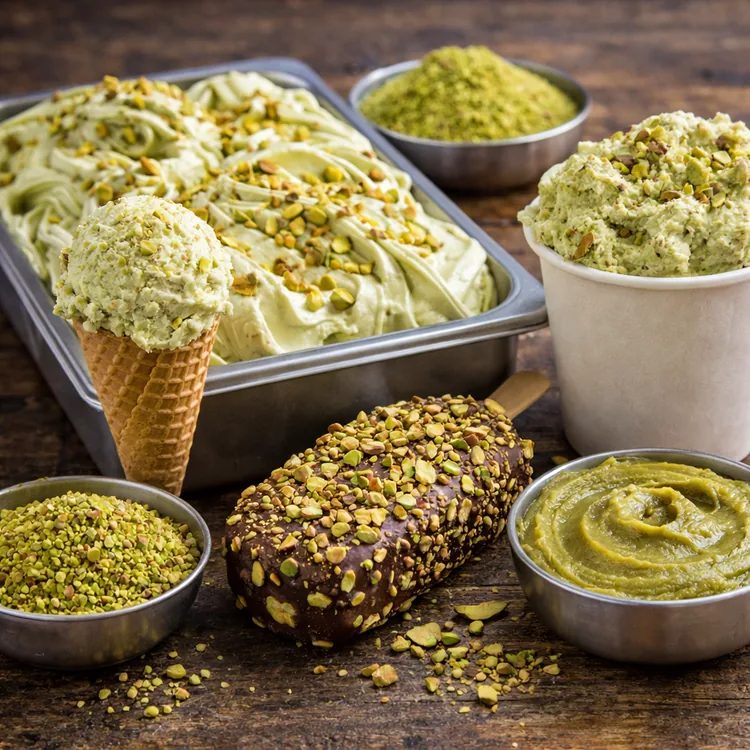
Introduction: why frozen dessert manufacturers look to pistachio for premium positioning
In frozen desserts, few ingredients communicate premium value as quickly as pistachio. The category already carries strong associations with indulgence, craftsmanship and upscale flavor profiles. When pistachio is used well, it can elevate a frozen dessert from a standard nut flavor into a more distinctive and commercially attractive concept. This is one reason pistachio remains especially relevant in gelato counters, premium retail tubs, dessert parlors, chocolate-coated frozen bars and seasonal specialty launches.
From a sourcing perspective, however, pistachio in frozen desserts is not a simple one-format ingredient decision. Buyers are not only deciding whether to use pistachio. They are deciding how pistachio should appear, how it should taste, how visible it should remain, whether it will act as a base flavor or as a topping, whether it should support a premium visual story and whether the ingredient format fits the intended manufacturing process.
This is why successful pistachio sourcing for frozen dessert applications starts with product architecture. The manufacturer needs to define the role of pistachio before choosing the ingredient form.
Where pistachio fits in frozen dessert development
Pistachio can play several different roles across frozen dessert categories. In some products it is the core hero flavor. In others it is a visual inclusion, a topping, a ripple, a coating component or a premium garnish. These roles may overlap in a single finished product, but they still require different sourcing logic.
Common frozen dessert applications include:
- Gelato and scoop ice cream where pistachio helps define the primary flavor identity.
- Premium retail tubs where pistachio must work both in taste and visual marketing.
- Frozen dessert bars where pistachio may appear in coatings, inclusions or decorative finishes.
- Swirls and ripples where pistachio provides contrast, indulgence and product differentiation.
- Toppings and garnish where visible cuts or kernels reinforce premium presentation.
- Layered desserts and frozen confectionery where pistachio contributes both flavor and visual texture.
Because these applications differ so much, the same pistachio ingredient is rarely ideal for all of them.
Why application fit matters more than broad product naming
Manufacturers often begin sourcing conversations with broad terms such as pistachio paste, pistachio powder or pistachio pieces. Those terms are useful starting points, but they are not enough by themselves. A pistachio paste used as a flavor base in gelato is a different commercial decision from a pistachio topping used on a premium frozen bar. A decorative cut intended for retail appearance is not the same as a fine ingredient intended to disappear smoothly into the base.
This means the real sourcing question is not simply “Which pistachio product do we need?” It is “What must pistachio do in this frozen dessert?” Once that answer is clear, decisions about ingredient form, visual profile, texture contribution, packaging and pricing become much more practical.
The core formats used in frozen dessert systems
Frozen dessert manufacturers typically work with several pistachio formats depending on how the product is built. The most relevant forms often include:
- Pistachio paste for primary flavor systems, cream bases and premium pistachio-centered recipes.
- Pistachio powder for more controlled dispersion in selected dry or mixed systems.
- Chopped pistachios or granules for inclusions, ripples, edge coatings or toppings.
- Whole or split kernels where visible premium identity matters.
- Slices or decorative cuts for high-visibility garnish and retail presentation.
- Pistachio-based cream or ripple concepts where the goal is indulgent layering and contrast.
Each of these formats serves a different purpose. That is why frozen dessert buyers should think in terms of function, not only product name.
Pistachio paste as a base ingredient
Pistachio paste is often the most important format in frozen dessert development because it provides concentrated pistachio identity in a form that can support flavor-driven concepts. In gelato, premium ice cream and pistachio-forward frozen desserts, paste may be a foundational ingredient rather than a secondary add-on. It can help define the product’s primary character, premium message and category relevance.
But pistachio paste is not a finished dessert concept by itself. It is a base input that still needs to fit the manufacturer’s product strategy. A buyer evaluating paste should think about what kind of final frozen dessert is being built: a classic scoop flavor, an artisanal gelato line, a branded retail tub, a layered indulgent dessert or a premium seasonal launch. The same paste may not create the same commercial result in every one of those systems.
Powder and finer ingredient systems
Pistachio powder can be useful in applications where a finer ingredient distribution is preferred. It may support certain structured recipe approaches, topping systems, dry mix-style integration or other product formats where a more even ingredient presence matters. In these cases, buyers tend to think less about individual visual pieces and more about overall integration, handling and commercial suitability for the specific frozen dessert concept.
Because frozen dessert systems vary significantly, powder should still be chosen with the actual application in mind. A retail-facing pistachio dessert concept may need a different visual logic from an industrially blended frozen product. The role of powder should therefore be defined clearly before comparison begins.
Granules, pieces and visible inclusions
Granules and chopped pistachios are especially relevant when manufacturers want a clear textural signal and visible premium identity in the final dessert. These formats can be used in premium scoop products, frozen bars, layered desserts, edge coatings, ripples with particulate character or high-visibility dessert finishes. In these applications, pistachio is no longer only a flavor. It becomes part of the visual and textural experience.
Inclusion size matters because it changes both perception and performance. Smaller pieces may distribute more evenly and create broader visual spread. Larger pieces may communicate stronger premium nut presence but need to be justified by the finished concept. The right choice depends on how the pistachio should appear to the end customer.
Visible kernels and decorative cuts in premium concepts
Whole kernels, split kernels, slices and decorative cuts are often most relevant where the frozen dessert is designed to look visibly premium. This is especially true in artisanal gelato service, premium retail launches, dessert bars, plated frozen desserts and gifting-oriented concepts. In these cases, pistachio appearance helps justify the product’s market position.
Visible formats are typically chosen when the brand wants the consumer to see pistachio immediately and interpret it as a sign of ingredient richness, craftsmanship or premium quality. This kind of application usually places greater importance on visual selectivity, cut profile and consistency from batch to batch.
Why pistachio works especially well in gelato and premium ice cream
Gelato and premium ice cream are particularly suitable for pistachio because both categories tend to reward depth of flavor, recognizable ingredient identity and premium storytelling. Pistachio fits naturally into that space. It can be positioned as classic, indulgent, Mediterranean-inspired, gourmet or origin-driven, depending on the product concept and brand strategy.
From a commercial perspective, this makes pistachio one of the most versatile premium ingredients in the frozen aisle and in scoop-service environments. However, the strength of the concept still depends on matching the ingredient form to the intended sensory and visual outcome. A pistachio flavor concept with no visible identity may fit some brands well. A visibly rich pistachio gelato may fit others better. The right answer depends on the finished concept, not a universal rule.
Frozen dessert bars and coated products
Frozen bars and coated products create another important use case for pistachio. Here the ingredient can act as a flavor layer, a coating inclusion, a textural signal or a decorative visual element. Pistachio pieces may appear on the exterior coating, within the ice cream itself or in layered interior structures. In all of these roles, cut size and visual impact matter more than they do in a purely blended base.
Buyers in this segment should think carefully about where pistachio will appear and what it needs to communicate. A premium bar may use pistachio to reinforce indulgence and premium identity at first glance. In that case, appearance and inclusion behavior both become important commercial considerations.
Ripples, swirls and layered dessert concepts
Pistachio can also be highly effective in ripple and swirl concepts, where it creates contrast within a frozen base and helps build a more indulgent premium product architecture. In layered products, pistachio may act as a flavor lane, a visual accent or a differentiated element that separates the product from more generic frozen dessert offerings.
This kind of use is especially relevant to premium retail, foodservice desserts and innovation-led product development. Since the pistachio remains visible in a different way than a fully blended base ingredient, visual tone and product style can matter more strongly here.
Texture matters as much as flavor
In frozen desserts, pistachio is often selected not only for taste but for the experience it adds. Texture can be part of that experience in several ways. A fully integrated pistachio base may create a smooth, luxurious feel. Granules or inclusions may create bite and contrast. Decorative toppings may create a more crafted finish. Each route changes the product experience and therefore the commercial story.
This is why manufacturers should think about pistachio format in relation to the exact textural role it needs to play. A smooth premium gelato base and a crunch-led coated bar are both pistachio products, but they are built from different texture strategies.
Color and visual premium value
Pistachio is one of the few ingredients in frozen desserts that can carry significant visual meaning. Consumers often associate visible pistachio tone with premium quality and richer nut character. In scoop cabinets, retail packs, dessert photos and point-of-sale material, appearance can therefore influence perceived value well before the first spoonful.
This makes visual profile especially relevant in concepts where pistachio remains visible. For premium tubs, artisan gelato, layered dessert products and visible topping systems, color and visual style may support pricing, premium messaging and menu appeal. In more blended or less visible systems, the commercial importance of color may be lower, but it can still influence buyer perception during evaluation.
Why “premium” must be defined clearly
Many buyers want pistachio to make a frozen dessert feel more premium, but premium can mean different things in different markets. For one brand, premium may mean a richer pistachio flavor base. For another, it may mean visible nut pieces and strong cabinet appeal. For another, it may mean a gourmet Turkish Antep pistachio story combined with refined packaging and higher retail pricing.
Because of this, the word premium is only useful when connected to actual product decisions. Buyers should clarify whether premium in their case refers to taste intensity, appearance, origin, visible inclusions, indulgent structure, private-label positioning or all of these together. Once that is clear, the ingredient choice becomes easier to define.
Packaging and format strategy for frozen dessert manufacturers
Pistachio ingredient selection should also be aligned with how the finished product will be produced and packed. A central factory manufacturing large batches for retail distribution may have different priorities from an artisan gelato producer or a dessert chain. Ingredient handling, warehouse logic, pack sizes and use rhythm can all affect which pistachio format makes the most sense.
That is why packaging and handling are part of the sourcing conversation. Buyers should think not only about the product specification but also about whether the ingredient format arrives in a way that supports storage, dosing and production workflow efficiently.
Private-label frozen dessert opportunities
Pistachio can be especially useful in private-label frozen dessert ranges because it gives retailers and distributors a premium flavor story that can differentiate their assortment. A private-label pistachio gelato, premium tub, indulgent bar or seasonal dessert launch can occupy a higher-value position than more conventional flavors when the concept is executed well.
However, private-label success depends heavily on consistency. Since the product carries the buyer’s brand rather than the ingredient supplier’s identity, variation in visual style, pistachio presence or overall product feel becomes a direct brand risk. Buyers in this segment should therefore pay close attention to repeatability and sample-to-production alignment.
Why origin can matter in this category
Turkish Antep pistachios can be commercially attractive in frozen dessert applications because origin can reinforce the premium story. In categories like gelato, dessert bars and gourmet retail tubs, origin can support a more specialized and authentic product narrative. This can be valuable where consumers respond positively to premium ingredient storytelling.
At the same time, origin should support the concept rather than replace product discipline. A strong origin story cannot compensate for the wrong format, the wrong texture role or a weak visual result. The strongest frozen dessert concepts combine ingredient origin with sound application fit.
Who typically buys pistachio for frozen dessert applications?
This category is relevant to a broad range of B2B buyers, including:
- Gelato producers looking for premium flavor bases and visible inclusions.
- Ice cream manufacturers building branded or private-label pistachio lines.
- Frozen bar brands using pistachio in coatings, inclusions or premium center concepts.
- Dessert manufacturers producing layered frozen desserts or spoonable premium products.
- Importers and distributors serving regional frozen dessert producers.
- Private-label buyers developing high-value pistachio products for retail or foodservice channels.
Each of these buyers may need a different pistachio format even when working from the same broader ingredient family.
How to compare supplier offers more effectively
Frozen dessert manufacturers should compare pistachio offers using an application-led framework rather than on generic price alone. A better comparison includes:
- the exact role of pistachio in the final product,
- whether the ingredient is a base, inclusion, topping or decorative element,
- how visible the ingredient will be to the consumer,
- the importance of visual profile and premium positioning,
- the texture contribution required,
- packaging and production handling fit, and
- expected consistency across future supply.
When those points are defined, price becomes easier to interpret because the buyer is comparing ingredients that actually serve the same commercial purpose.
Sampling should reflect the real frozen application
Sample review is especially important in frozen dessert development because pistachio may behave differently depending on how it is used. A sample that looks attractive in a tray may create a different effect in a gelato base, a retail tub, a frozen bar coating or a layered dessert. This is why buyers benefit most when they evaluate the ingredient in the actual frozen application whenever possible.
That helps answer practical questions: Does the pistachio contribute the right visual identity? Does it support the desired premium feel? Does it align with the frozen dessert’s commercial role? Sample review is most useful when it happens close to the real product environment.
Common mistakes buyers make in this category
Several recurring sourcing mistakes reduce efficiency in frozen dessert projects:
- choosing pistachio format before defining the product role,
- assuming pistachio paste alone defines the finished concept,
- using the same ingredient logic for base flavor systems and visible inclusions,
- overpaying for visual selectivity in applications where the ingredient is not seen,
- under-specifying visible premium concepts,
- ignoring consistency in private-label or recurring branded programs, and
- judging samples outside the real frozen dessert context.
Most of these problems come from insufficient product definition rather than lack of ingredient potential.
Questions buyers should answer before requesting quotations
Before approaching suppliers, buyers should ideally answer the following:
- Is pistachio the core flavor or a supporting premium element?
- Will the ingredient be fully blended, partially visible or highly visible?
- Is the concept a gelato, retail tub, frozen bar, layered dessert or topping-led product?
- Does the product need paste, powder, granules, kernels or decorative cuts?
- How important are visual tone and premium presentation?
- What texture role should pistachio play in the finished product?
- Is the program branded, foodservice or private label?
- What pack sizes and handling logic fit the production model?
- How important is repeatability across future runs?
- What information will help the supplier recommend the most suitable format?
Suggested buyer brief for frozen dessert applications
A useful inquiry often includes:
- destination market and frozen dessert category,
- the intended role of pistachio in the product,
- whether the ingredient is for a base, topping, inclusion, ripple or garnish,
- the target product position such as mainstream, premium or gourmet,
- any expectations around visible appearance,
- packaging and handling preferences,
- estimated production scale or order rhythm, and
- whether the concept is branded, artisanal or private label.
Clearer briefs lead to clearer commercial proposals and more relevant sample discussions.
Commercial summary table
| Ingredient Area | Why It Matters | What Frozen Dessert Buyers Should Check |
|---|---|---|
| Application Fit | Different frozen products require different pistachio logic | Define whether pistachio is a base flavor, inclusion, topping, ripple or decorative element |
| Format Selection | Paste, powder and pieces serve different product roles | Choose the format that matches the actual frozen dessert architecture |
| Visual Profile | Visible pistachio can support premium positioning | Assess whether the ingredient will be seen clearly by the end customer |
| Texture Role | Pistachio contributes more than flavor in frozen desserts | Decide whether the goal is smooth richness, inclusion bite or decorative finish |
| Packaging | Affects storage, dosing and production handling | Make sure the ingredient format and pack size fit the manufacturing workflow |
| Consistency | Important in branded and private-label programs | Ask how repeatable the approved ingredient profile is across future supply |
| Commercial Position | Premium means different things in different frozen categories | Clarify whether premium refers to flavor, visibility, origin, indulgence or all of these together |
Atlas perspective
At Atlas, academy content is designed to turn broad product interest into clearer commercial thinking. Frozen desserts are a good example of why that matters. Pistachio can be one of the strongest premium ingredients in the category, but only when the manufacturer defines its role clearly. The more precisely the buyer explains whether pistachio is expected to flavor, decorate, differentiate or visually elevate the product, the more useful the sourcing conversation becomes.
That clarity helps buyers compare offers more accurately, test samples more meaningfully and align product development with supply reality. Better product definition usually leads to stronger frozen dessert concepts.
Final takeaway
Pistachio is a premium ingredient in frozen desserts because it combines flavor identity, visual value and strong category differentiation. But the best results do not come from choosing pistachio in general. They come from choosing the right pistachio format for the right frozen application. A paste-led gelato concept, an inclusion-led premium tub and a topping-driven frozen bar all require different ingredient logic.
For buyers working with Turkish Antep pistachios, the commercial opportunity is strongest when application, format, texture, visibility and packaging are aligned from the beginning. Better sourcing decisions lead to better finished products, clearer premium positioning and more reliable long-term development in the frozen dessert category.
Frequently asked questions
Who is this guide written for?
This guide is intended for importers, distributors, gelato producers, ice cream manufacturers, private-label teams and other B2B buyers researching Turkish pistachio ingredients for frozen dessert applications.
Why is pistachio considered a premium ingredient in frozen desserts?
Because it contributes distinctive nut identity, strong menu appeal, visible premium cues and a more differentiated flavor concept than many standard frozen dessert ingredients.
Which pistachio format is best for frozen desserts?
There is no single best format. The right choice depends on whether the pistachio is being used as a base flavor, a visible inclusion, a topping, a ripple or a decorative finish.
Is pistachio paste enough on its own to define the final concept?
No. Pistachio paste can be a key base ingredient, but the final product still depends on how the concept is built, positioned, packaged and presented to the customer.
Do visible inclusions matter commercially?
Yes. In premium frozen dessert products, visible pistachio pieces can support perceived richness, indulgence and premium value, especially in retail and foodservice presentation.
Why should buyers test samples in the real frozen application?
Because the ingredient may look or perform differently once placed inside a gelato, ice cream, frozen bar or layered dessert concept. Real application testing gives a more useful commercial answer.
What should a buyer include in an inquiry?
A strong inquiry should mention the frozen dessert category, the intended role of pistachio, required format, visibility expectations, packaging needs and whether the concept is branded or private label.
How can Atlas help?
Atlas helps buyers define product requirements more clearly and connect Turkish pistachio ingredient choices to the real commercial needs of frozen dessert development.