Introduction: why this category matters in modern pistachio trade
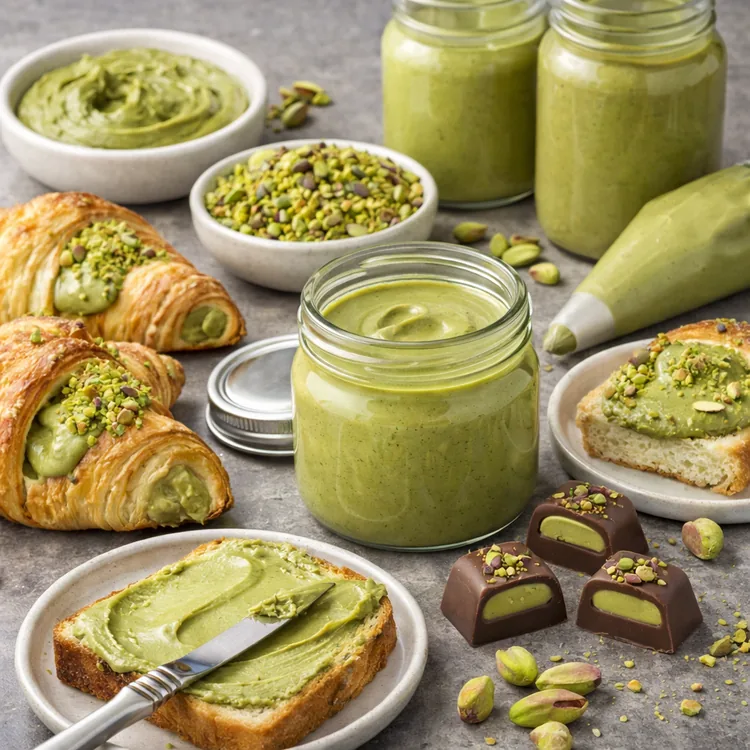
Pistachio creams, fillings and spreads have become one of the most commercially interesting segments in value-added pistachio business because they connect premium nut identity with broad consumer use. They can appear in bakery products, confectionery, dessert systems, chocolate centers, retail jars, foodservice formats and seasonal gift lines. In each case, the pistachio is no longer only a raw ingredient. It becomes part of a finished concept with its own market position, texture expectation and visual identity.
That shift changes the buying conversation. A pistachio cream concept is not evaluated in the same way as a snack pistachio, a kernel pack or a simple bulk ingredient. The buyer needs to think about spreadability, filling performance, premium appearance, sweetness balance, pack format and how the product will behave in the final commercial environment. This is why sourcing decisions in this segment should begin with the real application rather than with generic product names alone.
For Turkish Antep pistachio supply, this category can be especially attractive because origin story, premium nut identity and culinary association can all support higher-value product development when the underlying concept is defined clearly.
What counts as a pistachio cream, filling or spreadable concept?
In practical B2B terms, these product ideas overlap, but they are not identical. A pistachio cream usually refers to a smooth pistachio-based product with a rich, creamy character intended for use in confectionery, bakery, desserts or retail concepts. A pistachio filling is typically designed for internal use inside croissants, pastries, chocolates, cookies, cakes or layered desserts where flow, body and product stability matter. A spreadable concept usually points toward a consumer-facing or foodservice-oriented product meant to be applied with a knife or spoon onto bread, pastry, crepes, desserts or breakfast items.
Although the language sometimes overlaps in the market, the commercial logic differs. A filling may prioritize process fit and hold performance inside another product. A spread may prioritize consumer texture, jar appeal and repeat purchase. A pistachio cream may sit between the two, depending on whether it is positioned as an ingredient, a premium retail product or a semi-finished concept for downstream use.
This is why the same pistachio base material can lead to very different commercial products. The final value depends on how the concept is intended to perform.
Why these concepts are commercially attractive
Pistachio creams and spreadable products are attractive because they allow buyers to build more value around the ingredient than a simple raw nut sale would allow. They can support premium gifting, dessert-driven branding, breakfast and bakery applications, chocolate innovation, foodservice versatility and private-label differentiation. In many markets, pistachio already carries a premium perception, so when the product is presented in a creamy or filled format, that premium cue can be translated into a broader retail or foodservice concept.
For importers and private-label buyers, this category is also attractive because it is flexible. A single pistachio-based concept can be adapted into multiple commercial formats, such as a consumer jar, a bakery filling, a pastry center, a premium dessert topping or a foodservice tub. That flexibility makes the category commercially dynamic, but it also means product definition must be precise.
The first rule: define the final application before discussing the product
The most important principle in this category is to start with the end use. A cream intended for a filled croissant is not the same as a cream intended for a retail jar. A spreadable breakfast concept is not the same as a pistachio center for molded confectionery. A product that performs well as a bakery filling may be commercially weak as a premium shelf-ready spread, even if the pistachio content is attractive on paper.
Buyers should therefore define the real application first. Will the product be used in bakery manufacturing, chocolate and confectionery, dessert finishing, hotel breakfast service, retail packaged consumer sale or foodservice distribution? Once that is clear, texture expectations, packaging logic, visual priorities and commercial value become easier to align.
Without that clarity, the conversation often becomes too general. Buyers compare products that are not directly comparable and suppliers respond with broad offers that do not fully address the real concept.
Why pistachio paste is important, but not the whole story
Pistachio paste is often the core building block in this category because it provides pistachio identity in a concentrated and workable form. However, pistachio paste should not be confused with a finished cream or spread. It is better understood as a key input or intermediate base that can move into different commercial directions depending on the intended product concept.
A buyer may look at pistachio paste and assume that the commercial decision ends there. In reality, the larger decision is how that pistachio base will be translated into the target application. Will the concept need a smoother feel, a more premium visible tone, a specific filling behavior, a jar-ready texture, or a more indulgent dessert profile? These questions sit beyond paste alone.
That is why buyers in this segment should evaluate pistachio paste as part of a wider product architecture rather than as a complete answer by itself.
Core product paths in this category
Most B2B pistachio cream and filling programs tend to move in one of several commercial directions:
- Bakery fillings for croissants, donuts, pastries, cookies, laminated goods and cakes.
- Chocolate and confectionery centers for pralines, bars, truffles and premium filled sweets.
- Retail spreads for jars, tubs and breakfast or dessert-focused consumer lines.
- Foodservice formats for hotels, cafés, dessert chains and pastry kitchens.
- Dessert toppings and layered applications where pistachio cream supports premium finishing or indulgent presentation.
- Private-label concept ranges where the same pistachio base may appear across multiple pack sizes or sales channels.
Each of these routes requires different thinking around viscosity, texture, visible appearance, packaging and use environment.
Bakery fillings: a different commercial logic
Bakery-focused pistachio fillings are usually judged by how they perform inside another product. The buyer cares not only about pistachio taste or color, but about how the filling behaves in croissants, pastries, laminated doughs, filled cookies or dessert layers. The finished bakery item may need the filling to remain attractive after production, provide a premium pistachio signal and align with a specific sweetness or indulgence profile.
In these applications, the cream or filling is not the final retail product on its own. It is one performance layer inside a larger pastry or bakery system. That means buyers often think more about consistency, process suitability, handling practicality and how well the pistachio concept supports the finished bakery identity.
Bakery buyers therefore benefit from evaluating pistachio concepts in the actual bakery application, not only in isolated sample jars or sample trays.
Chocolate and confectionery fillings: premium perception and center performance
Pistachio fillings for chocolates, pralines and confectionery often sit in a more premium visual and sensory space. The pistachio may function as a hero flavor, a luxury center concept or a differentiated nut-based filling inside a premium confectionery line. In these applications, the filling is often expected to support a more refined consumer impression.
That changes the sourcing logic. A confectionery buyer may care more about visible tone, premium identity, center smoothness and how the pistachio works within a chocolate flavor system. The concept may also be positioned for gifting, seasonal launches or specialty retail, which makes consistency and product presentation especially important.
Spreadable retail concepts: consumer-facing expectations
Spreadable pistachio products sold in jars or tubs create a different commercial challenge because the product must succeed as a standalone consumer item. The buyer is no longer only building an ingredient system. The buyer is building a retail proposition. That means the pistachio concept must perform on shelf, in the pack, at first opening and during repeated consumer use.
Retail spreadable concepts usually require strong alignment between texture, visual tone, premium positioning, packaging and brand message. The consumer will notice how the product looks in the jar, how easily it spreads, how indulgent it feels and whether the pistachio character seems authentic and worth the price. This is a very different decision from buying a bulk bakery filling.
Foodservice and HORECA uses
Hotels, cafés, pastry shops and dessert operators often need pistachio creams or fillings in formats that support repeated kitchen use, easy portioning and consistent premium presentation. These buyers may value operational practicality more than retail-facing packaging aesthetics, but they still need the product to look and feel commercially strong in service.
In foodservice, the pistachio cream may be used in breakfast stations, plated desserts, pastry finishing, layered sweets, beverage topping concepts or filling applications. Because the product is used repeatedly by professionals, consistency and handling logic tend to matter strongly.
Texture is one of the main buying decisions
Texture is central in this category because it shapes how the product is experienced, applied and positioned. A bakery filling may need a different body from a retail spread. A confectionery center may need a different feel from a dessert topping. A premium consumer jar may need a texture that feels indulgent and repeatable in domestic use rather than highly process-oriented.
This is why buyers should discuss texture in commercial terms, not only sensory terms. The relevant question is not simply whether the product feels smooth or rich. It is whether the texture suits the actual job the product must do in the intended application. Texture is both a product-quality issue and a functional-use issue.
Spreadability versus filling behavior
It is useful to separate spreadability from filling behavior because they are related but not identical. Spreadability is usually judged by how easily and attractively the product can be applied by the end user or foodservice operator. Filling behavior is usually judged by how well the concept works inside a pastry, dessert or confectionery system. Some products can do both, but many concepts are optimized more strongly in one direction than the other.
That is why a buyer should not assume that a pistachio cream designed for one use can automatically be repositioned into another use without compromise. The commercial success of the concept often depends on staying honest about its primary application.
Color and visual identity in pistachio creams
Color can be highly relevant in pistachio creams and spreadable concepts because the final product is often judged visually before it is tasted. In jars, tubs, chocolate reveals, pastry centers and dessert layers, the buyer or consumer may interpret the visible tone of the concept as a sign of quality, pistachio intensity or premium positioning. This is especially true when pistachio is being marketed as a hero ingredient rather than as a background flavor.
For this reason, buyers often pay attention to how the underlying pistachio material contributes to the final visual character of the concept. However, the right visual profile still depends on the intended market position. A premium retail spread may value visual appeal differently from an industrial filling used in a less visible role.
Flavor balance and category positioning
Pistachio creams and fillings are rarely judged by pistachio character alone. They are judged by balance. A product may need to feel rich, premium, dessert-like, breakfast-friendly, luxurious, approachable or confectionery-driven depending on the category. This means buyers should consider how the pistachio identity will interact with the rest of the concept rather than focusing only on the pistachio base in isolation.
Commercially, this matters because different categories reward different taste expectations. A premium gifting chocolate center may accept a different flavor expression from a family breakfast spread. A bakery filling may need to fit broader consumer tastes, while a gourmet pistachio jar may aim for a more specialized premium audience.
Packaging is part of the concept, not an afterthought
In this category, packaging plays both a protective and a commercial role. For bulk industrial fillings, packaging must support handling, storage and production practicality. For retail spreadable concepts, packaging must also communicate value, convenience and category fit. For foodservice, packaging may need to support repeated opening, controlled use and operational efficiency.
This is why packaging should be discussed early. A strong product in the wrong packaging may underperform commercially or create operational inconvenience. A good concept becomes stronger when the pack format supports the way the product will actually be used.
Private-label opportunities in spreadable and filled concepts
This category is especially relevant to private-label development because pistachio spreads and filled concepts can help buyers build premium lines with strong consumer recognition. Private-label retailers, distributors and specialty food brands may use pistachio-based products to create gourmet breakfast lines, dessert-oriented gift items, pastry fillings, baking aids or premium nut spreads under their own branding.
However, private-label success depends on consistency. Since the product is sold under the buyer’s own brand, variability in texture, appearance or overall concept quality becomes a brand problem quickly. That makes specification discipline, sampling and repeatability especially important in private-label pistachio cream programs.
Who typically buys these concepts?
Pistachio creams, fillings and spreadable concepts are relevant to several buyer groups:
- Bakery and pastry manufacturers using pistachio fillings or layered sweet concepts.
- Chocolate and confectionery companies building pistachio centers, creams and premium filled products.
- Retail spread brands developing pistachio jar or tub lines.
- Private-label buyers creating premium nut-based concepts under their own brand.
- Foodservice distributors and dessert chains requiring practical professional-use formats.
- Importers and distributors serving regional processors or premium grocery channels.
These buyers may all work from the same pistachio origin base, but they often need very different product definitions.
Why Turkish Antep pistachios can support premium concept development
Turkish Antep pistachios can be commercially attractive in this segment because the origin can support strong premium storytelling and culinary differentiation. In categories such as gourmet spreads, pastry fillings and premium confectionery centers, origin identity can help the final product feel more specialized and more premium to the buyer or end customer.
That said, origin alone is not the product concept. The final success still depends on whether the pistachio input aligns with the intended texture, visual profile, packaging model and category expectations. The most effective products use origin as a commercial advantage, but not as a substitute for specification clarity.
How buyers should compare supplier offers
Supplier comparison in this category should go beyond headline price. A stronger comparison framework includes:
- fit with the intended application,
- texture and handling suitability,
- visual profile and premium fit where relevant,
- packaging practicality,
- consistency and repeatability across likely future supply,
- commercial fit with the target customer segment, and
- clarity of product definition rather than vague broad descriptions.
A concept that looks attractive in general terms may still be weak value if it does not suit the real job it is meant to do.
Sampling should reflect the real end use
Because these products sit so close to finished concept design, sample review is especially important. Buyers should avoid evaluating a pistachio cream only in isolation when the final use is inside a pastry, a praline, a jarred spread or a dessert layer. A more useful approach is to review the sample in the real or near-real application whenever possible.
That helps buyers answer the questions that matter commercially: Does the concept feel right in the final format? Does the texture support the use case? Does the visual tone support the product position? Does the pistachio character feel consistent with the intended market? A sample can only answer those questions fully when placed in a realistic context.
Common buying mistakes in this category
Several recurring mistakes reduce sourcing efficiency in pistachio cream and filling projects:
- starting with a generic pistachio paste request without defining the final application,
- assuming a retail spread and a bakery filling can use the same concept without adjustment,
- judging the product only on sample taste rather than commercial fit,
- treating packaging as a late-stage decision,
- ignoring consistency even though the product will be branded or consumer-facing,
- comparing offers only on price without defining texture or use case, and
- underestimating how strongly visual tone and concept positioning affect buyer perception.
Most of these errors come from incomplete product definition rather than from poor ingredient potential.
Questions buyers should answer before requesting quotations
Before asking for commercial offers, buyers should ideally clarify the following:
- Is the concept intended for bakery, confectionery, retail, dessert or foodservice use?
- Will the product function mainly as a filling, a spread or a premium cream concept?
- How important are visual tone and premium appearance?
- What packaging format fits the target business model?
- Will the product be sold to consumers directly or used as an industrial ingredient?
- How important is texture to the final application?
- Does the buyer need a professional-use bulk format or a retail-ready concept?
- How critical is repeatability across future lots or launches?
- What market position will the product occupy: mainstream, premium, gourmet or private label?
- What information should be included to help the supplier recommend the right concept path?
Suggested buyer brief for pistachio creams and spreadable products
A useful supplier brief often includes:
- destination market and end-use category,
- whether the product is for bakery, dessert, confectionery, retail or foodservice,
- whether the concept is a filling, cream or spread,
- target market position such as mainstream, premium or gourmet,
- packaging expectations,
- estimated volume or project scale,
- any priorities around visual profile, and
- the commercial role the pistachio concept should play in the final product.
Clearer briefs lead to clearer product discussions and more relevant sample evaluation.
Commercial summary table
| Concept Area | Why It Matters | What Buyers Should Check |
|---|---|---|
| Application Fit | Determines whether the concept works as a filling, spread or cream | Define the final use before comparing products |
| Base Ingredient Logic | Pistachio paste is important but not the whole finished concept | Assess how the base material supports the intended commercial product |
| Texture | Shapes use experience, handling and final product performance | Decide whether the concept needs spreadability, filling body or dessert-style richness |
| Visual Profile | Supports premium positioning in visible consumer-facing products | Review whether the appearance matches the target market and pack style |
| Packaging | Affects both protection and commercial usability | Choose packaging that fits retail, foodservice or industrial use |
| Consistency | Critical in branded and private-label programs | Ask how repeatable the approved concept is across future production cycles |
| Commercial Position | Different categories require different product definitions | Clarify whether the concept is mainstream, premium, gourmet or professional-use |
Atlas perspective
At Atlas, academy content is designed to make sourcing conversations more practical and more commercially useful. Pistachio creams, fillings and spreadable concepts are a strong example of why product definition matters. Buyers often begin with a broad idea such as pistachio cream or pistachio spread, but the more useful question is what the concept is expected to do in the final business model.
When application, packaging, visual expectations and category role are defined clearly, supplier discussions become more precise, sample evaluation becomes more meaningful and commercial comparison becomes more realistic. Better questions usually lead to better product outcomes.
Final takeaway
Pistachio creams, fillings and spreadable concepts should be sourced as complete commercial ideas, not as simple ingredient labels. The strongest results come when buyers define the intended application first, then choose the pistachio base, texture profile, packaging logic and product position that best support that use. A concept that works beautifully in bakery may not be ideal for retail. A premium jar concept may not behave like an industrial filling. The real value comes from matching the concept to the job.
For buyers working with Turkish Antep pistachios, the opportunity in this category is significant. Origin can support premium storytelling, but the real commercial success comes from disciplined product definition, realistic evaluation and supply decisions aligned with the final market. Better information leads to better concepts, better communication and stronger long-term sourcing outcomes.
Frequently asked questions
Who is this guide written for?
This guide is intended for importers, distributors, bakery companies, confectionery producers, dessert brands, private-label teams and other B2B buyers researching Turkish pistachio ingredients for creams, fillings and spreadable concepts.
What is the difference between a pistachio cream and a pistachio filling?
A pistachio cream is a broader concept often associated with smooth premium texture, while a pistachio filling is usually defined more directly by how it performs inside another finished product such as a pastry, dessert or confectionery item.
Is pistachio paste the same as a finished pistachio spread?
No. Pistachio paste is generally a base or intermediate ingredient, while a finished spread is a more complete commercial concept shaped by texture, application, packaging and positioning.
Why should buyers define the application first?
Because the right product logic changes depending on whether the concept is meant for bakery use, confectionery centers, consumer spreads, dessert applications or foodservice distribution.
Can the same pistachio concept work for both retail and industrial use?
Sometimes, but not always. The required texture, packaging and commercial fit may differ enough that separate concept definitions are more appropriate.
What matters most when comparing supplier offers in this category?
The most important points are application fit, texture suitability, visual profile where relevant, packaging logic, repeatability and overall alignment with the intended market position.
What should a buyer include in an inquiry?
A strong inquiry should mention the end-use category, whether the concept is a filling, cream or spread, the target market position, packaging expectations and any important performance priorities.
How can Atlas help?
Atlas helps buyers define product requirements more clearly and connect pistachio sourcing discussions to the real commercial needs of bakery, confectionery, retail and foodservice concepts.