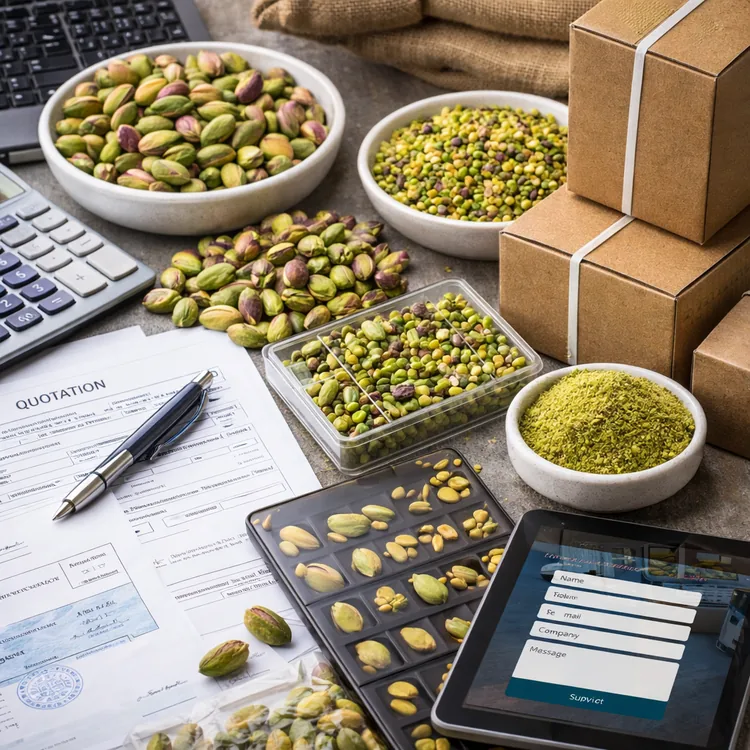
Introduction: why FAQ content matters in B2B pistachio sales
Most B2B buyers do not contact a supplier the moment they land on a website. First they scan. Then they compare. Then they look for signals that the supplier understands their use case. In pistachio trade, that process usually includes questions about product type, application fit, packaging, quality consistency, customization, documents, lead time, order logic and whether the supplier can support the buyer’s market.
When a website answers those questions clearly, the buyer can move forward with more confidence. When the site remains vague, the buyer often leaves, delays the inquiry or contacts a competitor whose information feels easier to trust. That is why FAQ content is not only an SEO feature. It is also a conversion tool. It helps reduce friction between first interest and commercial action.
For Turkish pistachio suppliers, this is especially important because many buyers are international, comparison-driven and often evaluating several suppliers at once. A strong FAQ page can help a supplier look more prepared, more relevant and easier to work with before any direct contact begins.
What “conversion-oriented FAQ content” actually means
Not every FAQ page helps convert leads. Some pages are too generic. Some answer trivial questions that buyers do not actually care about. Others repeat information from the homepage without resolving real doubts. A conversion-oriented FAQ page is different. It is written around buyer hesitation, buyer qualification and buyer action.
In practical terms, this means the questions should reflect what serious prospects are thinking before they contact a pistachio supplier. They want to know whether the supplier handles the right product forms, whether the company works with importers or manufacturers, whether trial quantities are possible, whether private-label or special packaging is supported, whether the supplier understands application needs and what information is needed to get a useful quote.
When FAQ content addresses those real questions directly, it does two jobs at once. It improves buyer confidence and it improves inquiry quality.
Why FAQ pages work especially well in pistachio trade
Pistachio trade sits in an unusual middle ground between commodity logic and application-specific sourcing. Some buyers want in-shell snack pistachios. Others need kernels, cuts, slices, powder or paste. Some buy for bakery, others for chocolate, confectionery, ice cream, retail, private label or industrial ingredient use. Because the category is broad, a new prospect often needs clarification before deciding whether the supplier is relevant.
FAQ pages are useful in this environment because they let the supplier answer common buying questions in plain language. They can explain how product formats differ, why certain quality cues matter more in some applications than in others and what buyers should prepare before requesting a quotation. In other words, they turn uncertainty into structure.
That structure matters commercially. A buyer who understands the product offer more clearly is more likely to send a serious inquiry and less likely to send a vague message that goes nowhere.
The main goal: reduce buyer hesitation
Most B2B conversion problems are hesitation problems. The buyer is interested, but not yet sure. They may wonder whether the supplier serves their country, whether the products match their application, whether the company works only with large volumes, whether private label is possible or whether the supplier is prepared for export documentation. If those questions remain unanswered, hesitation grows.
A strong FAQ page reduces hesitation by dealing with these concerns before the buyer has to ask. That does not mean giving away every commercial detail. It means removing the uncertainty that blocks the next step. Often the next step is not a full commitment. It is simply the decision to send an inquiry, request samples or begin a serious conversation.
The second goal: improve lead quality
FAQ pages should not only attract more leads. They should help generate better leads. A buyer who reads clear answers about formats, applications, packaging, minimum order logic and quotation requirements is more likely to send a useful message. Instead of asking for “your best price,” they may ask for a specific product form, packaging type or application-based quotation. That makes the sales process more efficient for both sides.
This is why FAQ content can function as a quiet qualification tool. It teaches the buyer how to ask better questions. Over time, that can reduce vague inquiries and increase the number of conversations that are commercially realistic.
What kind of FAQ topics convert best in B2B food trade?
The most effective questions are usually the ones closest to commercial decision-making. In pistachio trade, that often includes:
- what product forms are available,
- which applications each product suits,
- whether custom cuts, roasting or packing are possible,
- what packaging formats are offered for export,
- how buyers should request pricing,
- whether samples are available,
- what kind of documentation may be provided,
- how private-label projects are handled,
- how consistency is managed, and
- what information helps the supplier respond accurately.
These topics help buyers move from general interest into commercially useful engagement.
FAQ content should follow the buyer journey
One of the smartest ways to build an FAQ page is to organize questions around the buyer journey. Early-stage questions are usually about relevance: What products do you supply? Do you work with importers? Can you support our application? Mid-stage questions are about feasibility: What formats are available? Can you provide samples? Do you support private label? Later-stage questions are about execution: What packaging options do you offer? What documents are available? What should we include in an RFQ?
When FAQ content follows this progression, the page feels more helpful and more natural. It guides the buyer forward instead of simply listing disconnected answers.
Questions that build relevance early
At the beginning of the buyer journey, the site needs to answer relevance questions. These are the questions that help a prospect decide whether to stay or leave. Strong early FAQ topics may include:
- Do you supply in-shell pistachios, kernels, cuts, powder and paste?
- Do you work with importers, distributors and manufacturers?
- Which applications do your pistachio ingredients support?
- Are Turkish Antep pistachios suitable for premium retail or industrial use?
- Do you support snack, bakery, confectionery and food manufacturing customers?
Questions like these do not close a sale by themselves, but they prevent the wrong buyers from wasting time and help the right buyers keep reading.
Questions that reduce commercial friction
Once a buyer believes the supplier may be relevant, they usually want to understand whether working together will be practical. This is where friction-reducing questions become important. Examples include:
- Can I request samples before placing a larger order?
- What information should I send when requesting a quotation?
- Do you offer bulk export packaging as well as retail-ready or private-label options?
- Can product format be aligned with my application?
- Do you work with custom roasting, custom cutting or custom pack concepts?
These are the kinds of questions that often determine whether a lead becomes active or stays passive.
Questions that build trust
Trust-building FAQ content is especially important in international B2B trade because the buyer may not know the supplier personally and may not be located in the same market. Trust-oriented questions usually address clarity, consistency and process discipline rather than emotional branding alone.
Examples include:
- How do you help buyers define the right product specification?
- What kind of consistency should buyers discuss before approving a sample?
- How should buyers compare pistachio formats for different applications?
- What is the difference between retail-ready, industrial and private-label supply models?
- How should a buyer explain their destination market and intended use?
These answers show that the supplier understands real sourcing decisions rather than just pushing product availability.
Product-format FAQ ideas that convert well
Because pistachio supply is application-sensitive, product-format questions are some of the most important on a B2B FAQ page. Good examples include:
- What is the difference between in-shell pistachios and kernels?
- Which pistachio format is best for bakery, chocolate or dessert applications?
- When should a buyer choose granules, slices or slivers?
- Is pistachio paste a separate product decision from kernels or powder?
- Why does kernel color matter more in some applications than others?
These questions work well because they connect product language to commercial use. That helps buyers self-educate before contacting sales.
Application-based FAQ ideas
One of the best ways to improve conversions is to answer questions by application rather than only by product type. Buyers often think in terms of what they are making, not only what they are buying. Useful application-based questions may include:
- Which pistachio ingredients are suitable for chocolate manufacturing?
- What kind of pistachio cuts are best for pastry and bakery toppings?
- How should snack brands evaluate raw versus roasted pistachio supply?
- Which formats work best for ice cream, spreads or dessert fillings?
- What should private-label buyers consider before choosing a pistachio product line?
This type of FAQ content tends to attract more qualified readers because it speaks directly to commercial use cases.
Packaging and logistics FAQ ideas
Many B2B leads hesitate because they do not yet understand how the product will be packed, shipped or handled after arrival. Packaging and logistics questions therefore play a strong conversion role. Examples include:
- What export packaging options are available for pistachio shipments?
- Do packaging formats change depending on whether the product is in-shell, kernels, cuts, powder or paste?
- Can the shipment be prepared for bulk industrial use or private-label retail use?
- What should buyers ask about palletization, liners and carton format?
- How can packaging be matched to repacking, roasting or direct production use?
These questions help buyers visualize the operational side of the relationship, which is often necessary before they make contact.
Sampling and quote-request FAQ ideas
These are some of the highest-converting FAQ topics because they sit close to action. If a buyer is looking for answers about samples or quotations, they are already near the inquiry stage. Useful questions include:
- Can I request a sample before discussing larger volumes?
- What details should I include in my quotation request?
- Should I specify the destination market, pack size and application when requesting an offer?
- How can I compare sample quality more effectively?
- What information helps a supplier recommend the right pistachio format?
Good answers here can directly improve inquiry quality and reduce unnecessary back-and-forth.
Private-label FAQ ideas
Private-label buyers often have more specific concerns than general importers because they are protecting a brand, not only purchasing a product. Strong private-label FAQ topics may include:
- Can pistachio products be supplied for private-label programs?
- Which pistachio products are most suitable for private label?
- What packaging decisions matter most in private-label pistachio lines?
- How important is consistency in private-label snack and ingredient programs?
- What should a buyer prepare before starting a private-label pistachio project?
These questions help high-intent buyers see that the supplier understands private-label complexity.
Documentation and export-readiness FAQ ideas
Export-oriented buyers often need reassurance that the supplier understands documentation and shipment structure. FAQ content can help by answering high-level practical questions without overcomplicating the page. Examples include:
- What export-related details should buyers clarify before ordering?
- What documentation expectations should be discussed for destination markets?
- How should a buyer explain country-specific packaging or labeling needs?
- Why is it useful to discuss end market and intended sales channel early?
These answers help the buyer feel the supplier is internationally literate and commercially organized.
How FAQ content supports SEO and conversion at the same time
FAQ content works well because it naturally matches search intent. Buyers often search in the form of questions: “Which pistachio format is best for chocolate?” “Can I buy private-label pistachios from Turkey?” “What packaging options are used for pistachio export shipments?” When those questions are answered clearly on the site, the content can support visibility.
But visibility alone is not the real win. The real win is when the page also helps the visitor move forward. That means the answer should not stop at definition. It should help the reader understand what the question means commercially and what step should follow next.
What makes an FAQ answer persuasive without sounding promotional
The most effective FAQ answers are practical rather than exaggerated. In B2B trade, buyers usually trust clarity more than sales language. A good answer does not need to claim perfection. It needs to show understanding. It should explain what matters, why it matters and how the buyer should think about the next step.
For example, a weak answer might say: “Yes, we offer premium pistachios of the highest quality.” A stronger answer would say: “The right pistachio depends on whether your application is snack, bakery, confectionery, retail or industrial. Buyers usually get better quotations when they share the target market, product form, pack size and intended use.” The second version is more useful, so it is also more persuasive.
FAQ pages should point toward action
An FAQ page should not leave the buyer stranded after answering the question. It should gently lead toward a next step. That next step may be requesting a quotation, explaining the intended application, contacting the supplier about samples or reviewing related product pages.
This is why high-converting FAQ pages often work best when they sit close to product pages, application pages and contact pages. The buyer reads the answer, understands the relevance and then sees where to go next. In conversion terms, that continuity matters.
How to structure an FAQ page for better lead conversion
A useful page structure usually includes four layers. First, an introduction that explains why the questions matter. Second, grouped FAQ sections based on buyer concerns such as products, applications, sampling, packaging and private label. Third, answers written in direct commercial language. Fourth, a visible CTA that invites the buyer to share product requirements or request a quotation.
Grouping questions by topic is often more effective than publishing one long alphabetical list. It lets the page feel more intentional and helps the visitor scan quickly for the area that matters to them.
Examples of high-converting pistachio FAQ questions
Below are examples of the kinds of questions that often work well on a B2B pistachio website:
What pistachio product forms do you supply?
A useful answer should explain the main categories clearly, such as in-shell pistachios, kernels, cuts, slices, powder and paste, while also reminding the buyer that the most suitable format depends on the intended application.
Which pistachio format is best for my application?
This question converts well because it invites relevance. A strong answer should mention that snack, bakery, chocolate, confectionery, dessert and industrial uses often require different pistachio forms and that buyers should share end use when requesting recommendations.
Can I request samples before placing a larger order?
This is a high-intent conversion question. A strong answer should explain that sample evaluation is often useful for confirming application fit, while also encouraging the buyer to share destination market, intended use and desired format so the sample can be more relevant.
What should I include when asking for a quotation?
This is one of the best lead-qualification questions. A useful answer should guide the buyer to share product form, application, target market, packaging expectations, estimated volume and any special requirements such as private label or custom format.
Do you support private-label pistachio projects?
This question attracts serious commercial leads. A strong answer should explain that private-label programs depend on product type, packaging, visual expectations and market positioning, and that clearer project briefs usually lead to better proposals.
What packaging options are available for export shipments?
This answer should help operational buyers understand that packaging depends on product form, route, storage model and downstream use, whether the product is intended for repacking, roasting, industrial production or retail-ready distribution.
How should buyers compare pistachio offers more effectively?
This is a trust-building question. A strong answer should explain that price alone is not enough and that buyers usually compare offers better when they look at format, grade, appearance, packaging, repeatability and application fit together.
Common FAQ mistakes that reduce conversions
There are several common mistakes that make FAQ pages weaker than they should be:
- answering questions that buyers do not really care about,
- writing answers that are too vague to be useful,
- using heavy marketing language instead of practical guidance,
- failing to connect the question to a commercial next step,
- publishing too few questions to address real buyer hesitation, and
- treating FAQ pages as separate from products, applications and inquiry forms.
In most cases, better FAQ pages come from listening to the questions sales teams already receive and then answering those questions clearly online.
How Atlas can use FAQ content more strategically
For Atlas, FAQ content can do more than fill out a support page. It can strengthen the whole commercial journey. It can connect academy articles to product pages, connect product pages to inquiries and help buyers move from broad interest in Turkish pistachios to more specific product discussions.
FAQ content can also help Atlas present itself as a practical commercial partner rather than only a product source. When the page shows that the company understands how buyers think about application, packaging, pricing logic and supply planning, credibility increases. That often matters before price is ever discussed.
Suggested FAQ categories for a pistachio website
A strong FAQ page or FAQ hub can be organized into categories such as:
- General sourcing questions for first-time visitors.
- Product and format questions for application-specific buyers.
- Sampling and quotations for high-intent prospects.
- Packaging and export topics for operational buyers.
- Private label and customization for brand-driven leads.
- Application FAQs for bakery, chocolate, dessert, snack and industrial uses.
This kind of structure helps make the page more useful to both search engines and real buyers.
Practical checklist: what a conversion-oriented pistachio FAQ page should accomplish
| FAQ Goal | Why It Matters | What Good Content Should Do |
|---|---|---|
| Reduce hesitation | Buyers often delay contacting suppliers when information is incomplete | Answer practical pre-inquiry questions clearly and directly |
| Improve lead quality | Better-informed buyers usually send better inquiries | Explain what details buyers should share before requesting a quote |
| Clarify product fit | Pistachio formats vary by application | Connect each product type to likely commercial uses |
| Build trust | International B2B buyers need reassurance | Show commercial understanding, not just promotional language |
| Support SEO | Buyers often search in question form | Use real questions buyers are likely to search and ask |
| Guide action | Answers should move the buyer forward | Point naturally toward samples, product pages or quotation requests |
| Support sales efficiency | Sales teams lose time on repetitive clarification | Pre-answer recurring product, packaging and inquiry questions |
Final takeaway
Pistachio FAQ ideas help convert B2B leads when they address the real commercial questions buyers ask before making contact. The strongest FAQ pages reduce hesitation, improve inquiry quality and show that the supplier understands application fit, export practicality and how B2B sourcing decisions are actually made.
For Turkish pistachio suppliers, this kind of content can be highly valuable because it bridges the gap between traffic and conversation. When buyers find answers that are clear, useful and commercially grounded, they are more likely to move forward. In that sense, FAQ content is not secondary website material. It is part of the sales process itself.
Frequently asked questions
Who should read this guide?
This guide is intended for pistachio suppliers, exporters, importers, distributors, private-label teams and food manufacturers interested in using FAQ content to improve B2B conversion quality.
Why do FAQ pages help convert B2B leads?
They help because they answer pre-inquiry questions, reduce hesitation and make it easier for serious buyers to understand whether the supplier fits their needs.
Should FAQ pages focus only on SEO keywords?
No. They should also help real buyers move forward with more confidence. A page that ranks but does not answer commercial questions clearly is less valuable than one that supports both search visibility and action.
What types of questions are best for a pistachio FAQ page?
The most effective questions usually cover product formats, applications, packaging, samples, quotations, private label, export readiness and what buyers should share before requesting an offer.
Can FAQ pages improve the quality of inquiries?
Yes. When buyers understand which details matter, they tend to send more useful and more specific messages, which leads to better commercial conversations.
What is the biggest mistake in FAQ content?
One of the biggest mistakes is writing vague answers that sound polished but do not reduce real buyer uncertainty.
How should a supplier choose which questions to publish?
A good starting point is to use the repeated questions that sales teams already receive from importers, distributors and manufacturers, then write answers that clarify the next step.
How can Atlas use FAQ content more effectively?
Atlas can use FAQ content to connect academy education with product relevance, strengthen trust before contact and encourage better-qualified pistachio inquiries from international buyers.