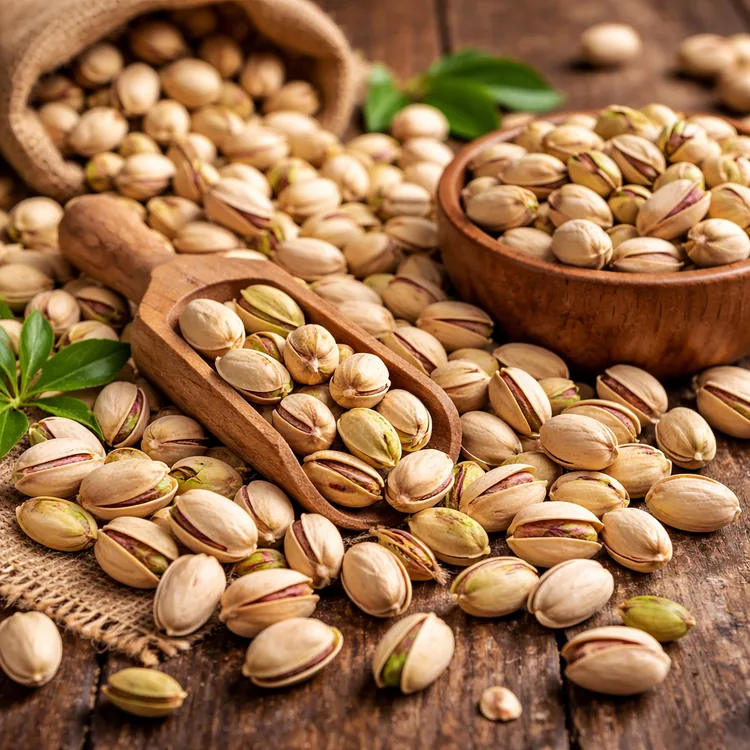
Introduction: why raw in-shell pistachios matter in snack-market sourcing
Many finished snack products are judged by their roast, seasoning and packaging, but the commercial outcome begins much earlier with the raw in-shell material. For snack brands and roasters, raw pistachios are not just an input. They are the foundation of the final eating experience. Shell opening, size consistency, external appearance and overall raw material condition all affect what the product can become after roasting.
This is especially important in premium or semi-premium snack segments, where consumers expect pistachios to be easy to open, visually attractive and satisfying to eat. A brand may invest in excellent roasting and packaging, but weak raw material can still limit the result. In practice, the wrong raw lot can lead to uneven roast response, less appealing shelf presentation, higher complaint risk and weaker brand perception.
For importers, distributors, private-label teams and roasting companies, that means raw in-shell pistachios should be evaluated as a performance-oriented snack raw material, not simply as a generic agricultural product. Price matters, but it is only one part of a larger sourcing decision.
What this product is in commercial terms
Raw in-shell pistachios intended for snack brands and roasters are usually purchased as an unfinished format that will later be roasted, salted, flavored or packed under a specific commercial concept. They may be imported directly by snack companies, handled by regional distributors, sold to private-label packers or processed by contract roasters serving retail and foodservice channels.
The key point is that the buyer is not purchasing a finished snack. The buyer is purchasing roasting potential, appearance potential and brand potential. That creates a different set of priorities than buying finished roasted pistachios. Instead of asking only how the product tastes today, buyers should ask how reliably it can be transformed into a saleable end product tomorrow.
In this context, Turkish Antep pistachios can be commercially attractive because they combine strong origin identity with a premium product story. However, even a good origin narrative must be supported by raw material selection that fits the intended snack positioning and roast strategy.
Why snack brands may prefer raw in-shell supply
Snack brands often prefer raw in-shell pistachios when they want greater control over the finished offer. Buying raw material allows the brand or its processing partner to define roast style, salt intensity, flavor profile, pack freshness strategy and category differentiation more precisely. This can be particularly valuable in private-label, specialty retail and premium snacking programs where the brand wants a distinctive final result.
Buying raw instead of fully finished roasted product can also support better alignment with local taste expectations. Salt preferences, roast depth and seasoning styles vary by market. A destination-based roaster or packer may be better placed to finish the product according to local consumer demand, retailer feedback or brand standards.
There is also a practical commercial reason. Some buyers want more control over final quality approval, packaging timelines, seasonal promotions or pack configuration. Raw in-shell supply can fit these models more flexibly than buying a finished product produced entirely at origin.
Why roasters evaluate raw material differently from traders
A roasting company does not look at raw in-shell pistachios the same way a pure trading desk might. The roaster is concerned with how the product behaves under heat, how evenly it finishes, how attractive it will look after processing and how well it will fit specific customer programs. A roaster may reject a seemingly acceptable lot if the shell opening is weak, the size distribution is too mixed or the visual profile is not strong enough for the target retail channel.
That is because roasters are effectively converting raw agricultural material into a branded or commercial snack experience. Their margin depends not only on buying cost but on roasting yield, production efficiency, customer satisfaction and repeat orders. Good raw material reduces process risk. Better raw material can support better consistency, fewer compromises in roast profile and stronger final presentation.
The first major buying point: natural shell opening
One of the most important criteria in raw in-shell pistachios for snack use is shell opening. Consumers strongly prefer pistachios that are naturally open and easy to eat. Closed shells, poorly opened shells or awkwardly tight shells create friction in consumption and can quickly undermine the premium feel of the final snack product.
For snack brands, shell opening affects product perception even before the first bite. Well-opened shells signal generosity, convenience and quality. They also improve visual impact in transparent or semi-transparent packaging. For roasters, strong natural opening makes it easier to build an attractive finished offer without relying on aggressive processing expectations that the raw material cannot support.
Importers and roasters should therefore treat shell opening as more than a technical note. It is a direct consumer-facing attribute that influences usability, presentation and complaint risk. In premium retail channels, this point often carries even more weight because shoppers expect visibly attractive in-shell snacks.
The second major buying point: shell appearance and retail potential
Raw in-shell pistachios intended for snack use should not be assessed only for internal composition. The shell itself plays a visible commercial role. Shell cleanliness, shell brightness, staining level and overall lot uniformity all influence how appealing the finished roasted product can become.
Even before roasting, buyers should ask whether the raw lot looks suitable for shelf-facing snack programs. A lot with weak shell appearance may still be edible, but it may be harder to position as a premium snack product after roasting. External appearance influences the first impression the product will make once packed, displayed and opened by the end customer.
For this reason, shell appearance is best assessed in relation to final market intent. A value-market snack program may accept broader visual tolerance. A premium brand, specialty retailer or gourmet private-label line will usually need a more selective raw material profile.
The third major buying point: size grading and lot consistency
Size matters because it affects both process consistency and retail perception. More uniform sizing generally leads to more predictable roasting and a more coherent finished appearance. When pistachios vary too widely in size, the roast response can become less even and the final packed product may look mixed or less premium.
For roasters, size consistency can influence process control. Different nut sizes may react differently during roasting, which can create a less uniform finished lot. For snack brands, size consistency contributes to visual polish and perceived value in the retail pack. Larger, more even pistachios are often associated with stronger premium positioning, while more mixed lots may be better suited to commercial mainstream channels if the rest of the specification supports that positioning.
Buyers should therefore clarify whether they are sourcing for a broad commercial grade, a selective branded grade or a more premium retail program. This affects how size variation should be interpreted and how offers should be compared.
Raw material suitability for roasting
Not every raw in-shell pistachio lot is equally suitable for snack roasting. The goal is not only to buy raw pistachios, but to buy raw pistachios that roast well. A good roasting lot should have the right balance of physical consistency, shell presentation and overall condition to support uniform heat response and attractive finished output.
Roasters typically want raw material that can deliver:
- consistent roast development across the batch,
- good visual finish after processing,
- limited weak shells or unattractive pieces,
- strong consumer-friendly opening, and
- a clean starting profile suitable for salt or seasoning application.
This is why snack-use raw pistachios should be assessed in terms of downstream performance. The right question is not simply whether the raw product is acceptable today, but whether it can become a strong roasted retail product tomorrow.
Moisture and condition: why raw handling still matters
Moisture management is an important point even when buyers intend to roast the product later. Raw pistachios that are not well handled or packed can present freshness or process consistency issues by the time they reach the roasting stage. In long-distance export supply, packaging condition, storage discipline and transport environment can influence the raw product’s performance before it ever reaches the line.
For snack-market buyers, raw material condition matters because roasting does not correct every upstream weakness. Good handling and well-protected packing help preserve the raw product so that the roaster starts from a more stable and more predictable base. That matters for roast planning, quality control and customer consistency.
Defects and tolerance thinking in raw in-shell programs
All agricultural products involve some natural variation, but raw pistachios for snack applications should still be reviewed with practical tolerance awareness. Buyers should not judge quality through one dramatic point alone. Instead, they should consider the broader commercial impact of mixed weaknesses.
Important areas to review may include:
- closed shells or difficult-to-open shells,
- broken or visually weak shells,
- inconsistent shell appearance,
- mixed size distribution,
- empty or poorly filled shells,
- shell staining beyond target grade expectations, and
- lot inconsistency that may weaken retail presentation after roasting.
What matters commercially is whether these issues will remain visible or meaningful in the final snack product. A roaster or snack brand should assess defects according to their effect on finished output, brand fit and consumer experience.
Commercial grading versus final market positioning
One of the most common mistakes in raw pistachio buying is assuming that grade terminology alone is enough to define suitability. In practice, buyers should link grading decisions to the intended retail or roasting outcome. A commercially acceptable lot may still be too weak for a premium snack brand. A visually selective lot may be unnecessary for a more price-driven mainstream program.
This is why the final market position should be discussed first. Is the product intended for mass retail, specialty food, gourmet gifting, ethnic snack distribution or private-label supermarket sale? Once that is clear, buyers can interpret raw lot quality more intelligently and compare offers in a more commercially useful way.
Who typically buys raw in-shell pistachios for snack use?
This product format is relevant to several kinds of buyers:
- Snack brands that want to roast and season product under their own label.
- Contract roasters that process pistachios for multiple customers and need reliable raw lots.
- Importers and distributors serving regional roasters, private-label clients or specialty retailers.
- Private-label partners building differentiated snack lines for supermarkets or distributors.
- Foodservice suppliers that finish or repack in-shell pistachios for hospitality or institutional channels.
Each of these buyers may prioritize different details, but all share one core need: raw material that can be transformed into a consistent snack product with commercial confidence.
Why Turkish Antep pistachios can be attractive for this segment
Turkish Antep pistachios can be appealing to snack-market buyers because they combine origin value, culinary identity and premium positioning potential. For brands that want a stronger story, origin can add meaning on pack, in sales conversations and in premium merchandising environments.
However, the origin story is most effective when the raw material itself supports the intended snack standard. Buyers should therefore see origin as a commercial advantage, but not a shortcut around proper assessment. Strong finished snack programs are built when origin value and product suitability work together.
Packaging and logistics for raw in-shell supply
Packaging for raw in-shell pistachios is not merely a shipping decision. It is part of protecting the product until roasting. Good bulk packaging helps preserve quality, supports warehouse handling and reduces the chance of condition drift during transit and storage. This matters especially in export programs that involve long routes, temperature variation or extended lead times between shipment and production.
Buyers should think about packaging in operational terms:
- Will the product be stored before roasting?
- Does the packing format suit receiving and warehouse systems?
- Is the product protected well enough for the destination route?
- Will the buyer re-sort, re-pack or move the product again before processing?
A product that arrives in poor condition or impractical packaging can create avoidable cost and delay even if the raw material itself is commercially sound.
Sampling: what buyers should look for before approval
Sample review is one of the most important parts of buying raw in-shell pistachios for snack use. Since the product will be roasted later, buyers should evaluate it both as a raw material and as a potential finished snack base. Where possible, a test roast can provide more useful insight than a raw-only visual check.
Useful sample review points include:
- overall visual impression,
- natural shell opening,
- shell cleanliness and consistency,
- size distribution,
- presence of weak or problematic shells,
- fit with intended snack grade or brand position, and
- response under pilot roasting if available.
Cross-functional sample review can also be valuable. Procurement, technical teams, roasting teams and sales teams may each identify different opportunities or risks.
Questions buyers should ask before placing an order
Clear questions improve sourcing accuracy. Before committing to a raw in-shell snack program, buyers should try to clarify:
- Is the lot intended for snack-market roasting rather than only generic trade supply?
- How strong is the natural shell opening profile?
- What level of visual selectivity does the lot represent?
- How uniform is the size distribution?
- How suitable is the raw material for consistent roasting?
- What packaging format is offered for export and storage practicality?
- How should the product be stored after arrival and before roasting?
- Can the supplier support repeatability across future lots?
- What market positioning does the offered grade best support?
- What assumptions affect the quotation, such as order size or grade selection?
Common mistakes in this category
Several recurring mistakes reduce buying efficiency in raw in-shell pistachio sourcing for snack programs:
- buying on price alone without defining the final snack positioning,
- ignoring shell opening even though the final product is consumer-facing,
- approving raw samples without considering roasting behavior,
- using the same evaluation logic for premium and mainstream programs,
- overlooking size consistency even though roast uniformity matters, and
- failing to discuss lot repeatability for future orders.
Most of these problems come from treating raw in-shell pistachios as a simple commodity input instead of a finished snack precursor. Better specification language usually leads to better results.
Suggested buyer brief for a raw in-shell snack inquiry
Buyers often receive more accurate supplier responses when they provide a short application-specific brief. A useful inquiry may include:
- destination market,
- intended sales channel,
- whether the product is for own roasting or contract roasting,
- target consumer position such as mainstream or premium,
- preference for stronger shell opening or more selective appearance,
- expected annual volume or shipment rhythm,
- preferred packaging style for raw transport and storage, and
- any important expectations around final roast or private-label use.
The clearer the intended use, the more useful the offer comparison becomes. Instead of generic pistachio pricing, the buyer receives a proposal better aligned with the real commercial requirement.
How snack brands should compare supplier offers
Supplier comparison should go beyond unit price. A more useful framework considers:
- raw material appearance and shell opening,
- roasting suitability,
- market fit for the target snack segment,
- expected consistency across repeat lots,
- packaging and export practicality,
- how selective the grade appears to be, and
- overall value relative to finished snack objectives.
A slightly higher-priced offer may still be commercially stronger if it supports better roasting performance, cleaner retail presentation or fewer downstream compromises.
Commercial summary table
| Buying Area | Why It Matters | What Snack Buyers Should Check |
|---|---|---|
| Shell Opening | Shapes consumer convenience and premium feel | Look for strong naturally open presentation and lower risk of difficult-to-open nuts |
| Shell Appearance | Supports post-roast visual appeal and retail confidence | Assess cleanliness, staining level and overall lot presentation |
| Size Consistency | Helps roast predictability and visual uniformity | Review whether the lot is coherent enough for the intended brand position |
| Roasting Suitability | Determines whether raw product can become a strong finished snack | Consider how the lot is likely to respond in roasting and seasoning operations |
| Defect Profile | Influences final appearance, yield and complaint risk | Check for closed shells, weak shells, mixed sizes and broader visual inconsistency |
| Packaging | Protects raw condition before processing | Confirm that the export pack suits storage, transit and operational handling |
| Repeatability | Critical for long-term brand and roasting programs | Discuss how future shipments are expected to match approved samples |
Atlas perspective
At Atlas, academy content is designed to make sourcing conversations clearer and more commercially useful. Raw in-shell pistachios are a good example of a category where broad product descriptions are not enough. Buyers benefit from asking more specific questions about end use, roast intent, market positioning and visual expectations before comparing offers.
When product discussions are framed around the final application, supplier communication becomes more precise, sample approval becomes more meaningful and sourcing decisions become easier to defend commercially.
Final takeaway
Raw in-shell pistachios for snack brands and roasters should be purchased with the finished snack outcome in mind. The strongest buying decisions come from connecting raw material selection to roasting suitability, retail presentation and end-consumer convenience. Shell opening, visual consistency, size grading and overall lot condition all influence whether the raw product can become a successful finished snack.
For buyers interested in Turkish Antep pistachios, the opportunity is not only in origin value but in choosing raw lots that genuinely match the intended market position. Better information leads to better sample evaluation, better supplier comparison and better finished product performance.
Frequently asked questions
Who is this guide written for?
This guide is intended for importers, snack brands, contract roasters, private-label teams, distributors and other B2B buyers researching raw in-shell Turkish pistachio supply for snack-market use.
Why would a buyer choose raw in-shell pistachios instead of ready-roasted product?
Buying raw gives the buyer or roaster more control over roast profile, salt level, packaging timing, market-specific finishing and overall product differentiation.
What is the most important quality point in raw in-shell pistachios for snack use?
There is no single point in isolation, but natural shell opening is one of the most commercially important because it directly affects convenience, visual appeal and final consumer satisfaction.
Do raw pistachios need to look attractive even though they will be roasted later?
Yes. Raw shell appearance still matters because it influences how appealing the finished roasted product can become, especially in consumer-facing retail programs.
Why does size consistency matter to roasters?
More uniform size generally supports more even roasting and a more coherent finished appearance, both of which are important in many snack applications.
Can raw in-shell pistachios suit both premium and mainstream snack brands?
Yes, but the raw lot should match the intended positioning. Premium programs usually require more selective visual and shell-opening characteristics than mainstream value-focused programs.
What should a buyer include when requesting an offer?
A useful inquiry should mention the destination market, intended snack positioning, whether the product will be self-roasted or contract-roasted, expected volume, packaging needs and any priorities around shell opening or appearance.
How can Atlas help?
Atlas helps buyers define product requirements more clearly and connect commercial expectations with suitable Turkish pistachio supply options.