Introduction: why pistachio inclusions matter in premium confectionery
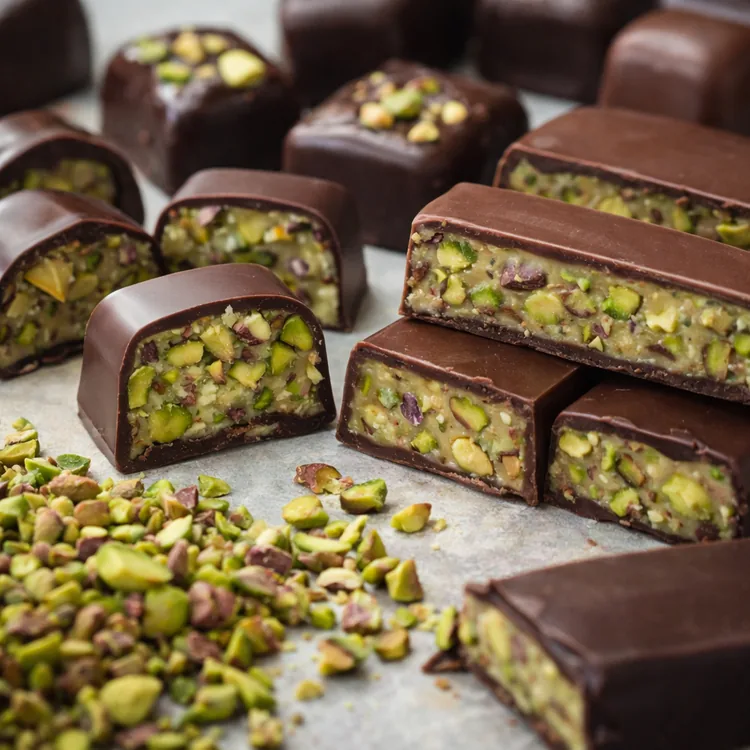
Filled bars and pralines are rarely judged on sweetness alone. In premium confectionery, buyers and consumers pay attention to the full eating experience. They notice the shell, the center, the first bite, the breakdown of the filling, the contrast between smooth and crunchy elements and the visual cues that suggest craftsmanship or indulgence. Pistachio inclusions play an important role in that experience because they add structure and identity at the same time.
In a smooth filling, pistachio pieces can introduce a deliberate textural contrast. In a soft praline center, they can create a sense of substance and natural ingredient value. In a filled bar, they can support a layered bite that feels more premium than a homogeneous mass. For brands, this matters because consumers often associate visible nut pieces and well-defined ingredient texture with better quality, richer formulation and greater authenticity.
From a sourcing perspective, however, using pistachio inclusions well requires more than simply adding chopped kernels to a recipe. Buyers need to think carefully about format, size, color, roast level, consistency, visual balance, packaging and the way the inclusion interacts with the center. That is why the inclusion conversation belongs at the beginning of confectionery design rather than at the end.
What counts as a pistachio inclusion in filled bars and pralines?
Inclusions are the visible or texturally distinct pistachio elements incorporated into a filling, layered center or coated confectionery product. They are different from pistachio paste, pistachio cream or pistachio butter used as the base of a formulation. The base may deliver broad flavor and color, while the inclusions create bite, particulate structure and visual differentiation.
Depending on the finished product, pistachio inclusions may include:
- small chopped kernels for light crunch and even distribution,
- medium diced kernels for a more visible nut presence,
- granules for controlled particulate structure,
- larger selected pieces for premium visual effect,
- split kernels where larger visual identity is desired,
- combinations of paste and particles for a more layered pistachio expression.
The best choice depends on what the product is trying to achieve. A molded praline with a delicate shell may need a smaller, more controlled inclusion size than a robust filled slab or layered bar. A creamy center may benefit from light particulate contrast, while a denser nougat or gianduja-style filling may support more assertive nut pieces.
Why pistachio works especially well in filled bars and pralines
Pistachio has several qualities that make it particularly attractive in filled confectionery. First, it carries strong premium associations. Buyers often connect pistachio with luxury desserts, artisan confectionery and more elevated gifting formats. Second, it provides both flavor and visual value. Unlike some ingredients that contribute mainly one or the other, pistachio can shape aroma, color impression, particle definition and overall sophistication in a single formulation.
Third, pistachio works across multiple flavor systems. It can sit comfortably in milk chocolate, dark chocolate and white chocolate environments. It pairs naturally with vanilla, caramel, honey, nougat-style centers, sesame, cocoa, wafer, cream-based fillings and other nut systems. This flexibility makes it useful both for classic confectionery and for newer premium concepts.
Finally, pistachio allows manufacturers to create more than one sensory layer at once. A pistachio bar does not need to rely on pistachio paste alone. It can combine smooth pistachio cream, visible chopped inclusions and a coated shell to create a more complete and memorable bite.
Commercial value: inclusions help turn a filling into a premium proposition
In confectionery, appearance and texture often carry commercial weight well beyond their ingredient cost. A smooth greenish filling may look appealing, but a filling with visible pistachio pieces usually communicates more ingredient richness and a more intentional product design. In other words, inclusions help buyers move from a flavored filling to a pistachio-centered product identity.
For private-label brands and premium confectionery manufacturers, this can be commercially valuable in several ways:
- Stronger premium perception: visible pistachio pieces make the product feel more generous and more ingredient-led.
- Better product storytelling: brands can talk about texture, nut content and authentic pistachio character more convincingly.
- More differentiated sensory experience: the product feels more designed and less generic.
- Higher visual interest in cut-open photography and merchandising: bars and pralines with visible inclusions are often easier to market visually.
- Improved consumer expectation alignment: customers expecting pistachio can see and feel pistachio in the bite, not only taste a flavored center.
For international buyers, these factors matter because the ingredient is not just being purchased as a raw material. It is contributing directly to how the finished confectionery is perceived in the market.
Texture design: one of the most important reasons to use pistachio inclusions
One of the strongest reasons to include pistachio particles in filled bars and pralines is texture architecture. Premium confectionery is often more satisfying when it contains internal contrast. A fully smooth center can feel elegant, but it can also become monotonous if the formulation lacks structure. Pistachio inclusions provide an efficient way to introduce a controlled crunch, bite or break pattern without overwhelming the filling.
Texture design should be deliberate. The inclusion should not feel random or hard in a way that disrupts the eating experience. Instead, it should support the style of the center. In a soft cream-based filling, small inclusions can keep the texture interesting without making the product feel coarse. In denser nougat or caramel systems, more pronounced pieces may add a satisfying counterpoint. In a layered bar, pistachio particles can help create transitions between smooth and crisp elements.
For B2B buyers, this means inclusion choice is not simply about visual appearance. It is about how the finished product breaks, chews and releases flavor. That is why inclusion size and consistency deserve close attention during product development and sourcing.
Choosing the right inclusion size
Size is one of the most important inclusion variables because it affects both texture and process behavior. Large pieces can create a bold visual effect and more obvious nut identity, but they may also be harder to distribute evenly in finer praline fillings or delicate molded shells. Smaller pieces are easier to incorporate and often more stable in production, but they may contribute less visual drama or distinct bite.
In general, buyers should match size choice to product style:
Fine inclusions
Fine chopped pistachios or small granules are often suitable when the goal is to create a subtle, even particulate texture. They work well in smoother cream centers, spread-like fillings and more delicate praline interiors where large pieces could interfere with depositing or shell integrity.
Medium inclusions
Medium chopped kernels are often the most versatile option. They provide more visible nut character while remaining manageable in many filled bar and praline systems. For many manufacturers, this is the most commercially practical format because it balances appearance, texture and process fit.
Larger pieces
Larger selected pieces can create a more premium visual signature, especially in bars or generous-cut products where the center is intentionally bold. However, they require closer review of distribution, shell thickness, biting force and manufacturing tolerance.
The main principle is simple: the inclusion should feel intentional and repeatable. Oversized pieces in a fine praline may create problems. Very small particles in a premium chunky bar may underdeliver visually. The right size is the one that supports the eating experience and production process together.
Uniformity matters as much as nominal size
Even more important than average size is size consistency. A batch with uncontrolled variation can create uneven texture, irregular visual distribution and inconsistent filling behavior. Some pieces may disappear into the center while others dominate the bite. In molded products, a few oversized pieces may also disrupt deposition or cause structural variability around the shell.
For confectionery buyers, consistent sizing helps in several ways:
- it makes the bite more predictable,
- it improves visual balance across units,
- it supports smoother process control,
- it reduces the chance of localized hard spots or particle clustering,
- and it helps future shipments match the original development standard.
That is why buyers should not ask only for chopped pistachios. They should ask for the chopped pistachio profile that fits their product and be clear about repeatability expectations.
Using inclusions together with pistachio paste or cream
Some of the strongest pistachio-filled confectionery products use a dual-structure approach. A pistachio paste or cream creates the base flavor and visual identity, while the inclusions provide texture and visible reinforcement of the pistachio concept. This combination is often more effective than using either element alone.
A smooth pistachio filling without visible inclusions can still taste excellent, but some consumers may interpret it as a flavored cream rather than a nut-rich filling. By contrast, a center that combines pistachio base and visible pistachio particles usually reads as more authentic and more ingredient-driven. For product developers, this can be especially useful in premium bar concepts, gifting pralines and layered centers designed to create a stronger reveal when cut or bitten.
In these systems, the inclusion size should be chosen in relation to the base viscosity and intended eating style. Thicker or denser bases can usually support more assertive particles, while lighter systems may need finer, more evenly distributed pieces.
Color and visual appeal in pistachio inclusions
Pistachio is one of the few nut ingredients where color can strongly influence premium perception. In filled bars and pralines, visible pistachio pieces contribute not only texture but also visual recognition. Buyers often want the inclusion to look clean, appealing and consistent with the product’s positioning.
If the bar or praline is marketed as a premium pistachio product, the inclusions should help reinforce that message. Uneven, dull or visually weak pieces may reduce the effect, even if the flavor is acceptable. At the same time, visual requirements vary by market and concept. Some brands prefer a more natural, artisanal appearance. Others want a more vivid and controlled premium look. The correct inclusion style depends on the target segment and final presentation.
In practical terms, buyers should consider how the inclusion will appear:
- inside the center when the product is cut open,
- on product photography or packaging visuals,
- in natural light or retail display,
- and in relation to the surrounding chocolate or filling color.
Roasted or raw-style inclusions: choosing the right flavor direction
Another important choice is whether the pistachio inclusion should present a more raw, fresh nut character or a more developed roasted note. Neither is inherently better. The correct choice depends on the desired flavor profile and how the pistachio is being positioned within the confectionery product.
A more natural pistachio expression may be suitable when the aim is freshness, delicacy or a softer premium profile. A more roasted expression may support deeper nut character, stronger aromatic integration with chocolate or a more indulgent confectionery style. In many commercial settings, the best result is the one that complements the center rather than competing with it.
Buyers should think about how the pistachio inclusion interacts with:
- milk chocolate sweetness,
- dark chocolate bitterness and cocoa intensity,
- white chocolate dairy notes,
- caramelized or nougat-style centers,
- and any secondary flavors such as vanilla, sesame, wafer or cocoa.
The inclusion should support the total flavor system, not just add random nut particles.
Texture compatibility with different center styles
Pistachio inclusions behave differently depending on the structure of the center around them. That is why application fit matters so much.
Soft cream or spread-like centers
These systems often benefit from finer or medium inclusions that suspend well and create a gentle crunch without feeling disruptive. Overly large pieces may sink, cluster or create an awkward bite if the base is very soft.
Gianduja-style or nut-rich centers
These centers can usually handle more visible particles because the matrix already has nut body and a richer texture. Medium inclusions often perform well here because they reinforce the indulgent, nut-forward profile.
Nougat or chewy centers
Pistachio pieces can work especially well in nougat-style systems because they add visual contrast and interrupt the chew with more defined nut texture. Size control is still important to avoid irregular bite force.
Caramel or hybrid centers
In caramel-based fillings, inclusions can add a welcome crispness and create a more premium nut confectionery identity. However, the balance between chew and crunch must be managed carefully so the product does not feel too hard or uneven.
Molded praline fillings
Because pralines often rely on thinner shells and more delicate structures, inclusions need to be chosen with precision. Medium-to-fine particles are often easier to manage than highly irregular larger pieces.
Filled bars versus pralines: the inclusion strategy is not always the same
Although both categories use centers, filled bars and pralines often require slightly different inclusion logic.
Filled bars
Bars often allow for bolder texture. They can support chunkier inclusions, more dramatic cut-open visuals and layered formats where pistachio pieces are part of the product’s identity. Because bars are often consumed in larger bites, they can handle a more assertive inclusion profile when well balanced.
Pralines and bonbons
Pralines usually require a more refined internal structure. The shell is often thinner, the bite size is smaller and the overall experience may need to feel more elegant or precise. Inclusions can still be important, but distribution and size control become more critical.
For B2B buyers, this difference matters because the same chopped pistachio format may not suit both applications equally well. Product development should therefore define whether the inclusion is intended for a bold bar format, a refined praline or both.
Processing considerations for manufacturers
Inclusions are not judged only by how they taste. They also need to work in production. A pistachio piece that looks attractive in a sample bowl may create difficulty when it moves through mixing, depositing or layering systems if the size is too irregular or the material is not matched to the center style.
Manufacturers should therefore evaluate inclusion choice with practical questions in mind:
- Does the inclusion distribute evenly in the center?
- Does it remain suspended or does it settle?
- Does it interfere with depositing or molding?
- Does it create weak points in delicate shells?
- Does it allow a repeatable cut-open appearance?
- Does it support the same bite across the full batch?
These questions do not require overcomplicated theory. They simply reflect the fact that the best inclusion is one that performs reliably in the real process, not just in concept.
Purity and cleanliness: a critical quality expectation
Because filled bars and pralines are quality-sensitive products, inclusion purity matters. Buyers want pistachio inclusions that are clean, well prepared and suitable for food manufacturing. Even a premium-looking concept can be compromised if the inclusion quality is inconsistent, visually weak or commercially unreliable.
When reviewing inclusion supply, buyers should think about overall cleanliness, piece integrity, lot consistency and whether the product feels appropriate for premium confectionery use. Inclusions are often more exposed than background ingredients because consumers may see them in cross-sections or feel them distinctly during eating. That makes quality perception more immediate.
How inclusions influence flavor release
Pistachio inclusions do not only change the way a product feels. They also affect how flavor is experienced during chewing. A smooth pistachio center may deliver an immediate broad flavor, while visible pieces can create secondary bursts of nut character as the product breaks down. This often makes the pistachio impression feel more natural and more layered.
In filled confectionery, that can be useful because it helps extend the pistachio experience beyond the first instant of sweetness. A well-designed center may begin with chocolate and cream notes, then reveal more defined pistachio texture and flavor through the inclusions. This sequence is part of what makes premium confectionery feel dynamic rather than flat.
Balancing indulgence and elegance
Not every pistachio bar or praline should feel the same. Some concepts aim for abundance and indulgence, while others aim for refinement and restraint. Inclusion strategy should support that positioning.
A chunky filled bar may intentionally showcase large visible pistachio pieces and a more robust internal structure. A refined praline may use finer inclusions to create a subtle premium feel without disrupting the elegance of the shell. Neither approach is more correct in absolute terms. The key is alignment between inclusion format and brand concept.
For buyers, this is a useful reminder that pistachio sourcing decisions should begin with product identity, not generic ingredient language. The inclusion should match the story the finished product is trying to tell.
Common formulation directions where pistachio inclusions add value
Pistachio cream with chopped pistachios
This is one of the most commercially intuitive combinations. The cream delivers pistachio flavor and body, while the chopped inclusions add visible proof of ingredient richness and create a more satisfying bite.
Chocolate-hazelnut or gianduja-style center with pistachio pieces
Pistachio can act as a premium accent inside another nut-forward center. This approach adds color contrast, flavor layering and product differentiation.
Nougat center with pistachio inclusions
This direction often works well because pistachio pieces bring structure and a more premium visual identity to an already textural center.
Caramel-based center with pistachio particles
When balanced correctly, pistachio pieces can make caramel centers feel more sophisticated and less one-dimensional.
Wafer or crisp systems supported by pistachio particles
In layered bars, pistachio inclusions can reinforce the premium theme while complementing crisp textures.
What confectionery buyers should ask suppliers before ordering
Before approving pistachio inclusions for filled bars or pralines, buyers should clarify several points:
- What exact inclusion format is being offered?
- Is the size profile appropriate for our application?
- How consistent is the lot from batch to batch?
- What visual profile should we expect in the finished center?
- Does the inclusion support a more natural or more roasted flavor direction?
- How is the product packed for protection and practical handling?
- Will the supplied product match the approved development sample?
- Is this format better suited for pralines, bars or more robust center systems?
These questions help transform a general pistachio requirement into a workable confectionery ingredient brief.
Sample approval matters greatly in this category
Because inclusions influence appearance, texture and product handling all at once, sample approval is especially important. A confectionery manufacturer should ideally assess the pistachio inclusion not only on its own, but within the actual or pilot center system. That is the most useful way to see whether the size, distribution and bite match the intended result.
Samples should help answer practical questions such as:
- Does the center still deposit cleanly?
- Does the bite feel balanced?
- Is the cut-open look attractive and repeatable?
- Does the inclusion level support the premium story?
- Does the pistachio feel integrated rather than random?
What matters most is that the approved sample becomes a realistic reference for commercial supply, not just a best-case presentation.
Why repeatability is essential for branded confectionery
In premium bars and pralines, inconsistency is costly. If one batch shows beautiful pistachio distribution and the next feels sparse or visually different, customer perception may change quickly. That is why repeatability matters just as much as initial quality. The supplier relationship should support consistent size profile, visual appearance and general suitability across repeated orders.
This is especially important for private-label programs, export products and confectionery brands that rely on cross-section visuals in advertising. The inclusion is not merely hidden inside the product. It often becomes part of the selling image.
How inclusions affect premium positioning and giftability
Filled pralines and premium bars are often bought not only for personal consumption but also for gifting, display and special-occasion indulgence. In these contexts, pistachio inclusions contribute strongly to the perception of luxury and generosity. Consumers tend to respond positively when a confection reveals visible nut pieces and a more layered center rather than a flat or overly uniform filling.
For commercial buyers, this means pistachio inclusions can contribute to:
- stronger premium shelf impact,
- better cut-open merchandising visuals,
- greater perceived ingredient value,
- and a more convincing justification for premium pricing.
Common mistakes when using pistachio inclusions in confectionery
Choosing the inclusion only for appearance
A visually striking inclusion can still perform poorly if the size is wrong for the center or shell. A strong inclusion must support process and bite, not just photography.
Using overly mixed particle sizes
Wide variation can produce an inconsistent bite and a less controlled product appearance.
Ignoring the relationship between base filling and inclusion
The inclusion should complement the center. A mismatch in viscosity, bite or flavor profile can weaken the overall product.
Assuming all chopped pistachios are interchangeable
They are not. Confectionery applications are sensitive to size, appearance, flavor direction and consistency.
Approving a sample without defining the commercial standard
What made the sample successful should be documented in product terms so repeat orders can be assessed properly.
Guidance for different buyer types
For confectionery manufacturers
Focus on process fit, bite consistency and repeatability. Test the inclusion inside the real filling system and confirm that it supports the intended shell, deposit and cut-open appearance.
For importers and distributors
Think in application terms. A pistachio inclusion suited for premium pralines may not be the same one best suited for thicker, more robust filled bars. Clear segmentation improves selling and reduces confusion.
For private-label teams
Connect the inclusion choice to the market position of the final product. If the bar or praline is intended to feel premium and ingredient-rich, visible pistachio structure can be highly valuable.
For brand owners
Use inclusions to support both product experience and communication. Cross-sections, product claims and premium storytelling are all stronger when the inclusion strategy is well defined.
How Atlas approaches this topic
At Atlas, pistachio inclusions are best understood as application-specific ingredients rather than generic nut pieces. The right choice depends on the confectionery format, desired bite, visual goal and market positioning. That is why the sourcing conversation should begin with the intended product style: molded praline, filled bar, enrobed center, layered slab or another confectionery application.
From there, the goal is to connect the buyer with a pistachio format that supports the real use case. In some projects, a finer inclusion is the better commercial and technical answer. In others, a bolder piece size helps create the product identity the brand wants. The value lies in matching the inclusion profile to the actual confectionery objective rather than relying on broad ingredient language.
Final takeaway
Using pistachio inclusions in filled bars and pralines is about much more than adding nut pieces to a center. Done well, inclusions help define the texture, visual signature, premium perception and flavor layering of the finished product. They can turn a simple filling into a richer, more memorable confectionery experience.
For buyers and manufacturers working with Turkish Antep pistachios, the most important task is to choose the inclusion format with the final application in mind. Size, consistency, appearance, flavor direction and process suitability all matter. The strongest results come from treating pistachio inclusions as a deliberate part of product design, not as a decorative afterthought.
When the right pistachio format is selected and matched to the product concept, filled bars and pralines gain a stronger identity, a more convincing premium feel and a more satisfying eating experience.
Frequently asked questions
What is the main benefit of pistachio inclusions in filled bars?
The main benefit is layered sensory value. Pistachio inclusions add texture, visible ingredient character and a more premium pistachio identity to the center.
Are the best inclusions always the largest ones?
No. The best inclusion size depends on the center system and the desired eating experience. Larger pieces can look premium, but they are not always the best choice for delicate pralines or smoother fillings.
Should manufacturers combine pistachio paste and pistachio inclusions?
In many products, yes. A pistachio base plus visible inclusions often creates a stronger and more authentic overall pistachio expression than either element alone.
Why is size consistency important in pralines?
Because pralines often rely on more precise internal structure. Consistent sizing helps maintain an even bite, cleaner distribution and better production control.
Do inclusions mainly affect appearance or texture?
They affect both. In good confectionery design, inclusions improve visual appeal, reinforce premium identity and create a more interesting texture profile.
What should buyers define before requesting a quote?
Buyers should define the finished confectionery format, desired bite, visual goal, base filling style and the type of pistachio inclusion profile most suitable for that application.
Talk to Atlas about inclusions for filled bars, pralines and premium centers
If your team is developing pistachio-filled bars, molded pralines, coated centers or other premium confectionery applications, Atlas can help clarify the most suitable pistachio format, inclusion profile and sourcing approach for your product goals.