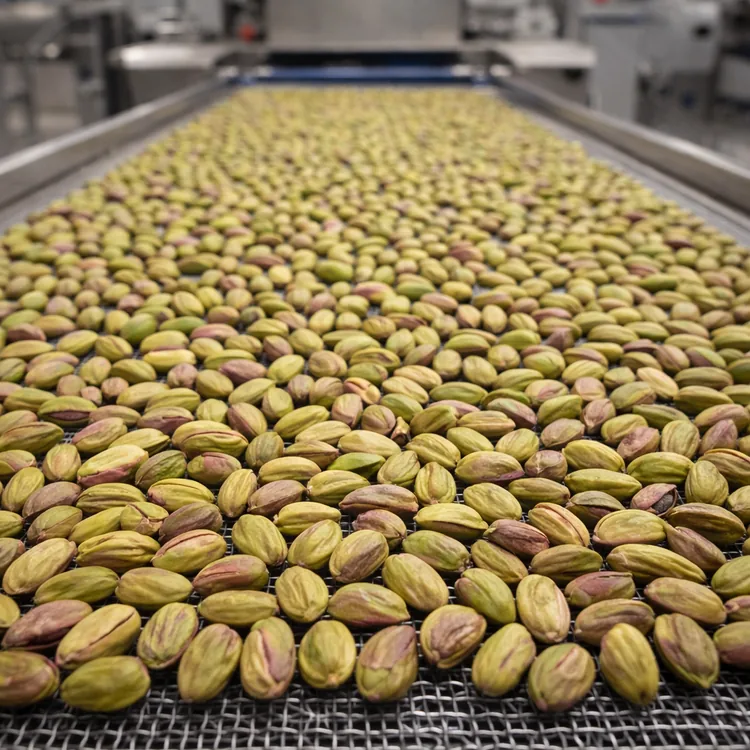
Introduction: kernel size is a production variable, not a minor detail
When manufacturers evaluate pistachio ingredients, attention often starts with origin, flavor, color and price. Those factors are important, but kernel sizing deserves equal attention because it influences how the product behaves across the full production process. A pistachio lot that looks acceptable at first glance can still create problems if the kernels are too mixed in size, too irregular for the intended application or inconsistent from shipment to shipment.
In manufacturing environments, small physical differences often create bigger operational consequences than buyers expect. Uneven kernels may affect depositor behavior, piece count, topping distribution, grinding consistency, mix appearance, cutting performance, yield calculation and customer perception of quality. For this reason, consistent sizing is not only a technical preference. It is a commercial factor tied to efficiency, waste reduction and product standardization.
For buyers working with Turkish Antep pistachios, understanding sizing helps turn general quality language into more useful purchasing criteria. Instead of asking simply for premium kernels, buyers can define what type of kernel size profile is actually required for the end use. That leads to better comparisons, fewer misunderstandings and more reliable repeat orders.
What “consistent kernel sizing” actually means
Consistent kernel sizing does not necessarily mean every pistachio kernel is identical. In practical B2B terms, it means the supplied lot falls within an expected and commercially useful size range for the application. The important point is not mathematical perfection. The important point is controlled variation.
A controlled size profile helps manufacturers work with predictable raw materials. It reduces the risk of a shipment containing too many very small kernels, too many oversized pieces or an uncontrolled mix that behaves differently across each production stage. In other words, consistent sizing means the product has been prepared and selected with enough discipline to support repeatable use.
For some applications, buyers may want larger, more visually impressive whole kernels. For others, they may need a narrower mid-size range that performs better in coatings, fillings or inclusions. For chopped or granulated formats, consistency may relate to cut size distribution rather than whole-kernel size. The correct standard depends on the product goal, but the underlying need remains the same: the manufacturer wants a pistachio ingredient that behaves predictably.
Why manufacturers care more about sizing than traders sometimes expect
In manufacturing, ingredient performance is measured not only by taste but also by stability, repeatability and line compatibility. A buyer might accept some natural variation in a retail snack product, but a manufacturing line often requires tighter control because the ingredient becomes part of a larger system. When one variable changes, the rest of the process may need adjustment.
Kernel size affects how pistachios flow through equipment, how evenly they are distributed in recipes, how they present visually in finished products and how closely the final result matches prior production runs. That means sizing affects both operations and brand consistency. Even when the ingredient itself is premium, inconsistent size can undermine the value of the product by introducing variability at exactly the point where manufacturers are trying to reduce it.
Production efficiency: one of the biggest reasons size consistency matters
Manufacturers build systems around control. They calculate input weights, design recipe proportions, set machine tolerances and create visual standards for finished goods. These systems work best when raw materials arrive in a repeatable format. Consistent kernel sizing supports that stability.
When sizing is irregular, teams may spend more time adjusting processes or compensating during production. Operators may need to recheck fill ratios, topping appearance or mix balance. Quality teams may spend more time separating defects from simple size variation. Procurement may face complaints from production even when the paperwork looks correct. All of this creates hidden cost.
By contrast, a well-sized pistachio kernel lot reduces friction. It allows the manufacturer to run closer to standard conditions, reduces avoidable variation and helps keep process outcomes aligned with the approved specification.
Visual uniformity in finished products
For many food categories, visual consistency matters almost as much as flavor. Consumers notice whether nut pieces look balanced, premium and evenly distributed. If one dessert tray contains large, attractive kernels and another contains mostly broken fragments, the product can feel inconsistent even if the taste is acceptable. The same is true for chocolates, pastries, biscuits, confectionery inclusions, toppings and premium ice cream decorations.
Kernel sizing contributes directly to visual rhythm. A more controlled size range creates a more intentional look. That is especially important in premium products where pistachios are visible and part of the value proposition. The visual standard communicates care, quality and product positioning. When kernel size is mixed without control, the finished item can look less refined and less reliable.
Portion control and recipe consistency
Many manufacturers measure ingredients by weight, but the visual and structural effect of those ingredients is still influenced by size. Two pistachio inclusions can weigh the same and still behave differently if one consists of large kernels and the other of small fragments. In the finished product, that can change coverage, bite texture, visual density and perceived value.
This matters in recipes where pistachios are intended to create a visible premium effect. If kernel size fluctuates too much, the same weight addition may produce noticeably different results from batch to batch. That can create inconsistency in appearance, customer experience and internal quality review.
Size consistency therefore supports a more stable relationship between ingredient quantity and final product outcome. For manufacturers, that is a practical advantage because it helps recipes perform more predictably without repeated correction.
Processing performance in cutting, grinding and mixing
Consistent whole-kernel sizing also affects what happens after the kernels enter secondary processing. If the manufacturer is chopping, slicing, grinding or converting kernels into another form, the starting size distribution can influence the behavior of the process.
For example, a highly mixed lot may grind less evenly than a more controlled lot. Some pieces may process faster, while others remain coarse. The result can be less consistent texture or additional rework. In chopped applications, uneven starting kernels may create a wider and less controlled distribution of final cut sizes. In mixed inclusions, different size classes may settle or distribute differently depending on the product system.
These are not always dramatic failures, but they are exactly the sort of small inconsistencies that manufacturers prefer to eliminate early. Better control at the raw material stage often leads to easier control later in the process.
Reduced waste and lower sorting burden
One of the clearest economic benefits of size consistency is reduced waste. When a pistachio lot arrives with uncontrolled variation, manufacturers sometimes compensate by manually removing pieces they consider too small, too large or visually unsuitable. Even when this is not a formal sorting process, it can still create material loss, slower production and dissatisfaction on the factory floor.
In more quality-sensitive environments, irregular size may force the buyer to reject material that otherwise has acceptable flavor and freshness. That is an avoidable cost if sizing had been controlled earlier in the supply chain. A more consistent product reduces the need for internal correction and improves usable yield from the buyer’s perspective.
Why size consistency matters differently across applications
Not every application requires the same degree or type of size control. Understanding the end use is therefore essential when setting expectations.
Whole-kernel decorative applications
In premium chocolate bars, baklava-style desserts, luxury pastries, filled confections and plated desserts, whole-kernel or near-whole-kernel visual presentation is important. Here, buyers often want tighter control because the kernel is a visible part of the product’s premium identity.
Toppings and inclusions
For cakes, cookies, ice cream, breakfast items and yogurt toppings, the goal is often even distribution and balanced appearance. Kernels that are too mixed in size may create poor coverage or an unbalanced look. A narrower size range usually helps maintain a more uniform finish.
Chopped or diced ingredient use
When kernels are further cut into pieces, the starting size still matters because it influences final size distribution. A more controlled input generally helps create a more controlled chopped output.
Paste and powder production
Even when the final product is ground, better input consistency can improve processing predictability. The importance may be lower than in decorative uses, but it is still relevant in quality-focused operations.
Snack and retail kernel packs
For premium snack formats, visible kernel consistency contributes directly to perceived value. Consumers often associate even, attractive nuts with better selection and higher quality.
The link between kernel size and premium perception
In many categories, consumers and trade buyers use visual cues to judge whether a product feels premium. Pistachios are particularly sensitive to this because they are visually expressive ingredients. Color, integrity, cleanliness and size all contribute to the impression of quality.
When kernel sizes are consistent, the product tends to look more selected, more intentional and more suitable for higher-value use. That does not mean every premium product requires large kernels. It means the chosen size should look appropriate, deliberate and consistent with the brand’s standard. A smaller, well-controlled size profile can look more premium than a mixed lot containing attractive kernels alongside many irregular fragments.
How inconsistent sizing creates downstream problems
Manufacturers usually do not complain about size inconsistency in abstract terms. They complain about the outcomes it causes. Typical downstream issues include:
- uneven visual coverage on finished products,
- inconsistent piece count from one batch to another,
- variable bite or texture in inclusions,
- difficulty maintaining internal quality standards,
- extra sorting or rework before use,
- lower usable yield,
- mismatch between approved sample and delivered lot,
- and disputes between procurement, production and quality teams.
These problems may look small individually, but together they can erode trust in the supplier relationship. That is why professional buyers often push for more precise size definitions instead of relying on vague “premium kernel” descriptions.
Why sample approval is not enough without a size standard
A sample can look excellent and still fail to protect the buyer if the agreed specification does not define what made that sample acceptable. If a manufacturer approves a sample because the kernels are clean, green and visually balanced, but the purchase order does not describe the expected size profile, later shipments may vary more than expected while still being defended as commercially reasonable.
For that reason, buyers should translate sample approval into documented expectations. Size range, tolerance, intended use and visual reference should be communicated clearly enough that repeat shipments can be evaluated against something more concrete than memory.
How buyers should talk about sizing with suppliers
Many sourcing problems begin with vague communication. Instead of asking only for premium kernels, buyers should try to define the product in application terms. Useful questions include:
- Is this for visible decoration, ingredient processing or grinding?
- Do we want larger whole kernels, a narrower medium range or a more economical mixed size?
- What variation is acceptable within the lot?
- Should oversize or undersize pieces be limited?
- Do we need sample-to-order match on visual appearance?
- Will the product be used directly or processed again after purchase?
These questions help move the conversation away from general quality claims and toward operational suitability. That is where the real value lies for manufacturers.
Size consistency and Turkish Antep pistachio sourcing
Turkish Antep pistachios are valued for their strong market identity, application versatility and relevance in premium dessert, confectionery and ingredient markets. For buyers sourcing from Turkey, kernel sizing should be treated as part of the broader specification rather than as a secondary detail after flavor and origin. In quality-sensitive applications, size consistency is part of how the product delivers its full commercial value.
That means importers and manufacturers should not evaluate Turkish pistachio offers on color and price alone. They should also consider how well the supplier can align the kernel size profile with the buyer’s end use. A product that appears competitively priced may become less attractive if wide size variation creates waste, rework or finished-product inconsistency.
Commercial advantages of better kernel size control
From a commercial perspective, better sizing discipline can create value in several ways:
- More reliable production: fewer surprises once the ingredient enters the factory.
- Stronger finished-product consistency: easier to maintain appearance standards across batches.
- Less internal correction: reduced need for extra sorting or reclassification.
- Better premium positioning: more attractive visible use in high-value applications.
- Clearer supplier comparison: easier to evaluate offers when the size profile is defined.
- Lower dispute risk: fewer misunderstandings about what was expected and what was delivered.
Size consistency, color consistency and purity should be reviewed together
Kernel size is important, but it should not be isolated from other quality variables. In most manufacturing environments, size consistency works best when reviewed together with color uniformity, cleanliness, defect tolerance, foreign matter control, aroma and packaging suitability. A well-sized product still needs to be clean, fresh and commercially stable.
Likewise, a visually green product may still perform poorly if the size distribution is too wide for the application. The strongest sourcing decisions come from evaluating these attributes as one connected package rather than as separate checkboxes.
How different buyer types should think about sizing
Importers
Importers should think about size consistency in terms of repeatability, complaint reduction and downstream customer satisfaction. If the importer serves multiple manufacturing customers, tighter sizing language can help avoid mismatched expectations.
Distributors
Distributors benefit when they can position products by application rather than by generic quality terms alone. A clearer sized-kernel offering can help them serve pastry, confectionery, gelato and industrial clients more effectively.
Food manufacturers
Manufacturers should start with end use and internal process behavior. The right question is not simply whether the kernels are good, but whether the size range supports stable results on the line and in the finished product.
Private-label brands
Private-label teams should consider the visual standard their retail customer expects. If pistachios are visible, kernel consistency can have a direct effect on perceived shelf quality and repeat purchase confidence.
What buyers should include in a sizing-oriented product brief
To improve quoting accuracy and supply alignment, buyers should consider including the following points in their product request:
- product form: whole kernel, split kernel, diced, granule, powder or paste,
- intended application: topping, inclusion, decoration, grinding, filling or retail packing,
- preferred size profile or range,
- acceptable tolerance for oversize and undersize pieces,
- visual expectation, especially if the ingredient is consumer-facing,
- packaging format and protection needs,
- sample approval standard,
- repeat-order consistency requirement,
- and any special handling or customer specification requirements.
The clearer the brief, the easier it is for the supplier to prepare the right offer and the easier it is for the buyer to compare proposals fairly.
Common buying mistakes related to kernel size
Choosing on price before defining the application
A lower-priced kernel offer may not be a better value if the size profile is unsuitable for the intended use.
Assuming “premium” automatically means consistent sizing
Premium language often refers to overall impression, not always to a tightly defined size range. Buyers should verify the actual standard.
Approving a sample without documenting why it was approved
If size mattered during evaluation, it should also be written into the commercial understanding.
Ignoring how size affects appearance
Many complaints arise not from flavor problems, but from finished products that look less uniform or less premium than expected.
Treating all applications the same
Different manufacturing uses require different size logic. Decorative kernels, chopped inclusions and grind inputs should not be treated as if they need the same profile.
How quality teams can evaluate sized kernels more effectively
Quality evaluation should go beyond a quick visual check. Teams should ask whether the lot matches the intended application and whether the variation appears commercially acceptable. A useful review process may include:
- checking overall visual balance across the lot,
- looking for excessive small fragments or broken pieces,
- watching for oversized kernels if uniform decorative use is required,
- confirming that size appearance matches the approved sample,
- reviewing cleanliness and foreign matter together with size,
- and evaluating whether the product is fit for the stated manufacturing purpose.
This helps ensure that the discussion stays linked to production reality rather than becoming an abstract inspection exercise.
Why repeatability matters more than one excellent shipment
In manufacturing supply, the best shipment is not necessarily the most visually impressive single lot. The most valuable supply program is the one that can maintain an appropriate standard repeatedly. A supplier who delivers an excellent sample or first order but cannot maintain the same size profile later creates risk for the buyer.
That is why consistent kernel sizing should be understood as part of long-term supply reliability. Manufacturers do not simply buy ingredients. They buy the ability to reproduce a product standard over time.
How Atlas approaches this issue
At Atlas, we view kernel sizing as a practical sourcing consideration that should be matched to the customer’s real application. Some buyers need visually balanced whole kernels for premium use. Others need controlled raw material for further cutting or grinding. Others need a more economical format where size variation is less critical than processing suitability.
The important point is to avoid vague sourcing language and move toward clearer product definition. That means connecting the buyer’s application, visual expectations and processing needs to the right pistachio format and supply conversation. Better alignment at the specification stage leads to better outcomes in production and fewer avoidable purchasing problems later.
Final takeaway
Consistent kernel sizing matters for manufacturers because it influences much more than appearance. It affects line performance, portion control, visual standardization, waste levels, recipe repeatability and the overall reliability of pistachio supply. For Turkish Antep pistachio buyers, sizing should therefore be treated as an essential part of the product specification, especially in applications where pistachios are visible or quality-sensitive.
Manufacturers that define size expectations clearly are usually better positioned to compare suppliers accurately, approve samples more intelligently and maintain product standards over time. In short, size consistency is not a minor finishing detail. It is one of the operational qualities that helps turn a pistachio ingredient into a dependable manufacturing input.
Frequently asked questions
Is size consistency only important in premium applications?
No. It is especially visible in premium applications, but it can also affect industrial efficiency, usable yield and process stability in broader manufacturing contexts.
Does larger kernel size always mean better quality?
Not necessarily. The best size profile depends on the application. A controlled medium-size range may be more useful than a larger but highly mixed lot.
What is the biggest risk of buying without a defined size standard?
The biggest risk is mismatch between expectation and delivery. The sample may look right, but later shipments may vary more than the buyer intended if the acceptable size profile was never clearly defined.
Should buyers specify size even when purchasing chopped kernels or granules?
Yes. In those cases, buyers should define the preferred cut or granule profile and not rely only on broad product names.
How can buyers improve supplier communication on this topic?
Buyers should explain the final application, describe the desired visual and functional result, request a defined size profile and align sample approval with a repeatable commercial standard.
Talk to Atlas about the right pistachio format for your production needs
If your team is sourcing Turkish pistachio kernels, chopped material, granules, powder or paste, Atlas can help clarify which product form and quality profile best fit your application, market positioning and purchasing priorities.