Atlas Global Trading Co. · Ankara, Turkey · Premium Turkish Pistachio Solutions
contact@atlastradehouse.com
Ready-to-Use Cut Formats

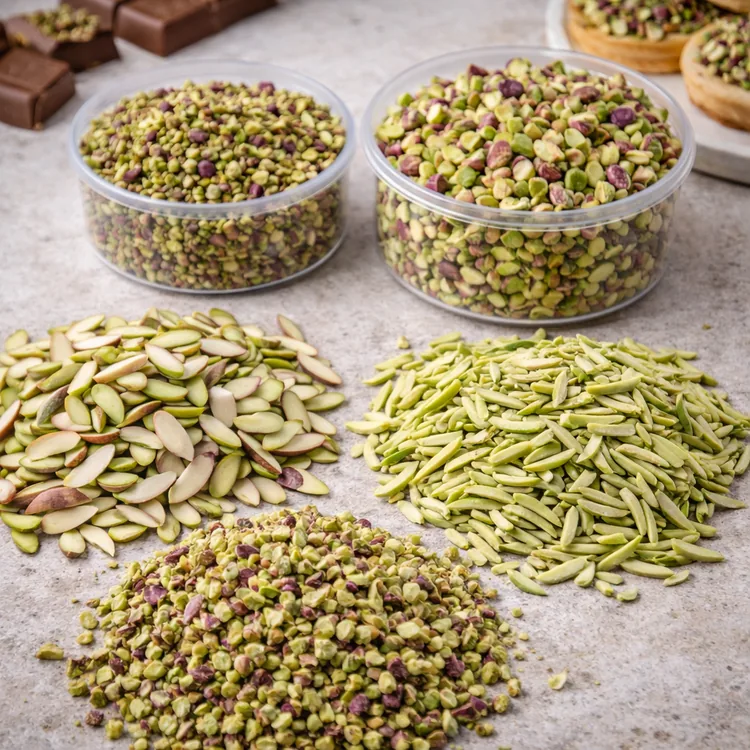
Pistachio granules, diced, sliced and slivered formats for decoration, inclusions, coatings and faster production handling

Processed pistachio cut formats are selected when buyers need pistachios already prepared for the real production environment. Instead of purchasing whole kernels and carrying out cutting, slicing or size reduction internally, manufacturers can source pistachios in a ready-to-use format that aligns more closely with their application, line speed and visual goals.

This category is especially valuable when the final product depends on controlled appearance, more consistent particle direction, easier dosing, improved coating performance or faster decorative finishing. Granules, diced pieces, slices and slivers can all serve different commercial purposes, from dense inclusion use in chocolate and pastry to elegant visual finishing in premium desserts and bakery lines.

Atlas presents this product for bakery manufacturers, pastry producers, chocolate brands, gelato businesses, dessert specialists and ingredient-focused buyers that need processed pistachio formats built around efficiency, consistency and premium presentation.

Decoration and finishing Coatings and inclusions Production efficiency Built for professional buyers
Product direction Processed cut formats for ready-to-use industrial and premium applications
Main buyer groups Bakery, pastry, chocolate, gelato and dessert manufacturers
Commercial focus Cut consistency, handling ease, decorative effect and process efficiency
Pistachio Granules, Diced, Sliced and Slivered
Commercial Overview

Why cut pistachio formats matter in professional food production

For many buyers, the real value of these products is not only that they are pistachios in smaller pieces. It is that they reduce internal preparation time, improve repeatability, support a more controlled visual outcome and make it easier to align the ingredient with the actual production task.

What makes this category commercially attractive

  • It reduces or removes the need for in-house chopping, slicing or manual preparation.
  • It helps standardize decorative appearance and inclusion direction across finished products.
  • It can improve throughput in production environments that rely on ready-to-use ingredients.
  • It supports premium presentation in bakery, pastry, chocolate and dessert lines.
  • It offers more precise control over the role pistachio plays in the final product, whether visual, textural or structural.
  • It can serve both premium artisan presentation and larger-scale industrial efficiency goals.

Typical early-stage buyer questions

  • Is the pistachio primarily for topping, internal inclusion, coating or layered finishing?
  • Does the application need a more textured, dense or visually elegant cut direction?
  • How important are uniform appearance and decorative cleanliness in the final product?
  • Will the format be used in repeat production, seasonal projects or development trials?
  • Should the product support visual merchandising, process speed or both?
  • What packaging direction best fits intake, storage and production-line handling?
Product Positioning

A processed pistachio category built around application fit

Pistachio granules, diced pieces, slices and slivers occupy an important middle ground between whole kernels and more fully processed formats such as powder or paste. They retain visible pistachio identity, but they are already prepared for more precise end uses. That makes them especially useful for buyers who need the aesthetic and textural value of real pistachio pieces without the extra labor of internal cut preparation.

Ready-to-use ingredient logic

The commercial strength of this category lies in saving time and improving workflow. The product arrives already closer to its final application role.

Visible premium value

Cut pistachio formats can support strong visual merchandising, especially in products where premium nut appearance is part of the consumer proposition.

Useful across several sectors

The same category can serve bakery, chocolate, frozen dessert and plated dessert concepts with different cut styles matched to different applications.

Balances aesthetics and process efficiency

Buyers often choose these formats because they need both a strong finished appearance and a more efficient production setup.

Format Direction

How different cut styles usually serve different commercial needs

Granules

Granules are often chosen where the buyer wants dense surface coverage, smaller decorative texture or more controlled inclusion behavior in coatings, bakery toppings, confectionery and layered sweet applications.

Diced pieces

Diced formats usually suit products that need a more visible pistachio piece identity than granules while still remaining practical for dosing, distribution and repeat production.

Slices

Sliced pistachios are especially relevant when the application needs elegance, a flatter decorative profile and refined visual presentation on pastries, cakes, chocolates and plated desserts.

Slivers

Slivered pistachios often support premium finishing, directional texture and delicate surface styling in pastry, confectionery, gifting and dessert presentation.

Reference Snapshot

Commercial details buyers usually review first

Product form

Granules, diced pieces, slices and slivers

Main commercial use

Toppings, inclusions, coatings, decorative finishing, layered textures and process-efficient ingredient handling

Typical discussion points

Cut direction, visual cleanliness, coverage effect, color expression, texture role and application fit

Typical buyer profile

Bakery manufacturers, pastry specialists, chocolate brands, gelato operators and industrial dessert producers

Packaging direction

Industrial ingredient packs for professional production environments

Commercial position

Efficiency-led processed ingredient category with strong visual and operational relevance

In practical manufacturing terms: these formats are often chosen when the buyer wants pistachio pieces that are already aligned with the production task. The value comes from reducing internal preparation, improving consistency and supporting a more controlled finished appearance.

Product Characteristics

How professional buyers usually evaluate cut pistachio formats

Buyers normally assess more than just size. They look at how the pieces behave on the line, how clearly they show in the finished product, how well they support a premium look and whether the format reduces labor in a meaningful way.

Cut definition

The cut style influences both the production process and the final visual effect. A buyer typically chooses the format that best matches the intended decorative or inclusion role rather than treating all cut forms as interchangeable.

Visual impact

In many premium applications, pistachio pieces serve as a visible quality cue. The right format can help communicate natural ingredient richness, premium handling and more refined product design.

Handling convenience

One of the biggest commercial reasons to buy prepared cuts is to avoid extra in-house labor. This can support cleaner workflow and faster movement from receiving to application.

Application specificity

Different end products ask different things of the pistachio format. Surface decoration, inclusion use and coating systems each place different commercial value on cut style and piece behavior.

Best-Fit Buyers

Who typically benefits most from this category

Bakery manufacturers

Suitable for pastries, cakes, layered products, toppings and decorative finishes where pistachio contributes both visual value and texture.

Pastry and dessert producers

A strong fit when pistachio must serve as an elegant finishing element, a layered component or a structured inclusion in premium sweet applications.

Chocolate and confectionery brands

Useful for top-surface decoration, inclusion work, pralines, bars, clusters and premium chocolate concepts that rely on visible nut identity.

Gelato and frozen dessert businesses

Relevant for toppings, mix-ins and showcase presentation where pistachio contributes to both appearance and textural interest.

Industry Applications

Common commercial directions for granules, diced, sliced and slivered pistachios

Pastry finishing

Especially relevant when visual refinement is central to the finished product and the pistachio must contribute to a premium top-surface effect.

Chocolate bars and pralines

Useful for premium decoration, controlled inclusion work and visible nut texture that strengthens perceived product value.

Bakery toppings and fillings

Appropriate where pistachio must add surface texture, internal layering or defined piece character in cakes, pastries and sweet baked goods.

Gelato and frozen dessert display

Suitable for showcase finishing, mix-ins and premium presentation where pistachio pieces help create a stronger visual proposition.

Coatings and enrobed products

Relevant where the cut style affects coverage, adhesion and overall surface impression in coated sweets and snack products.

Industrial production lines

Valuable when ready-to-use cuts support faster line preparation, reduce manual labor and improve repeatability in high-volume environments.

Why Buyers Choose This Format

Commercial strengths that make cut pistachios a practical decision

Many buyers do not want to spend internal time and labor converting whole kernels into smaller application-specific pieces. This product category solves that problem while also supporting more consistent results and a clearer visual strategy in the finished product.

Reduces preparation work

The product arrives closer to its final production use, which can shorten prep time and reduce operational friction inside the facility.

Supports visual consistency

Defined cut direction helps keep decorative and textural results more consistent across batches and product lines.

Improves application precision

Different cut styles allow buyers to choose a format that better matches the real role pistachio plays in the finished product.

Fits premium and industrial needs

The same category can support artisan finishing and larger-scale production efficiency, depending on the cut direction and commercial use.

Performance Perspective

What buyers often care about beyond basic product form

Coverage behavior

In toppings and coatings, buyers often focus on how the pieces distribute across the surface and how effectively the chosen cut style supports the desired visual density.

Textural contribution

The cut direction can influence how strongly pistachio is felt in the bite, making the commercial choice about more than appearance alone.

Handling speed

Ready-to-use cuts can simplify dosing and reduce extra preparation stages, which may be important for both small teams and industrial lines.

Repeatability

Professional buyers often value formats that help them reproduce the same decorative and inclusion effect more consistently over time.

Packaging Direction

How buyers usually think about supply and handling format

Packaging logic is normally shaped by batching rhythm, line throughput, storage planning and application frequency rather than simple visual preference.

Industrial ingredient packs

Suitable for manufacturers that need a practical ready-to-use format for repeated production and controlled internal movement.

Production-oriented storage

Useful where the product must move efficiently from receiving into dosing, decoration, filling or coating processes.

Development-scale supply

Helpful for trial runs, concept work and formulation testing where the buyer is still deciding which cut format best suits the finished product.

Repeat-production handling

Appropriate for ongoing product lines that need dependable, ready-to-use pistachio cuts aligned with regular throughput.

Commercial Value

How this category can strengthen a buyer’s pistachio program

For many manufacturers, cut pistachio formats create value because they connect ingredient purchasing directly to the real production use case. Instead of buying a more general product and converting it internally, the buyer sources a format that is already adapted to decorative, inclusion or coating needs.

Supports premium presentation

Visible pistachio cuts can strengthen product appearance and help communicate higher ingredient quality in finished goods.

Improves operational practicality

Ready-to-use formats can reduce extra labor and help teams move faster from ingredient intake to production use.

Useful across several product families

One category can serve bakery, pastry, confectionery and frozen dessert applications with different cut directions matched to different needs.

Good fit for scaling lines

Where decorative or inclusion work becomes more standardized, processed cut formats often become a more practical long-term solution.

Comparison View

How processed cut formats differ from other common pistachio directions

Topic Granules / Diced / Sliced / Slivered Whole Kernels Pistachio Powder & Meal
Main commercial role Ready-to-use decorative and inclusion formats Flexible base ingredient with visible whole-piece identity Fine ingredient for blending and controlled distribution
Best fit Toppings, inclusions, coatings and premium finishing Direct inclusion, visible premium applications or further processing Dry blends, doughs, fillings and fine recipe integration
Internal labor need Lower Higher if the buyer must cut or prepare pieces in-house Lower for blending-focused applications
Visual effect Moderate to high depending on cut style High as a whole-piece format Lower as a visible decorative format
Buying logic Choose when the application already needs prepared cuts Choose when you want broad flexibility or larger visible pieces Choose when smooth dry integration matters more than visible texture
Inquiry Guidance

Details that help Atlas prepare a more relevant commercial response

Helpful information to share

  • Your intended application, such as topping, coating, internal inclusion or layered finishing.
  • The preferred cut direction or the visual and textural effect you want to achieve.
  • Your destination market and approximate order volume.
  • Expected purchasing rhythm, including development-stage demand or repeat production.
  • Your preferred pack style and internal handling requirements.
  • Whether this product is needed alone or as part of a wider pistachio ingredient program.

Why these details matter

  • They help align the commercial discussion with the real production task.
  • They clarify whether the main priority is visual elegance, line efficiency, texture or coverage.
  • They improve the fit between the format and the buyer’s handling environment.
  • They make it easier to identify whether adjacent pistachio formats should also be considered.
  • They reduce unnecessary back-and-forth in the quotation process.
How to Start

A practical path to a more relevant quotation

1

Define the application

Clarify whether the pistachio is for topping, inclusion, coating, layered texture or decorative finishing.

2

Choose the cut direction

Explain whether you need granules, diced pieces, slices or slivers based on the visual and textural role in the finished product.

3

Set the commercial priority

Review whether appearance, production efficiency, handling ease or textural effect is the main factor in your decision.

4

Confirm pack logic

Select the packaging and handling direction that best matches your production environment and usage rhythm.

Frequently Asked Questions

Questions buyers often ask about pistachio granules, diced, sliced and slivered formats

Why buy cut pistachios instead of whole kernels?

Cut formats reduce internal preparation work and can improve consistency when the production line needs ready-to-use topping or inclusion material.

Are slices only for decoration?

No. Slices can also contribute texture, layering and visible ingredient identity in pastry, bakery and confectionery applications.

Which industries use this category most?

Bakery, pastry, chocolate, gelato, dessert and broader food manufacturing businesses are among the most common users.

What is the most important point in the first inquiry?

The intended use and preferred cut direction usually provide the most useful starting point for a more relevant commercial discussion.

Can granules be used for more than toppings?

Yes. Granules may also be used in fillings, coatings, inclusions and layered dessert systems where smaller pieces are commercially useful.

When are diced formats especially useful?

Diced pieces are often chosen when the buyer wants visible pistachio presence with more defined piece identity than granules but easier handling than whole kernels.

What are slivered pistachios best suited for?

Slivered pistachios are especially useful in premium finishing and elegant pastry or confectionery presentation where directional visual texture matters.

Why do buyers care so much about cut direction?

Because the cut style changes both the production behavior and the finished appearance, which means it directly affects the commercial result.

Is this mainly an industrial category?

It is especially relevant for industrial and professional users, but premium artisan producers also use these formats when they want ready-to-use pistachio cuts.

Can this category support premium presentation?

Yes. In many finished products, cut pistachio formats help create a more refined and visibly premium ingredient impression.

Do these formats help production efficiency?

Yes. Many buyers choose them specifically to reduce cutting, slicing or chopping work inside their own facility.

Which format is usually best for coatings?

The best format depends on the desired surface effect, but buyers generally choose the cut direction that delivers the right balance of coverage, adhesion and texture.

Can these formats be used in gelato?

Yes. They are often relevant for toppings, display finishing and mix-in concepts in gelato and frozen desserts.

What makes this category different from powder?

Powder is a fine dry ingredient for blending, while cut pistachios remain visible piece-based formats chosen for decoration, inclusion and texture roles.

What makes this category different from whole kernels?

Whole kernels offer more general flexibility, while processed cuts are already adapted to specific applications and often reduce internal labor.

Is this useful for chocolate bars and pralines?

Yes. Chocolate brands often use these formats for top-surface decoration, textural inclusions and premium nut presentation.

What should buyers share when requesting a quote?

They should explain the application, preferred cut style, expected volume, packaging direction and whether the requirement is for trials or repeat production.

Why is packaging direction important?

Because the right packaging helps align storage, internal movement, batching and production-line use with the buyer’s actual operating model.
Related Reading

Atlas Academy articles connected to this product

Request Product Guidance

Tell Atlas how you plan to use pistachio granules, diced, sliced or slivered formats

Share your application, destination market, expected order size and packaging direction so the discussion can focus on the most relevant commercial setup from the beginning.

Bakery finishing Chocolate decoration Gelato topping Coatings and inclusions Industrial production

Helpful details to send

  • Your finished product or use case
  • Approximate order volume and purchase frequency
  • Your preferred cut direction or visual target
  • Preferred pack style or handling needs
  • Interest in cut pistachios only or adjacent formats as well
Message Sent

Thank you for your inquiry

Your inquiry has been received. If you do not get a reply, please email contact@atlastradehouse.com directly.