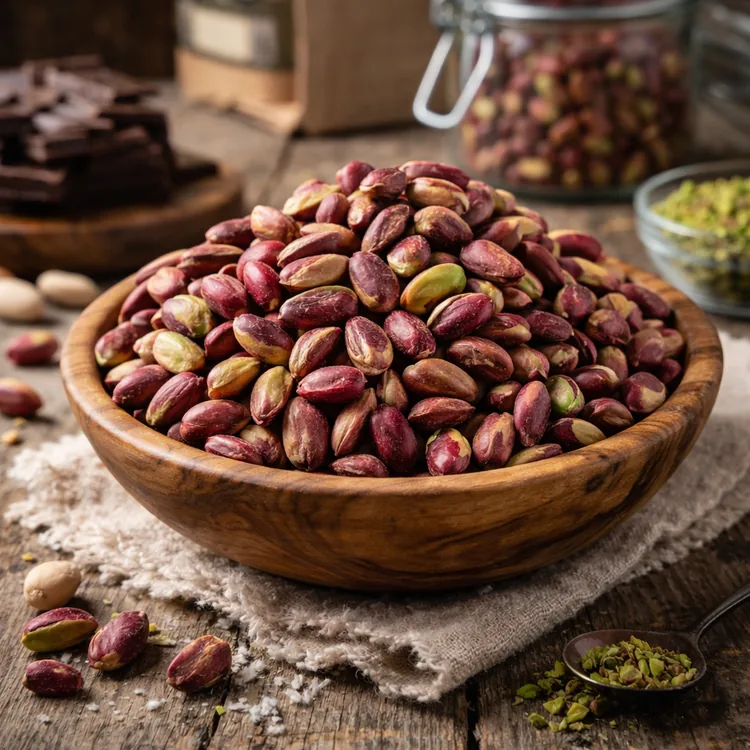
What are red pistachio kernels mainly used for?
They are mainly used in chocolate, bakery, confectionery, fillings, toppings, desserts and industrial ingredient programs where visible or versatile pistachio use is needed.
Why choose kernels instead of in-shell pistachios?
Kernels are easier to integrate into food manufacturing because the shell has already been removed, which simplifies handling and speeds up ingredient use.
Are red pistachio kernels suitable for visible applications?
Yes. They are commonly chosen where visible nut presence contributes to product appearance, premium positioning and consumer perception.
Can this product be processed further?
Yes. Many buyers use red kernels as a base for granules, diced product, sliced kernels, meal, powder or paste depending on internal production goals.
Who is this format best for?
It is especially useful for manufacturers, importers and ingredient buyers who want one pistachio format that can serve several commercial or production needs.
Why is this format considered flexible?
Because it can be used directly in finished products or redirected into other processed pistachio forms without locking the buyer into a single narrow application.
Does this format work for chocolate manufacturing?
Yes. It is often used in bars, pralines, filled chocolate systems and premium inclusions where pistachio identity should remain visible or semi-visible.
Is it suitable for bakery and pastry production?
Yes. Bakery and pastry producers often use kernels in toppings, fillings, decoration and premium sweet products where pistachio should be recognizable.
Can importers and distributors use this as a catalog item?
Yes. It is a practical catalog product because it can serve multiple customer types across industrial and premium ingredient segments.
How does this differ from a paste format?
Paste is already processed for creamy or blended use, while kernels remain more flexible and can still be used whole, cut or converted depending on the application.
When would a buyer choose green kernels instead?
Greener kernel formats are often chosen when stronger visual color expectations play a more central role in the final product presentation.
Is this format useful for product development teams?
Yes. R&D and innovation teams often prefer it because they can test both direct-use and processed-use possibilities from a single ingredient platform.
What should be included in an inquiry?
The most helpful details are intended use, estimated volume, packaging direction, ordering frequency and whether the kernels will remain whole or be processed further.
Can this product support multi-line manufacturing?
Yes. It is especially useful for companies operating across several pistachio applications and wanting one adaptable input ingredient.
Why is visible pistachio identity commercially important?
In premium finished products, visible pistachio pieces often help communicate natural ingredient value, product richness and stronger consumer appeal.
Is this format only for premium products?
No. It can work in both premium and more general industrial applications, depending on how the buyer plans to use and position it.
Can this be used as a bridge to more specialized formats?
Yes. Many buyers start with kernels and later move part of their purchasing into diced, sliced, powdered or paste forms as their programs become more defined.
Why do buyers often start here?
Because red pistachio kernels provide a strong balance of usability, flexibility, visual identity and downstream processing potential without over-specializing too early.